Parmesan Butter Noodles
This is a noodle recipe that took me 15 years to figure out. Then I added Parmesan cheese.
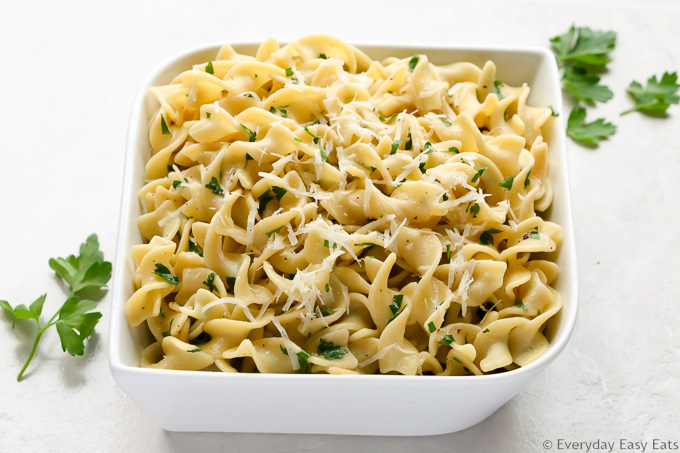
This is a noodle recipe that took me 15 years to figure out. Then I added Parmesan cheese.
- Carbohydrate 81.0764045 g
- Cholesterol 116.0054625 mg
- Fat 12.576714625 g
- Fiber 3.74211744592786 g
- Protein 18.521132875 g
- Saturated Fat 6.0633205 g
- Serving Size 1 1 Serving (127g)
- Sodium 378.249725442315 mg
- Sugar 77.3342870540721 g
- Trans Fat 1.2805467 g
- Calories 513 calories
Step-by-step
- Cook noodles per package directions, drain.
- Add Butter, and Garlic Salt, Mix.
- Add Parmeasean Cheese, Mix.
- Enjoy!!
The ingredient list omits the crucial physical interaction between hot starch and dairy fats. When boiling egg noodles, salt the water generously until it tastes like seawater. Starch released during the boil creates a viscous cooking water. Reserve a quarter cup of this water before draining. That starchy liquid acts as an emulsifier, binding the butter and grated cheese into a cohesive coating rather than letting the fat separate.
Ingredient Substitutions and Their Consequences
Swapping standard salted butter for European-style cultured butter introduces higher fat content and less water, yielding a richer mouthfeel. If replacing the grated Parmesan with a harder aged cheese like Pecorino Romano, reduce the garlic salt by half. Pecorino contains significantly more sodium than Parmesan, which will easily overwhelm the dish. Using dried minced garlic instead of garlic salt requires immediate hydration in the melted butter before the noodles are added, preventing gritty pockets of spice.
Managing Temperature and Storage
Control the heat strictly during assembly. Remove the pot from the burner entirely before stirring in the cheese. Excessive heat causes the dairy proteins in Parmesan to clump and separate into an oily mass instead of melting smoothly. Store any leftovers in an airtight container in the refrigerator for up to three days. Reheat gently over medium-low heat with an added splash of water to revive the emulsified sauce, as refrigerated noodles absorb residual fats rapidly overnight.


