Perfect Pie Crust
I use this crust for perfect pies every time. It is important to keep everything as chilled as possible.
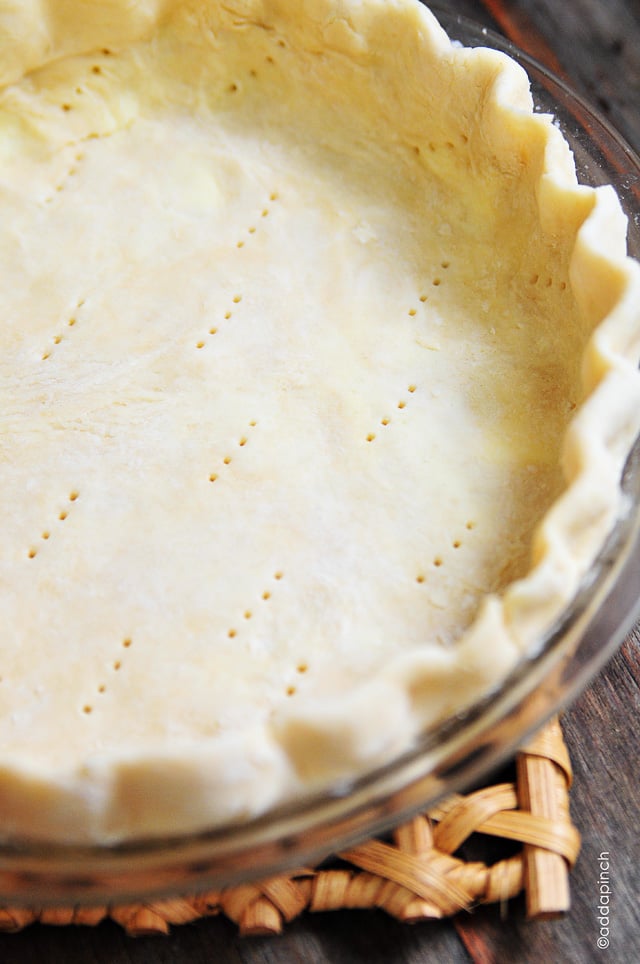
I use this crust for perfect pies every time. It is important to keep everything as chilled as possible.
- Carbohydrate 28.74628125 g
- Cholesterol 30.503125 mg
- Fat 24.68975 g
- Fiber 1.06218751788139 g
- Protein 4.014875 g
- Saturated Fat 10.54836 g
- Serving Size 1 1 serving (76g)
- Sodium 83.509375 mg
- Sugar 27.6840937321186 g
- Trans Fat 1.658913125 g
- Calories 352 calories
Step-by-step
- Chill crisco.
- Cut up butter and crisco into rather large pieces.
- Place flour and butter/crisco in food processor.
- Process until small beads about the size of peas form.
- Remove to large bowl.
- Add three tablespoons ice water and mix into dough.
- Gradually add more water a tablespoon at a time until the dough holds into a ball.
- Wrap in plastic wrap and place in refrigerator at least a half an hour, preferably over night.
- Roll out on floured surface.
- Makes 1 top and 1 bottom crust.
Pounded doughs like phyllo rely on stretching gluten strands, while shortcrust pastry requires inhibiting gluten development entirely. Standard pastry formulation dates back centuries in British baking traditions, prioritizing cold fat distribution over elasticity. Keeping every component near 35 degrees Fahrenheit prevents the butter from melting into the flour during mixing. Cut the butter and shortening into pieces roughly the size of dice before processing. Run the food processor only until the mixture resembles small peas. Processing past this stage coats too much flour in fat, resulting in a tough texture instead of a crumbly bite. Transfer the contents to a bowl before adding moisture. Adding water inside a running machine overworks the flour and triggers unwanted gluten creation. Three tablespoons of ice water go in first, stirred gently by hand. Add remaining liquid strictly one tablespoon at a time. The dough is ready when it just holds together under slight pressure without sticking aggressively to your fingers. Wrap the disk tightly in plastic wrap to prevent surface drying. Rest the dough in the refrigerator for at least thirty minutes. Overnight resting yields superior hydration balance across all flour particles. Rolling chilled fat requires a lightly floured work surface and a heavy rolling pin. Work from the center outward while rotating the disk forty-five degrees between strokes. Cracking edges indicate the fat is too cold; let the disk soften at ambient kitchen temperature for five minutes before continuing. Thickness should measure roughly one-eighth of an inch uniformly. Transfer the sheet into your pan without stretching the material, as stretched gluten snaps back during baking. Fluting the edges seals the perimeter and prevents interior shrinkage. Blind baking requires parchment paper weighted evenly with dried beans or ceramic beads. Bake until the exposed edges turn a pale golden hue and the base appears opaque. Cool the crust completely on a wire rack before adding any wet fillings.



