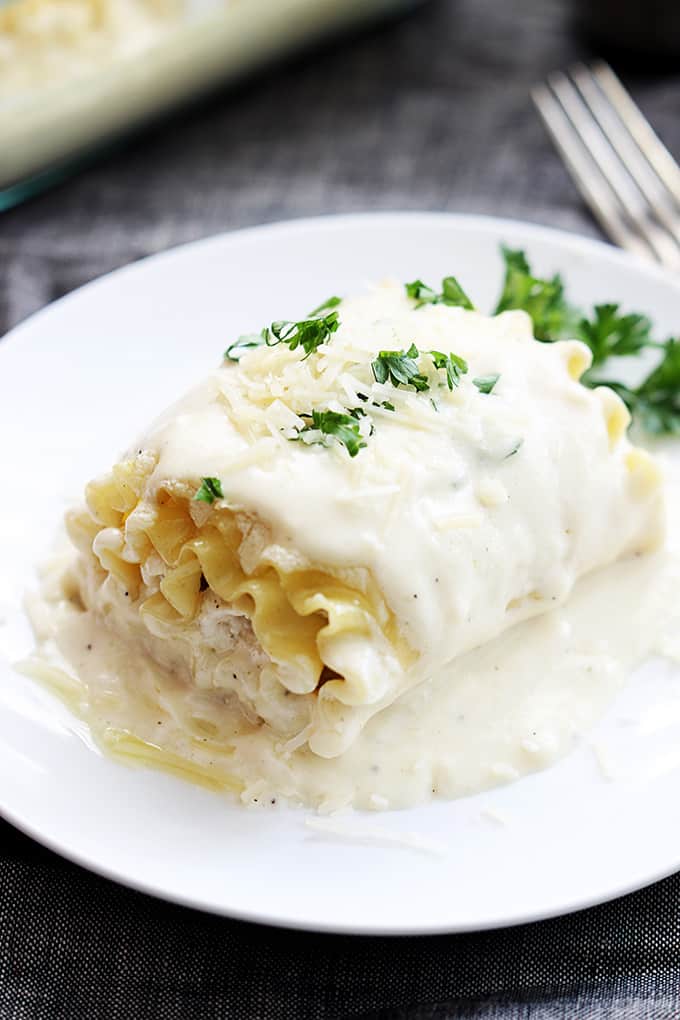
White Lasagna
Equipment: Paper Bag, a medium Bowl, Large Skillet, Cutting board, 9 x 13 Baking Dish, Tongs, Large Scoop Spoon, Aluminum Foil, Corn on the Cob Holder
Equipment: Paper Bag, a medium Bowl, Large Skillet, Cutting board, 9 x 13 Baking Dish, Tongs, Large Scoop Spoon, Aluminum Foil, Corn on the Cob Holder
- 2 tablespoons butter
- 1 jar alfredo sauce
- 1 package no-boil lasagna noodles - hy-vee has barilla so i use barilla
- 1 1/2 pounds boneless chicken breast fresh
- 1 red pepper roasted chopped
- 1 package button mushrooms cleaned and halved
- 1/2 cup cream or milk or 1/2 and 1/2
- 2 pounds shredded mozzarella cheese
- 1 pound shredded sharp cheddar
- 1/4 pound shredded smoked cheddar
- Carbohydrate 1.97140153962546 g
- Cholesterol 94.5313646266351 mg
- Fat 20.3910814136169 g
- Fiber 0.01125 g
- Protein 30.6829139314752 g
- Saturated Fat 12.7658162201094 g
- Serving Size 1 1 Serving (138g)
- Sodium 564.929669945006 mg
- Sugar 1.96015153962546 g
- Trans Fat 1.19619788345569 g
- Calories 318 calories
Step-by-step
- Ok, so let's roast that Red Pepper. I like to do it in the Broiler on a Pampered Chef Pizza Stone, but any oven safe pan will do. Char that baby on all sides and then toss in a paper bag. Right after you start the Pepper in the broiler, put your skillet on the burner on medium high and put in the butter.
- Ok open those mushroom and clean off all the dirty and crap and cut them in half. Put in Bowl. Check the pepper, flip in quarter turn, and then put the chicken in the skillet. Half way through the chicken cooking process flip the pepper another quarter turn. Cook Chicken thoroughly you don't want anyone getting sick. Another ? turn. Remove the Chicken & put on Cutting Board, replace with those clean and freshly cut Mushrooms. Saute the mushrooms until they look done, if you don't know what that looks like.. um um. 5 minutes should do the trick. Pour in Jar of Alfredo goodness. Ok pull out the pepper and put it in that Paper bag, roll up the open end, put in bowl.
- Change over the Oven to BAKE and set to 375 degrees.
- Now that those chicken breasts have rested and cooled off, cut into cubes and add to skillet. Stir.
- Remove the pepper from Bag, run under cold water and remove skin, stem and seeds. Chop into bits and add to skillet with half cup cream or whatever. Bring to slow boil.
- Take some of the liquid and cover bottom of baking dish. Cover with 3 noodles lined up like soldiers.
- Then 1/3 skillet mixture, 1/3 Mozz, 1/3 Sharp. Repeat but with noodle in opposite direction-oh yeah you have to break one of those guys in half so it fits, layer 3 is like layer one, BUT top with Smoked Cheddar.
- Stick the Corn on the Cob holder in the middle, and cover tightly with aluminum foil.
- Put in oven and cook for about 50 minutes. I like to finish mine in the broiler, but you don't have to.
- The rest you can figure out!
Using no-boil lasagna noodles saves time, but failing to manage moisture will result in a watery bake. Raw mushrooms release significant water as they cook. Saute those mushrooms for precisely five minutes in the skillet to drive off excess moisture before adding any sauce. Trapped steam from wet vegetables ruins the structural integrity of layered pasta dishes. Sparing moisture control prevents a soggy final slice.
Undercooked poultry presents safety hazards, yet overcooked chicken breast becomes fibrous and dry. Cook the meat thoroughly in the skillet before dicing it on a clean cutting board. Let the protein rest for ten minutes after cooking to allow the muscle fibers to reabsorb moisture. Cubing the chicken only after this resting phase keeps the meat tender inside the heavy cheese layers.
Heavy cream or milk cuts the thick starch concentration of jarred alfredo sauce. Bring this blended dairy and vegetable mixture to a slow boil before assembling the dish to ensure proper thickening. Layering noodles in alternating directions provides structural support as the casserole bakes at 375 degrees for fifty minutes. Foil traps initial steam, while an optional final broiling step browns the top cheeses.
While traditional lasagna relies on a rich tomato ragu and béchamel, modern white variations prioritize heavy dairy blends. Shredding mozzarella, sharp cheddar, and smoked cheddar yourself yields superior melting compared to pre-bagged varieties coated in anti-caking cellulose. Grating cheese manually also reduces grocery costs significantly over buying pre-shredded products.


