Bang Pow Chicken
I created this dish to emulate Kung Pao chicken but it is just a tribute to that dish and I put other ingredients in to match my tastes. You can substitute any other vegetables for the stir fry to match what is in season.
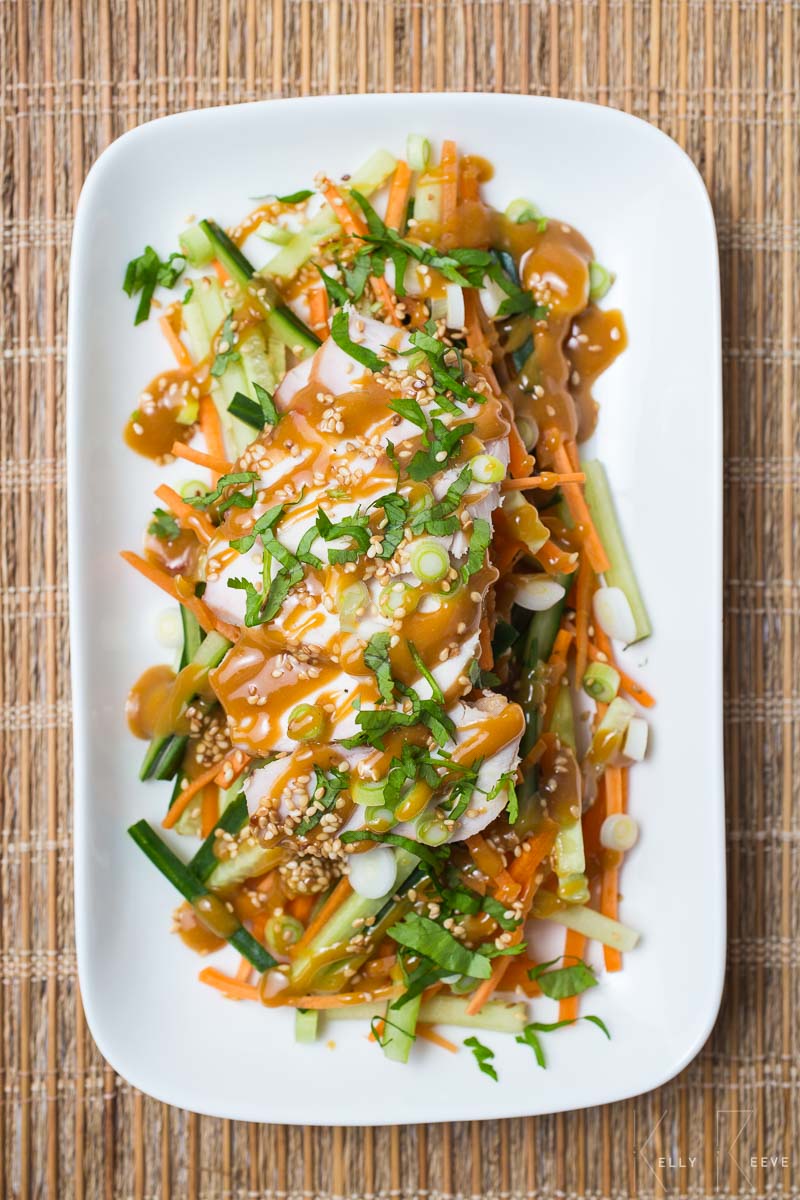
I created this dish to emulate Kung Pao chicken but it is just a tribute to that dish and I put other ingredients in to match my tastes. You can substitute any other vegetables for the stir fry to match what is in season.
- 1/2 cup water
- 1/2 cup soy sauce
- 2 cloves garlic chopped
- 2 tablespoon vegetable oil
- 1 teaspoon dry chicken soup mix oxo, chicken in a mug, bovril or similar
- 1/2 cup asian chili sauce use mild to hot per your taste
- 1 pound boneless skinless chicken raw, cut in thin strips
- 1 cup zucchini julienned
- 1 cup carrots julienned
- 1 cup onions julienned
- 1 cup sweet peppers julienned
- 3/4 cup unsalted peanuts
- 1 1/2 tablespoon cornstarch mixed in 2 tablespoons cold water
- Carbohydrate 18.150950000989 g
- Cholesterol 79.37866475 mg
- Fat 29.0850006241521 g
- Fiber 5.81400000709165 g
- Protein 37.5197519859782 g
- Saturated Fat 4.16719035323903 g
- Serving Size 1 1 Serving (320g)
- Sodium 632.73090623134 mg
- Sugar 12.3369499938974 g
- Trans Fat 1.86253515170262 g
- Calories 467 calories
Step-by-step
- Mix dry chicken soup mix, water, soy sauce and asian chili sauce together and set aside.
- Heat a wok or large frying pan.
- Add vegetable oil and heat.
- Add garlic and cook just utnil starting to turn golden.
- Add chicken and stir fry until cooked through.
- Add vegetables and stir fry until colours are bright and vegetables are heated through but still crisp.
- Add peanuts and stir fry for another minute.
- Add sauce ingredients and stir fry until hot and boiling.
- Add cornstarch in water and stir fry until thickened.
- Serve with rice or oriental noodles.
Traditional Sichuan kung pao relies heavily on Sichuan peppercorns and doubanjiang, whereas this adaptation builds its foundation on an accessible blend of soy, water, and Asian chili sauce. Adapting the volume of this preparation requires careful attention to thermal dynamics rather than simple multiplication. When doubling a pan-seared recipe for eight servings, home burners rarely supply enough British Thermal Units to evaporate moisture quickly. Excessive liquid causes the chicken to steam instead of brown, ruining the Maillard reaction necessary for savory depth. Batch cooking remains essential if exceeding a single pound of meat in standard cookware. Heat the oil until shimmering, around 400 degrees Fahrenheit, before introducing the protein to ensure proper searing. Maintain high heat during the vegetable stage so the julienned zucchini and peppers retain cellular rigidity, preventing a watery sauce.
Managing Thermal Capacity in Domestic Kitchens
Woks function best when heat transfers rapidly through curved carbon steel. Crowding the pan lowers the surface temperature instantly, releasing internal juices from the vegetables before the exterior can caramelize. Divide ingredients into two separate batches if the pan bottom appears overcrowded, combining them only when the sauce thickens. Starch molecules require a boiling environment to gelatinize fully, which explains why the cornstarch slurry must enter a bubbling liquid rather than a lukewarm pan.Balancing Sauce Viscosity and Starches
Stir-fry sauces thicken rapidly once the starch-water suspension reaches 203 degrees Fahrenheit. Whisking the cornstarch thoroughly with cold water prevents clumps from forming when exposed to heat. Pair this dish with steamed jasmine rice or wheat noodles to absorb the excess sodium and soy-based liquids effectively, balancing the rich peanut fat content.


