Crème Caramel (Flan)
I usually bake it in a round cake pan, but you can use ramekins. This recipe is not as hard as it looks. For best results, make flan a day ahead to let the caramel form a slightly liquefied layer. Time does not include cooling time. I have served this many times and it's a sure win every time. The total cooking time might vary, but it's close to 50 minutes.
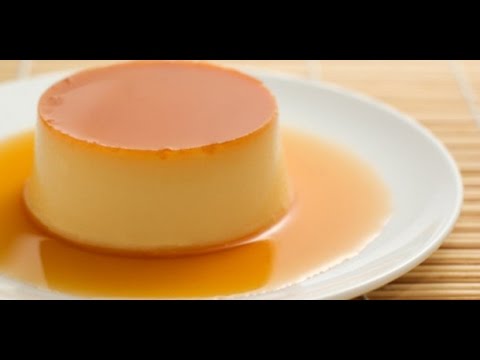
I usually bake it in a round cake pan, but you can use ramekins. This recipe is not as hard as it looks. For best results, make flan a day ahead to let the caramel form a slightly liquefied layer. Time does not include cooling time. I have served this many times and it's a sure win every time. The total cooking time might vary, but it's close to 50 minutes.
- Carbohydrate 116.4078625 g
- Cholesterol 1159.92 mg
- Fat 26.4113525 g
- Fiber 0 g
- Protein 24.56879 g
- Saturated Fat 9.03235125 g
- Serving Size 1 1 Serving (316g)
- Sodium 209.01709375 mg
- Sugar 116.4078625 g
- Trans Fat 2.636209 g
- Calories 789 calories
Step-by-step
- Preheat oven to 325F.
- Prepare an ice bath and set aside.
- Place eight ramekins in two baking pans lined with kitchen towels or 8-inch round cake pan.
- Bring a large pot of water to boil; keep hot until ready to use.
- Meanwhile, in a small saucepan, heat 3/4 cup sugar with the water over medium heat; cook until sugar is dissolved, about 5 minutes
- Swirl pan occasionally, DO NOT STIR.
- Wash down sides of pan with a pastry brush dipped in water to prevent crystals from forming.
- Increase heat to medium-high; continue cooking until caramel is amber, about 8 minutes, gently swirling pan to color evenly
- Remove from heat,and immerse bottom in ice bath for 3 seconds to stop cooking.
- Dry bottom of pan.
- Working quickly, pour about 1 tablespoon into each ramekin; OR pour all into cake pan and swirl to coat bottom evenly; set aside.
- In a small saucepan heat milk over medium heat just until bubbles form around edges and milk starts to steam,5 to 6 minutes Turn off heat.
- In a large bowl, whisk together yolks, eggs, and remaining 3/4 cup sugar until combined.
- Slowly add hot milk whisking constantly.
- Pour mixture through a fine sieve into clean bowl; skim off surface foam with a spoon.
- Stir in Vanilla, and pour custard into ramekins or cake pan.
- Carefully pour the hot water into baking pan until it reaches halfway up the side of ramekin or cake pan.
- Bake until center is set when gently touched with finger, 30 to 35 minutes.
- Remove from oven transfer to a wire rack to cool completely.
- Cover with plastic wrap, and place in refrigerator to chill, at least 6 hours or overnight.
- To unmold, run a sharp knife around edges and place a serving plate upside down over the top; invert and gently lift pan to remove.
Producing a professional-grade dessert requires nothing more than standard bakeware already present in most domestic kitchens. Achieving a glossy, pourable caramel without specialized copper pots relies on careful heat management rather than expensive tools. Swirling the pan instead of stirring prevents sugar crystallization by keeping unwanted nucleation sites out of the syrup. Brushing down the sides with water dissolves stray sugar crystals before they can ruin the batch. Stopping the cook by briefly immersing the bottom of the pan in an ice bath halts the thermal carryover immediately. Scaling this custard formula requires maintaining the fundamental egg-to-dairy ratio, though adjusting yields up or down changes the total baking duration significantly. Custards demand gentle thermal environments to avoid curdling the proteins. Placing the baking vessel inside a larger pan filled with hot water creates a thermal buffer that shields the eggs from direct, aggressive oven heat. Water conducts heat far more gradually than air, ensuring the outer edges do not overcook before the center reaches setting point. Straining the raw dairy and egg mixture through a fine sieve removes lingering chalazae and foam, yielding a uniform texture throughout each portion. Allowing the finished dessert to chill overnight in the refrigerator lets the solid sugar draw moisture from the custard, forming a self-saucing liquid layer.



