Tamale Pie
This has become a real favorite. I usually make more polenta than called for in the recipe for a thicker crust. Also, prepared as written it is pretty spicy so I normally use the mild variety of Ro-Tel, or mix 1/2 can of Ro-Tel and 1/2 can of regular petite diced tomatoes. If you have leftovers, try this for breakfast: Cut a slice of the Tamale Pie and heat in a microwave. Serve a sunny-side up egg on top! Really filling!
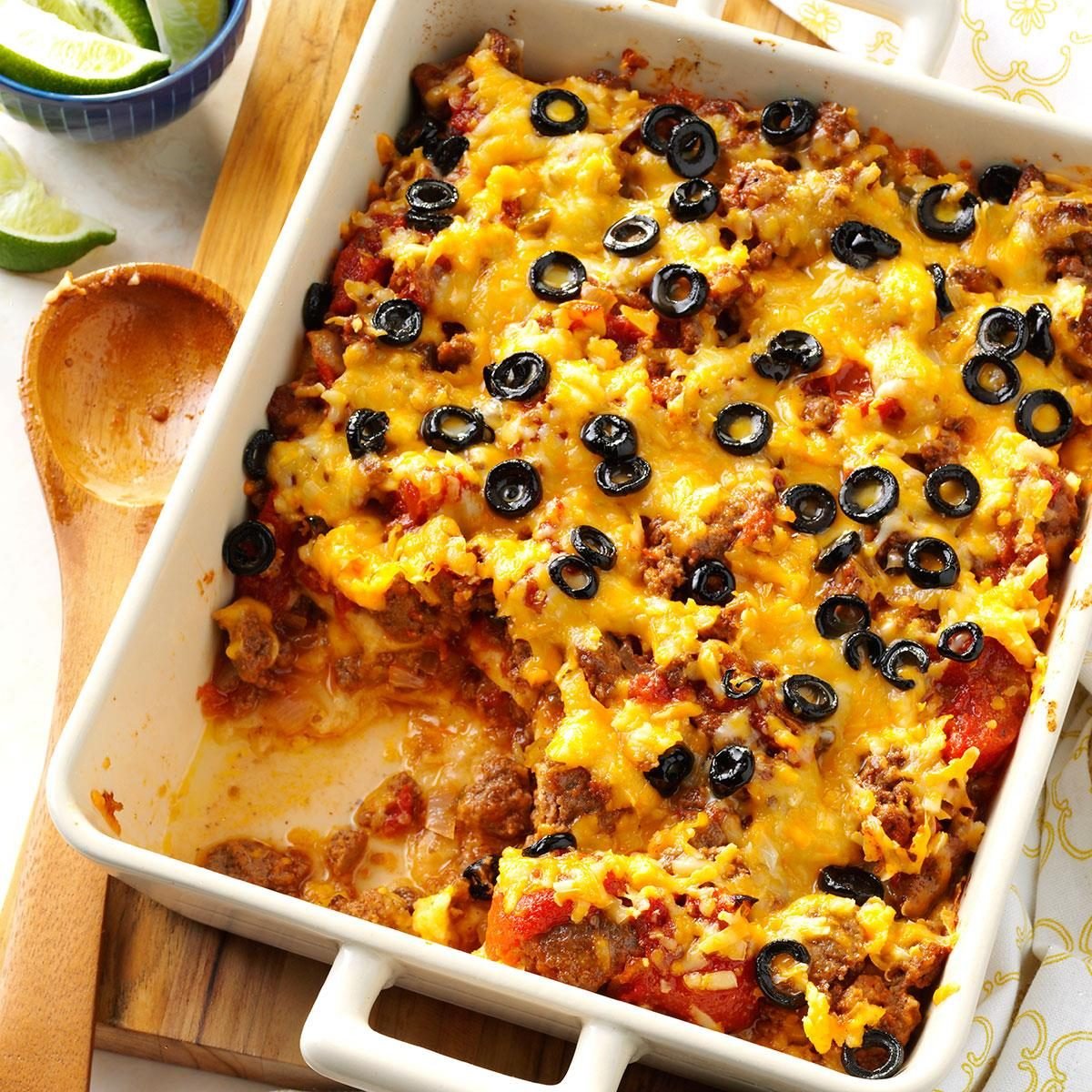
This has become a real favorite. I usually make more polenta than called for in the recipe for a thicker crust. Also, prepared as written it is pretty spicy so I normally use the mild variety of Ro-Tel, or mix 1/2 can of Ro-Tel and 1/2 can of regular petite diced tomatoes. If you have leftovers, try this for breakfast: Cut a slice of the Tamale Pie and heat in a microwave. Serve a sunny-side up egg on top! Really filling!
- 1 pound lean ground beef
- 1 teaspoon salt
- 2 cloves garlic chopped
- 1 medium onion chopped
- 1 large green pepper chopped
- 3 teaspoons chili powder
- dash of pepper
- 1 cup yellow corn meal
- 2 1/4 cup cold water with added chicken bouillon
- 4 teaspoons canola oil
- 6 ounces tomato paste (6 oz) tomato paste
- 10 ounces ro-tel diced tomatoes (mild) or hot, if you like that
- 10 ounces corn kernels canned with juice
- 16 ounces kidney beans
- Carbohydrate 44.322061083064 g
- Cholesterol 36.8543800625 mg
- Fat 10.9224823103655 g
- Fiber 8.57653920409193 g
- Protein 20.1179603350101 g
- Saturated Fat 3.04125418604773 g
- Serving Size 1 1 Serving (340g)
- Sodium 596.136961750499 mg
- Sugar 35.7455218789721 g
- Trans Fat 0.917362096058346 g
- Calories 347 calories
Step-by-step
- Preheat oven to 350?.
- Combine cornmeal, water and chicken bouillon in a medium saucepan; whisk or stir constantly over medium heat until slightly thickened. Spread in a 9 X 13-inch baking pan, sprayed with no-stick cooking spray.
- Bake for about 10-15 minutes to make it a little crusty to keep everything from sogging together. Set aside.
- In a large skillet, brown beef, onion, green pepper, and canola oil. Add chili powder, garlic, salt and pepper, and stir well.
- Add tomato paste, Ro-Tel, corn, and kidney beans, and mix well.
- Spread mixture evenly over the cornbread mixture and top with 1 cup shredded soy or fat free cheddar cheese. (Or use real cheese and count the points.)
- Bake for 20-25 minutes at 350 degrees.
- Variation: Spread ff refried beans over it and then put the chili type mix on that. Top with cheese (I don't do ff cheese) and bake again
The Mechanics of the Polenta Base
Traditional Mexican tamales require hours of steaming and meticulous dough preparation, whereas this layered casserole delivers a similar rustic corn and meat profile with significantly less physical labor. Whisking the cornmeal into cold water with chicken bouillon before applying heat prevents the formation of stubborn starch lumps that plague hasty polenta preparations. Spreading that resulting mixture into a greased 9x13-inch baking pan and subjecting it to a 15-minute dry bake at 350 degrees Fahrenheit creates a sturdy moisture barrier. Without this crucial dehydration step, the simmering juices from the beef, tomato paste, and canned legumes will rapidly turn the base into a soggy paste instead of maintaining distinct architectural layers. Browning the lean ground beef alongside chopped onions, green bell peppers, and canola oil develops foundational Maillard compounds that canned tomatoes and chili powder alone cannot replicate.
Next-Day Thermal Transformations
Casseroles often improve overnight as starches fully retrogradate and residual flavors meld into a cohesive profile inside the refrigerator. Slicing a cold wedge of the baked pie straight from chilled storage yields clean structural geometry that holds together under direct localized heat. Placing that portion on a microwave-safe plate and heating it on high for 90 seconds restores internal moisture without compromising the exterior edges. Capping the steaming wedge with a hot, runny-side-up egg introduces a rich lipid element that coats the dense cornmeal crust naturally. Storing the remaining portions in an airtight container for up to 72 hours ensures safe consumption while preserving the integrity of the kidney beans and corn kernels.


