Stuffed Cabbage
The cabbage rolls can be canned in Mason jars using a PRESSURE CANNER ONLY. They can also be frozen so it makes sense to double the recipe. The bonus is that they taste even better when reheated the second time. This recipe is a good guess however I never make it exactly the same way twice. The ingredient quantities are approximate but I usually use a 2 to 1 proportion of beef to pork. You might want to get an extra can of crushed tomatoes just in case.
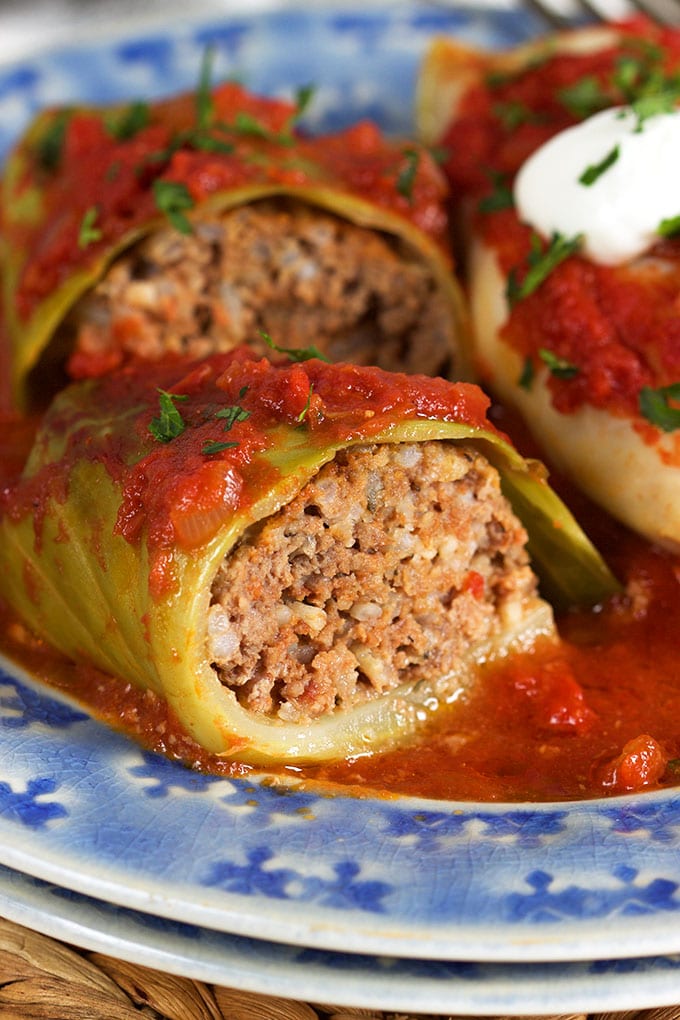
The cabbage rolls can be canned in Mason jars using a PRESSURE CANNER ONLY. They can also be frozen so it makes sense to double the recipe. The bonus is that they taste even better when reheated the second time. This recipe is a good guess however I never make it exactly the same way twice. The ingredient quantities are approximate but I usually use a 2 to 1 proportion of beef to pork. You might want to get an extra can of crushed tomatoes just in case.
- Carbohydrate 19.576711237192 g
- Cholesterol 63.616 mg
- Fat 18.259508531744 g
- Fiber 3.95353823396122 g
- Protein 18.418131043072 g
- Saturated Fat 6.951919647392 g
- Serving Size 1 1 Serving (239g)
- Sodium 159.2452363936 mg
- Sugar 15.6231730032308 g
- Trans Fat 2.8260460595232 g
- Calories 314 calories
Step-by-step
- Score around the core at the base of the cabbage. Remove any outside old leaves and set aside. In a large pot or Dutch oven, steam the head of cabbage in about 3 cups of water, removing the outer leaves as they soften. Set the steamed leaves aside.
- Cook the rice. Mince and crush the garlic. Mix the cooked rice, garlic, onion, pork, beef and about 1/2 to 3/4 cup of the tomatoes. Mix in one envelope of the G. Washington seasoning mix and some salt & pepper.
- Take one cabbage leaf. If the vein is heavy, pare it down. Lightly salt the leaf, if you like. Put a large meatball of the meat mixture at the base of the leaf. Roll over once from the bottom, fold sides in, and finish rolling.
- When all the cabbage rolls are made, empty the water from the pot. Put the old outer leaves, and any "too-small to roll" leaves in the bottom. Arrange the cabbage rolls. Put about 3-4 cups of water in the pot, cover and simmer for about 30 minutes. (This is to cook out the fat from the pork.)
- Remove the water from the pot (you can use a baster, or remove the cabbage rolls and empty the pot). Put the cabbage leaves back in the bottom of the pot and arrange the cabbage rolls on top.
- Mix together the rest of the crushed tomatoes and any leftover gravy you have. Pour over the cabbage rolls and simmer for about another 45 minutes. I also make these in a pressure cooker.
Scaling Proportions Safely
Doubling this recipe requires careful attention to pot geometry, because overcrowding prevents the crushed tomatoes and gravy from circulating evenly around the rolls. When scaling up, use a wide Dutch oven rather than a deeper pot to ensure the bottom layer of cabbage leaves receives direct thermal contact without crushing the delicate rolls stacked above. Retain any leftover cabbage scraps to line the base of the vessel, which creates an essential thermal buffer that stops the meat from scorching during the initial thirty-minute fat-rendering phase.Flavor Integration and Preservation
Maillard reactions develop deeply inside the meatball as the garlic and onion break down, while the acidic crushed tomatoes slowly break down the tough cellulose in the cabbage leaves during the final forty-five-minute simmer. This dish adapts exceptionally well to preservation because freezing concentrates the savory qualities of the tomato and meat reduction without degrading the structural integrity of the rice-filled core. For safe home canning, utilize a pressure canner strictly according to validated low-acid processing guidelines rather than relying on a boiling water bath.


