Three Grilling Rubs
I have been working on a few different rubs that go really great on grilled food and I thought you might all benefit from them. These are all really good on meat, but I think most of them would work equally well on veggies or tofu.
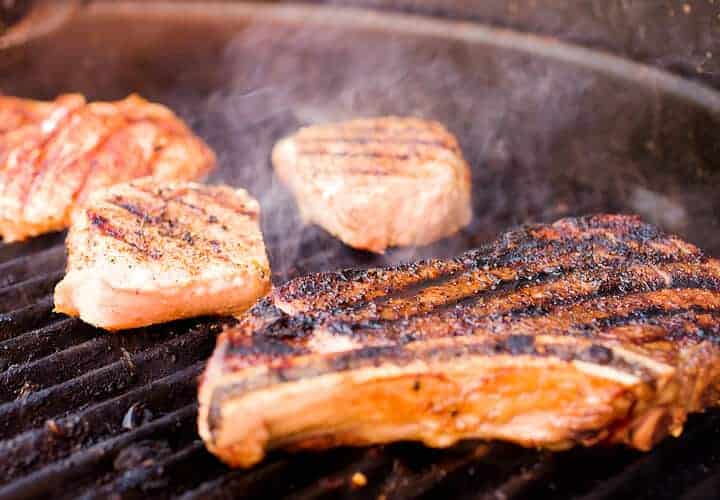
I have been working on a few different rubs that go really great on grilled food and I thought you might all benefit from them. These are all really good on meat, but I think most of them would work equally well on veggies or tofu.
- coffee spice rub:
- makes a scant 1/2 cup.
- - 2 tablespoons whole coffee beans
- - 1 teaspoon cardamon seeds
- - 1/2 small cinnamon stick
- - 1 1/2 teaspoons chili powder
- - 1 teaspoon garlic powder
- - 1 teaspoon paprika
- - 1 tablespoon kosher salt
- - 2 tablespoons sugar
- - 1 tablespoon pepper
- 5 c�s rub :
- makes about 1/3 cup of rub.
- - 1 tablespoon coriander
- - 1 tablespoon cumin seeds
- - 1 tablespoon cardamon seeds
- - 1 small cinnamon stick
- - 3-4 cloves
- - 1 tablespoon kosher salt
- - 1 tablespoon sugar
- all-purpose rub:
- makes 1/3 cup.
- - 1 tablespoon dried oregano
- - 1 tablespoon paprika
- - 1 tablespoon chili powder
- - 1/2 tablespoon garlic powder
- - 1 tablespoon kosher salt
- - 1 tablespoon fresh black pepper
- helpful equipment:
- - spice grinder!
- Carbohydrate 0 g
- Cholesterol 0 mg
- Fat 0 g
- Fiber 0 g
- Protein 0 g
- Saturated Fat 0 g
- Serving Size 1 1 recipe (0g)
- Sodium 0 mg
- Sugar 0 g
- Trans Fat 0 g
- Calories 0 calories
Step-by-step
- For all of these rubs except the all-purpose one, you?re going to need a spice grinder to really get the full flavor of the rub.
- Start with whole beans, a small piece of cinnamon and some cardamon seeds.
- Grind up these spices and then add in all your other spices to the mix.
- Once I had my rub mixed up, I coated a thick pork chop with it for testing and grilled it up.
- For this rub, I lightly toasted my cumin, cardamon, and coriander in a dry skillet for a few minutes until they were fragrant.
- Then I just blended them up!
- Just take all the spices and stir them up.
- To test out the all purpose rub and the 5 C?s rub, I generously coated a few chicken breasts with both and grilled them.
Ingredient quantities and measurements on a spice list reveal nothing about surface chemistry or how heat transforms botanical oils during high-temperature cooking. Whole spices contain volatile aromatic compounds locked inside cellular walls that degrade rapidly once pulverized, which is why starting with whole coffee beans, cardamom seeds, and cinnamon sticks yields a profoundly more pungent blend than pre-ground alternatives purchased months prior. When sugar is introduced to these spice mixtures alongside salt, excess moisture draws out through osmosis to dissolve the granular components, creating a sticky exterior that burns quickly if exposed to direct flames exceeding 400 degrees Fahrenheit. Managing this requires positioning proteins over indirect heat zones until the exterior caramelizes rather than blackening into acrid carbon.
Dry rubs present an ideal mechanism for preserving leftover roasted or grilled meats slated for second-day transformations. Because high-heat cooking dehydrates muscle fibers, applying a robust blend like the coffee-based mixture before cooking locks in internal juices, leaving dense pork or beef shreds that reheat successfully inside tacos, grain bowls, or breakfast hashes without tasting like cardboard. Storing these prepared spice blends in airtight glass containers away from direct light maintains their potency for up to two months, though volatile oils begin dissipating noticeably after thirty days.
Adjusting the foundational ratios allows home cooks to substitute ingredients based on pantry inventory without altering the fundamental chemistry of the crust. Swapping coriander seeds for fennel seeds in the seed-heavy blend introduces a licorice note that pairs effectively with oily fish, while omitting the sugar entirely from any rub prevents burning when cooking over extremely aggressive charcoal fires.



