Red Curry Tilapia
Easy home version of one of my favorite Thai dishes. Paleo friendly. I like it fresh, so this recipe is for 1 serving. I put this together in 10 minutes after I come home from work, and it fills the house with a wonderful smell for dinner an hour later. Very flexible for eating by itself, or on top of rice, noodles, or salad.
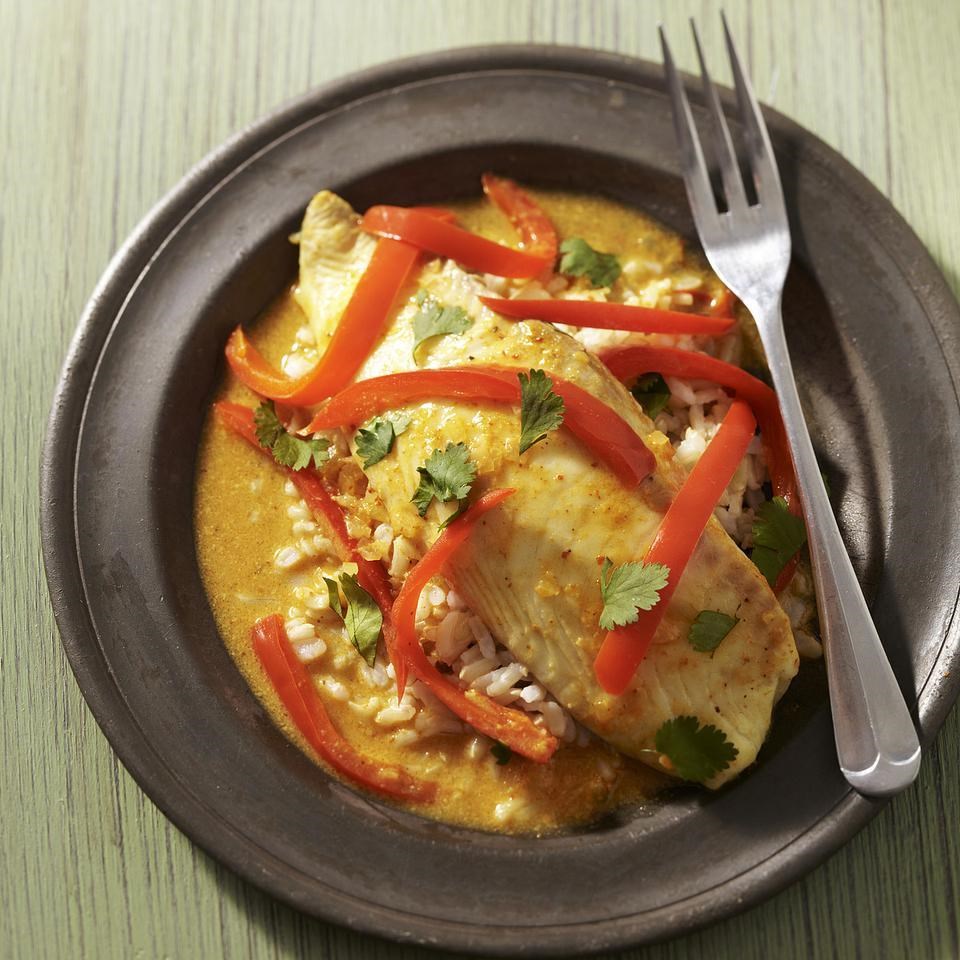
Easy home version of one of my favorite Thai dishes. Paleo friendly. I like it fresh, so this recipe is for 1 serving. I put this together in 10 minutes after I come home from work, and it fills the house with a wonderful smell for dinner an hour later. Very flexible for eating by itself, or on top of rice, noodles, or salad.
- Carbohydrate 7.80555799555 g
- Cholesterol 112 mg
- Fat 34.95119638615 g
- Fiber 2.1876000494957 g
- Protein 48.8290818331 g
- Saturated Fat 28.670792471825 g
- Serving Size 1 1 Serving (378g)
- Sodium 138.423190015 mg
- Sugar 5.6179579460543 g
- Trans Fat 1.59609709762501 g
- Calories 516 calories
Step-by-step
- Set the oven to 350(F) degrees.
- Pour the coconut milk in an oven-safe pan.
- Rinse and pat dry your tilapia filet. Rub it with the red curry paste (you can do this ahead of time to intensify the flavor) and put in the dish, making sure the coconut milk is about even or covering it (I use a single serving dish).
- Add the basil leaves and Thai hot chilies (if you like it with an extra kick), and bake for an hour. I prefer my fish very well done, and I use frozen filets. If your filet is unfrozen and you prefer your fish less baked, you can bake it at that temperature for 25-30 minutes and be fine.
- After the fish has cooked to your preference, you have the option of thinning out the sauce and making it a soup, or removing the fish with a slotted spoon and eating it paired with a side of sticky rice, noodles, or salad. If you plan on eating it with salad, I would recommend using less coconut milk, so the filet will be less "wet".
Coconut milk acts as the primary culinary vehicle in this preparation, functioning simultaneously as a poaching liquid and a rich sauce base that protects lean fish from drying out in dry oven heat. Because frozen tilapia releases considerable moisture as it thaws during baking, choosing the correct baking vessel diameter ensures the liquid reduces properly rather than merely boiling the protein. When rubbing the filet with red curry paste prior to baking, coat every crevice of the fish thoroughly because concentrated aromatics require direct contact with the proteins to penetrate effectively before the fats render. Operating an oven at 350 degrees Fahrenheit provides a steady, moderate thermal environment that gently coaxes the coconut milk to thicken without scorching its natural sugars.
Controlling Moisture and Texture
Managing the liquid ratio determines whether the final dish yields a concentrated sauce or a brothy soup. Standard recipes utilize five ounces of coconut milk, but reducing this volume slightly prevents the liquid from pooling excessively if serving the fish over crisp greens or raw vegetables. Tilapia cooked from a frozen state demands a full sixty minutes at 350 degrees Fahrenheit to achieve thorough doneness throughout the thickest part of the filet, whereas thawed fish requires only twenty-five to thirty minutes to reach optimal flaking texture.Dietary Adaptations
Adapting this preparation for different nutritional profiles requires minimal adjustment since the core components are naturally free from dairy, gluten, and nuts. Thai basil leaves release essential oils into the surrounding fat phase during prolonged heating, imparting an anise-forward aroma that complements the heat from optional Thai hot chilies without requiring added oils or fats.


