Curried Pumpkin Soup
This is one of my favorite soups. I make it with fresh sugar pumpkin when I can get it, otherwise I use canned pumpkin.
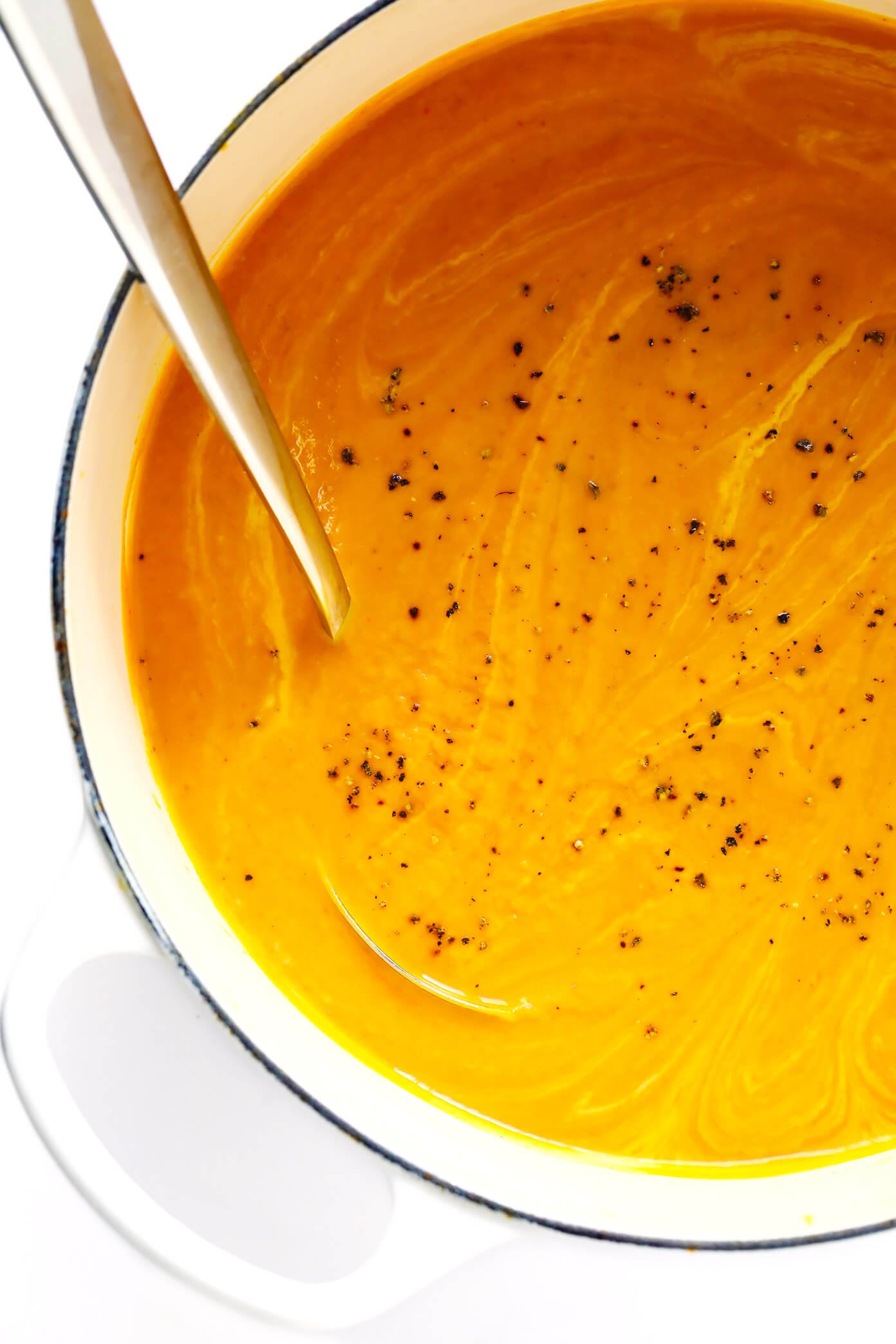
This is one of my favorite soups. I make it with fresh sugar pumpkin when I can get it, otherwise I use canned pumpkin.
- Carbohydrate 14.7268173439245 g
- Cholesterol 78.4075 mg
- Fat 24.0354998437914 g
- Fiber 1.76785002021021 g
- Protein 5.19085015628798 g
- Saturated Fat 14.9450551875067 g
- Serving Size 1 1 Serving (351g)
- Sodium 256.888093750156 mg
- Sugar 12.9589673237142 g
- Trans Fat 1.38747940626039 g
- Calories 285 calories
Step-by-step
- In a large saucepan, sauté onions & garlic in butter until translucent and slightly caramelized.
- Add curry powder & coriander and sauté 2 minutes longer.
- Remove from heat and stir in the pumpkin and salt.
- In batches, spoon mixture into a food processor or blender and process until smooth adding broth as necessary for blending.
- Return mixture to a large soup pot.
- Stir in the remaining broth, cream & half & half.
- Heat but do not boil.
- Serves about 8.
Curry powder drives this entire pot, carrying volatile aromatic compounds that must undergo fat-frying to release their full flavor potential. Ground spices contain fat-soluble essential oils trapped within plant cell walls; introducing dry spices directly into a cold liquid leaves them raw and medicinal. Sweating onions and minced garlic in melted butter creates a lipid medium. Adding the curry powder and ground coriander directly into this hot fat for exactly two minutes dissolves those compounds and toasts the spices without scorching the garlic.
The Importance of Mechanical Pureeing
Achieving a velvety texture relies heavily on the mechanical disruption of pumpkin fiber. Sugar pumpkins or canned pumpkin purée contain dense cellular structures that require high-shear processing. Working in small batches inside a blender or food processor prevents motor strain and ensures uniform particle breakdown. Gradually streaming chicken broth into the spinning blades creates a stable suspension before transferring the contents back to the heat.
Managing Dairy and Heat
Heavy cream and half-and-half introduce delicate milk proteins and butterfat that curdle easily under aggressive boiling. Maintaining a gentle simmer just below 212 degrees Fahrenheit prevents the emulsion from breaking. Adding dairy at the final stage preserves the fresh cream flavor and guarantees a smooth mouthfeel across all eight servings.


