Beef Enchiladas
I came up with this using everything I loved about Mexican food. I hope you like it.
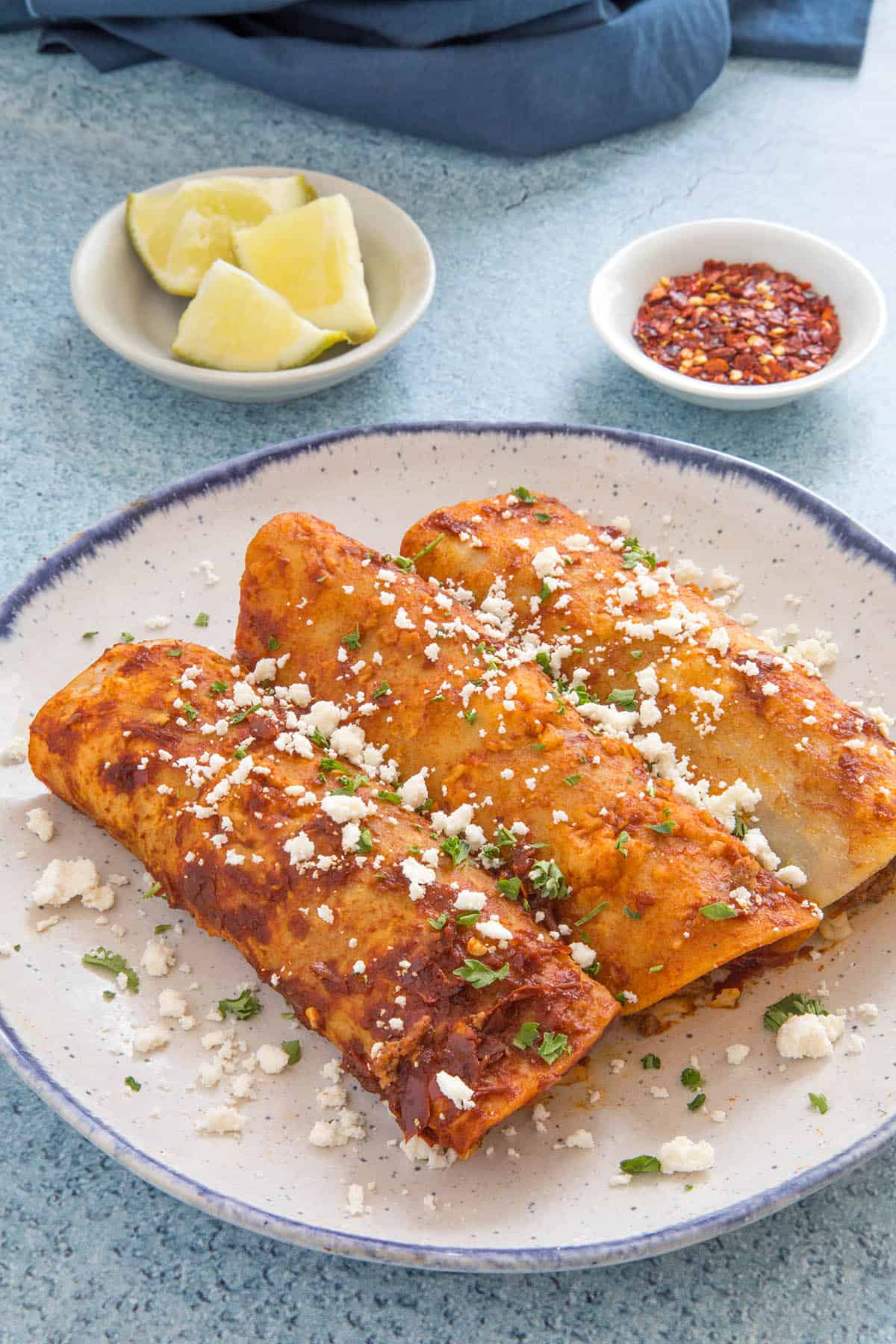
I came up with this using everything I loved about Mexican food. I hope you like it.
- 2 tablespoons cilantro chopped
- 1 12-oz can rotel tomatoes
- 16 ounce sour cream
- 1 head lettuce shredded
- 1 16-oz can roast beef mashed
- 1 tablespoons cumin to taste
- 12 ea soft flower tortillas warmed
- 1 12-oz can enchelada sauce
- 6 cups shredded cheese to taste
- 1 12-oz can refried beans warmed
- 16 ounces guacamole
- Carbohydrate 257.05801 g
- Cholesterol 249.644 mg
- Fat 93.54005 g
- Fiber 38.9522007248402 g
- Protein 95.02327 g
- Saturated Fat 45.434737 g
- Serving Size 1 1 Serving (1314g)
- Sodium 2900.707 mg
- Sugar 218.10580927516 g
- Trans Fat 8.37346900000001 g
- Calories 2196 calories
Step-by-step
- Preheat oven to 400F
- Pour canned beef, tomatoes, cilantro and cumin into medium pan (DO NOT drain). Mash up beef so it appears shredded.
- Simmer over medium heat until most of the liquid is evaporated. (approx. 20-25 min.)
- Warm refried beans in a small dish.
- Warm Flower Tortillas in microwave for one min. with package opened.
- Build encheladas one at a time.
- Spread one BIG teaspoon of refried beans on one edge of each tortilla; fill with one tablespoon of meat/tomatoe mixture and about a teaspoon full of cheese.
- Wrap tward bean side so the beans seal it.
- Place in 13" greased baking pan.
- Sprikle remaining chease on top of tortillas.
- Pour the can of enchelada sauce over everything.
- Bake for about 20 min. until it gets nice and gooey and bubbly.
- remove from oven and let cool for 2- 5 min.
- Serve over lettus with remaining beans, sour cream and guacamole on the side.
- You may also serve with spanish rice for those really big eaters.
Simmering the canned beef with tomatoes and cumin over medium heat requires careful monitoring until excess moisture evaporates completely, usually taking twenty to twenty-five minutes, which prevents the tortillas from becoming soggy during the final bake at 400 degrees Fahrenheit. Scaling this recipe up for a large gathering demands strategic pan management because crowding a thirteen-inch baking dish forces steam upward instead of allowing dry heat to melt the six cups of shredded cheese into a bubbly crust. Professional kitchens handle large volume adjustments by splitting heavy casseroles across multiple shallow metal pans to ensure uniform heat penetration. Freshly roasted cuts or scratch-made sauces introduce variable water content compared to canned ingredients, requiring adjustments to the initial stovetop reduction phase.
Allowing the baked pan to rest for five minutes off the heat lets the dairy proteins stabilize before portioning. Storing leftovers in airtight containers preserves quality for up to three days in refrigeration.



