Easy Homemade Chocolate
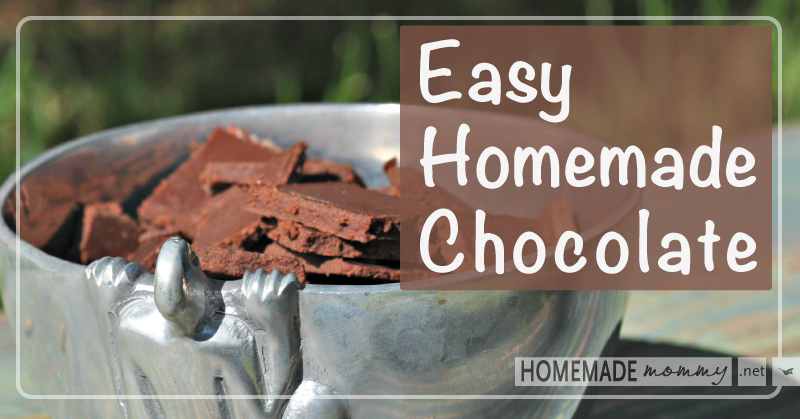
Chocolate! I have discovered how to make the easiest chocolate at home. I cut it up into pieces and store in my fridge for my daily chocolate fix. I promise this won’t disappoint and it helps you to get more great fats into your daily diet in a sweet way!
Chocolate! I have discovered how to make the easiest chocolate at home. I cut it up into pieces and store in my fridge for my daily chocolate fix. I promise this won’t disappoint and it helps you to get more great fats into your daily diet in a sweet way!
- Carbohydrate 2.21607956723203 g
- Cholesterol 0 mg
- Fat 1.3079101124169 g
- Fiber 0.0911680014369611 g
- Protein 0.16436280047237 g
- Saturated Fat 1.10434100327464 g
- Serving Size 1 1 Serving (4g)
- Sodium 14.1633628134967 mg
- Sugar 2.12491156579507 g
- Trans Fat 0.0758666045177696 g
- Calories 21 calories
Step-by-step
- In a heat resistant pyrex or other glass bowl or measuring cup, add the coconut oil. Fill a small saucepan with a few inches of water and place the glass measuring cup in it. Heat on stove top until coconut oil is mostly melted (room temp – not hot). UPDATE: please do not skip this step and microwave your oil. You will kill the good antimicrobial properties in the oil and it also won’t blend in well with the cocoa powder. If you end up with a watery mess you heated the coconut oil up too hot!
- While the coconut oil is coming to room temperature, add all the other ingredients to a food processor. Add the coconut oil and blend until combined in the food processor.
- Place some plastic wrap or parchment paper in a loaf pan to cover the bottom and sides of the pan. Pour the chocolate mixture into the loaf pan and cover with the plastic wrap (gently). Press down or tilt to even out the thickness. I like mine about 1/2 inch thick. UPDATE: I have recently just poured out the chocolate on some parchment paper on a cookie sheet or roasting pan and put the whole thing in the fridge. This avoids the plastic wrap and works just as well.
- Place the loaf pan with the fudge into into the freezer and let it set for about 20 min. Remove and slice into bite sized pieces. I put these in a jar and store in the fridge. I sometimes make a double recipe and store the other half already cut up in the freezer.
Coconut oil forms the structural backbone of this preparation, functioning differently than cocoa butter found in commercial bars. Because coconut oil has a high concentration of medium-chain triglycerides, it melts at approximately 76 degrees Fahrenheit, meaning this confection relies entirely on refrigeration to maintain its solid state rather than standard tempering methods. When heating the fat, maintain a gentle temperature via a double boiler setup; exposing unrefined coconut oil to direct microwave heat or excessive temperatures denatures delicate compounds and destabilizes the emulsion, resulting in a separated, oily mixture rather than a smooth suspension.
Pairing this rich, fat-forward treat requires contrasting textures and flavors to cut through the density. Acidic elements like fresh raspberries or tart dried cherries balance the high fat content, while flaky sea sprinkled on top provides a sharp saline crunch against the sweet maple syrup. Serving these pieces alongside unsalted roasted almonds or macadamia nuts introduces a hard crunch that contrasts with the quick-melting texture on the palate.
Fresh vanilla extract provides distinct aromatic compounds that elevate the bitter notes of cocoa powder far better than artificial vanillin, which can taste metallic when combined with high concentrations of vegetable fats. Utilizing high-grade cocoa powder ensures adequate starch and fiber content to help bind the liquid sweeteners into the fat phase without seizing.
Store the finished pieces inside an airtight glass jar in the refrigerator for up to two weeks, or transfer them to the freezer for long-term storage extending past a month. Because the melting point sits near room temperature, keep the pieces chilled until moments before consumption to preserve clean edges during slicing.


