Pernil with Orange Marinade
Many moons ago, I published my recipe for pernil, the delicious Puerto Rican roasted pork butt/shoulder. Recently, I had a whole Saturday afternoon to try a longer and slower cooking method for my bone-in pork butt. I have to tell you, if you have the time I would advise cooking it this way as you will have meat absolutely dripping moist and falling off the bone. The quicker method in my earlier recipe is a very good way of cooking the pork if you dont have 8-9 hours to kill waiting to tear into the pernil. But, if you do remember to put your pork in by 11AM, you will not be disappointed by the results of low and slow cooking. I am cutting and pasting the old pernil recipe here and adding my alternative Low and Slow cooking time. I hope youll give it a shot and let me know what you think! Remember to allow your pernil to marinate overnight for the best results!
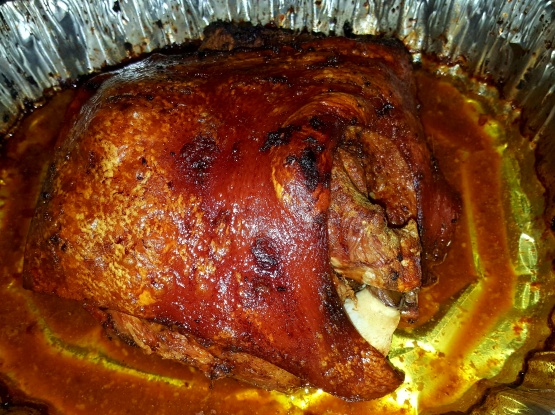
Many moons ago, I published my recipe for pernil, the delicious Puerto Rican roasted pork butt/shoulder. Recently, I had a whole Saturday afternoon to try a longer and slower cooking method for my bone-in pork butt. I have to tell you, if you have the time I would advise cooking it this way as you will have meat absolutely dripping moist and falling off the bone. The quicker method in my earlier recipe is a very good way of cooking the pork if you dont have 8-9 hours to kill waiting to tear into the pernil. But, if you do remember to put your pork in by 11AM, you will not be disappointed by the results of low and slow cooking. I am cutting and pasting the old pernil recipe here and adding my alternative Low and Slow cooking time. I hope youll give it a shot and let me know what you think! Remember to allow your pernil to marinate overnight for the best results!
- olive oil
- 1 bone-in pork shoulder (5-10 pounds depending on how many y 5 pounds will feed 4-5 hungry people)
- 5-8 cloves garlic some chopped some sliced
- adobo (or a mixture of garlic power onion powder, cumin, black pepper, salt and oregano)
- 1 bottle of sour orange marinade (or 2 oranges and 1 lime o
- 1 large onion chopped up
- Carbohydrate 0 g
- Cholesterol 0 mg
- Fat 0.28124999955 g
- Fiber 0 g
- Protein 0 g
- Saturated Fat 0.038834999937864 g
- Serving Size 1 1 Recipe (0g)
- Sodium 0.005624999991 mg
- Sugar 0 g
- Trans Fat 0.00761624998781403 g
- Calories 2 calories
Step-by-step
- Take your big-ass, delish pork shoulder/butt, place it in a baking dish skin-side up and rub it with some olive oil then sprinkle it all over w/ adobo (Goya makes a few versions of this that you can keep in your spice cabinet or you can make your own by sprinkling garlic power, onion powder, cumin, black pepper, salt and oregano all over the pork). WHEN I SAY SPREAD IT ALL OVER I MEAN SPREAD IT ALL OVER. Don’t be afraid of putting on too much.
- Cut slices of garlic up from about 3 cloves of garlic – make slices thick-ish. (NOTE: If you have the extra time, make a paste out of your garlic by smashing it in a mortar and pestle w/ a bit of salt to aid in the smashing until it has the consistancy of a spreadable paste.) ****NOTE: This recipe uses alot of garlic b/c we love alot of garlic. If you don’t like the taste of garlic, maybe this recipe isn’t the best for you.
- Take a sharp knife (a steak knife should be fine) and make 1-inch wide (1 inch deep or so) slits all over the pork, skin and all. Every time you make a slit, slide in a slice of garlic into the slit. It’s best if the garlic goes into the hole all the way. If it doesn’t, again, don’t worry… just make a bit of a deeper slit next time. (NOTE: If you made the garlic paste, then just slide a bit of the paste in each slit instead of the sliced garlic.)
- MAKE MARINADE IN SEPARATE BOWL: Add one cup of sour orange juice (again, Goya makes a bottled version, I’m sure it’s not as tasty as the real ones, but sour oranges aren’t around all the time to buy) to 3 cloves of chopped garlic and 1 chopped large onion. Add a sprinkling of salt and pepper and well as some extra oregano. Mix. (NOTE: You can also substitute sour orange w/ a cup of regular Orange Juice mixed w/ the juice of two limes, or juice of 2 oranges, juice of 1 lime.)
- Pour your marinade over your pork. Let sit for at least 3 hours, preferably overnight).
- Fat side up, place pork in a roasting pan along with the rest of the marinade. Add a bit of liquid if necessary (water or some chicken stock) – so it comes up about 1/2 an inch high. Make sure there’s always some hot liquid at the bottom to mix with the drippings. (This is not necessary – I just liked it this way).
- Heat the oven to 475 degrees and cook pork uncovered for 1 hour.
- After the hour is over, turn oven down to 275 degrees, tent pork with some tin-foil and cook for 8 to 9 hours on this low setting. (You want to cook the pernil for an hour to 1 1/2 hours per pound for low and slow versus the quicker cooking of pernil where I recommend a 1/2 hour to 45 minutes per pound).
- Don’t forget to remove the foil from the top of your pork about 30-40 minutes before your done cooking it. This will crisp up your pork skin only so much. If you are looking to make chicharron by removing the top layer of skin after it’s been cooked (as I did – see first picture, top of post) and frying it up a bit.
- Allow to rest for 15 minutes to a half hour before slicing and serving. ENJOY.
A five-to-ten-pound bone-in pork shoulder requires serious oven space and a roasting pan with high enough sides to prevent liquid from spilling over onto your heating elements during the initial high-heat phase. Because this recipe demands an initial blast at 475 degrees Fahrenheit followed by eight to nine hours at 275 degrees Fahrenheit, standard baking sheets will not suffice and will warp under the thermal shock. Anyone attempting this cut without a heavy-duty roasting pan and a tight seal of aluminum foil will find the meat dries out long before the connective tissue breaks down.
Piercing the skin and flesh to drive garlic slices deep into the muscle fibers serves a structural purpose beyond mere seasoning, as these channels allow the acidic sour orange marinade to penetrate the dense interior of the shoulder. Sour orange juice provides the necessary acidity to break down tough collagen proteins, but if bottled sour orange is unavailable, combining standard sweet orange juice with fresh lime juice at a one-to-one ratio yields a functionally similar pH level. Mashing the garlic into a smooth paste with coarse salt in a mortar and pestle rather than simply slicing it ensures the aromatics distribute evenly throughout the meat instead of falling out during the lengthy roasting process.
Managing moisture is critical when alternating between dry heat and braising environments over a nine-hour span, which is why maintaining a half-inch of liquid at the bottom of the roasting pan protects the lower muscles from scorching while steam keeps the upper layers hydrated. Allowing the pork skin to remain exposed during the final thirty to forty minutes of cooking is non-negotiable if you expect to achieve the brittle, crackling exterior known as chicharrón. Removing the foil too early, however, will dehydrate the fat cap prematurely and turn the exterior leathery rather than crisp.
Resting the roasted shoulder for twenty to thirty minutes before carving allows the internal muscle fibers to relax and reabsorb the rendered juices that would otherwise pool instantly on the cutting board. Slicing the meat too soon after it emerges from a 275-degree oven causes the internal moisture to bleed out, resulting in dry strands regardless of how long the pork cooked. Reserve any remaining pan drippings separately to spoon over individual servings, as the rendered fat carries the concentrated essence of the garlic, adobo, and citrus marinade.


