Potato and Cabbage Soup with Dill
The original recipe for this Eastern European-style soup came from Professional Vegetarian Cooking by Ken Bergeron. I've simplified it a little to work for me. I know the pickles/pickle juice/mustard seem a little unusual, but don't skip them. They really give this soup an extra special something-something.
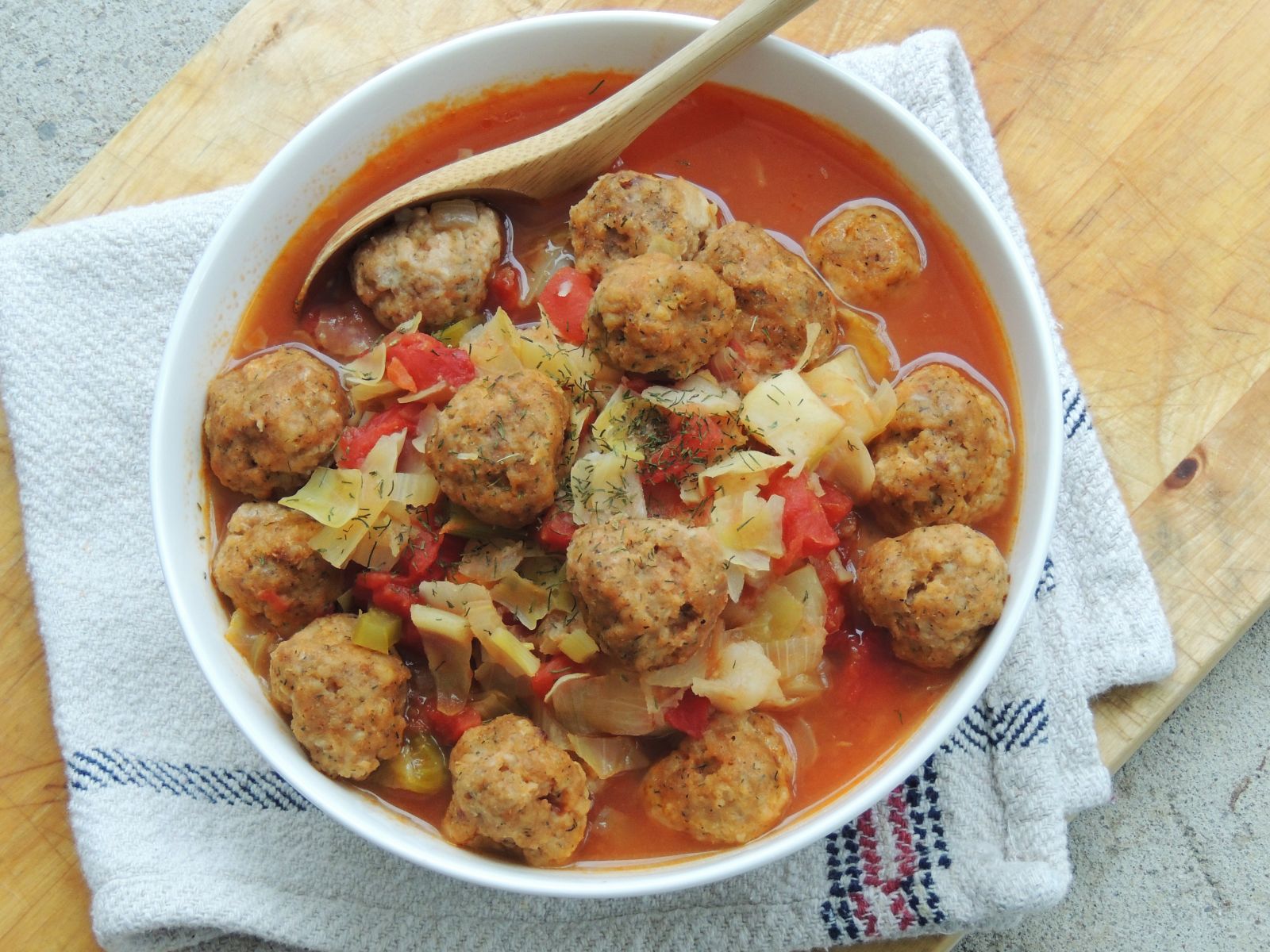
The original recipe for this Eastern European-style soup came from Professional Vegetarian Cooking by Ken Bergeron. I've simplified it a little to work for me. I know the pickles/pickle juice/mustard seem a little unusual, but don't skip them. They really give this soup an extra special something-something.
- 2 bay leaves
- salt & pepper to taste
- 1 tablespoon garlic minced
- 8 cups vegetable stock
- 2 sprigs thyme
- 1 1/2 cups onions small dice
- 1 1/2 cups celery small dice
- 1 1/2 cups carrots small dice
- 4 teaspoons oil
- 4 cups cabbage diced
- 2-3 cups potatoes peeled and 1/2-inch dice
- 1/2 cup dill pickles minced
- 1/2 cup dill pickle brine
- 1 tablespoon prepared mustard (i use a spicy polish mustard that provides a nice kick, but i think any kind would work.)
- 2 tablespoons fresh dill weed minced
- 1/4 cup parsley minced
- 1/2 cup dry potato flakes optional
- Carbohydrate 37.0121917688416 g
- Cholesterol 0 mg
- Fat 7.53222675000672 g
- Fiber 3.68455001422307 g
- Protein 2.71054175008548 g
- Saturated Fat 1.0103227500012 g
- Serving Size 1 1 Serving (1282g)
- Sodium 4787.20370574938 mg
- Sugar 33.3276417546185 g
- Trans Fat 0.422216275002031 g
- Calories 216 calories
Step-by-step
- Saute the onions celery, and carrots in the oil over medium heat for 10 minutes.
- Add the garlic, potatoes, cabbage, salt and pepper. Continue to saute for another 10 minutes over medium-low heat.
- Add the remaining ingredients. Bring to a boil and then simmer for 20 minutes (or until the potatoes are tender).
- At this point, you can season the soup and serve it as is. Or if you prefer a thicker soup, you can put 3 cups of the soup solids & 2 cups of the broth into a blender. Puree & then return to the soup. Bring the soup back to a simmer. Stir in the dry potato flakes to thicken the soup. Season to taste.
- Pour soup into bowls and garnish with chopped parsley or dill.
- NOTE: If you like, you can puree all of the soup to make it lighter for a first course. If the soup is going to stand on its own, leave it a little on the chunky side.
Unlike clear broths built on a standard chicken or beef foundation, this style of Eastern European soup relies on lactic acid and root starches for its structural identity. Two primary technical errors compromise this preparation: inconsistent vegetable sizing and premature acid introduction. Dicing the carrots, celery, onions, and potatoes to a uniform half-inch ensures they soften simultaneously during the initial ten-minute sweat rather than yielding some raw centers alongside mushy edges. Patience during the mirepoix phase matters; allowing the onions and carrots to sweat over medium heat for a full ten minutes builds foundational savory depth before any stock enters the pot. Delaying the pickle brine and mustard additions until after the potatoes approach tenderness prevents pectin from binding prematurely, which would otherwise keep the tubers hard regardless of boiling time. Testing doneness requires no thermometer; pressing a potato cube against the side of the pot with a spoon should yield a clean, uniform resistance without a hard core. Starchy varieties like Russets will break down faster during blending, whereas waxy cultivars retain structural integrity if a chunkier final texture is desired. Incorporating dried potato flakes offers a reliable thickener at the final stage without altering the vegetal profile of the stock, provided they are whisked thoroughly to prevent clumping. Residual warmth degrades fresh dill quickly, so reserve the minced herbs for the final plating rather than boiling them in the broth.



