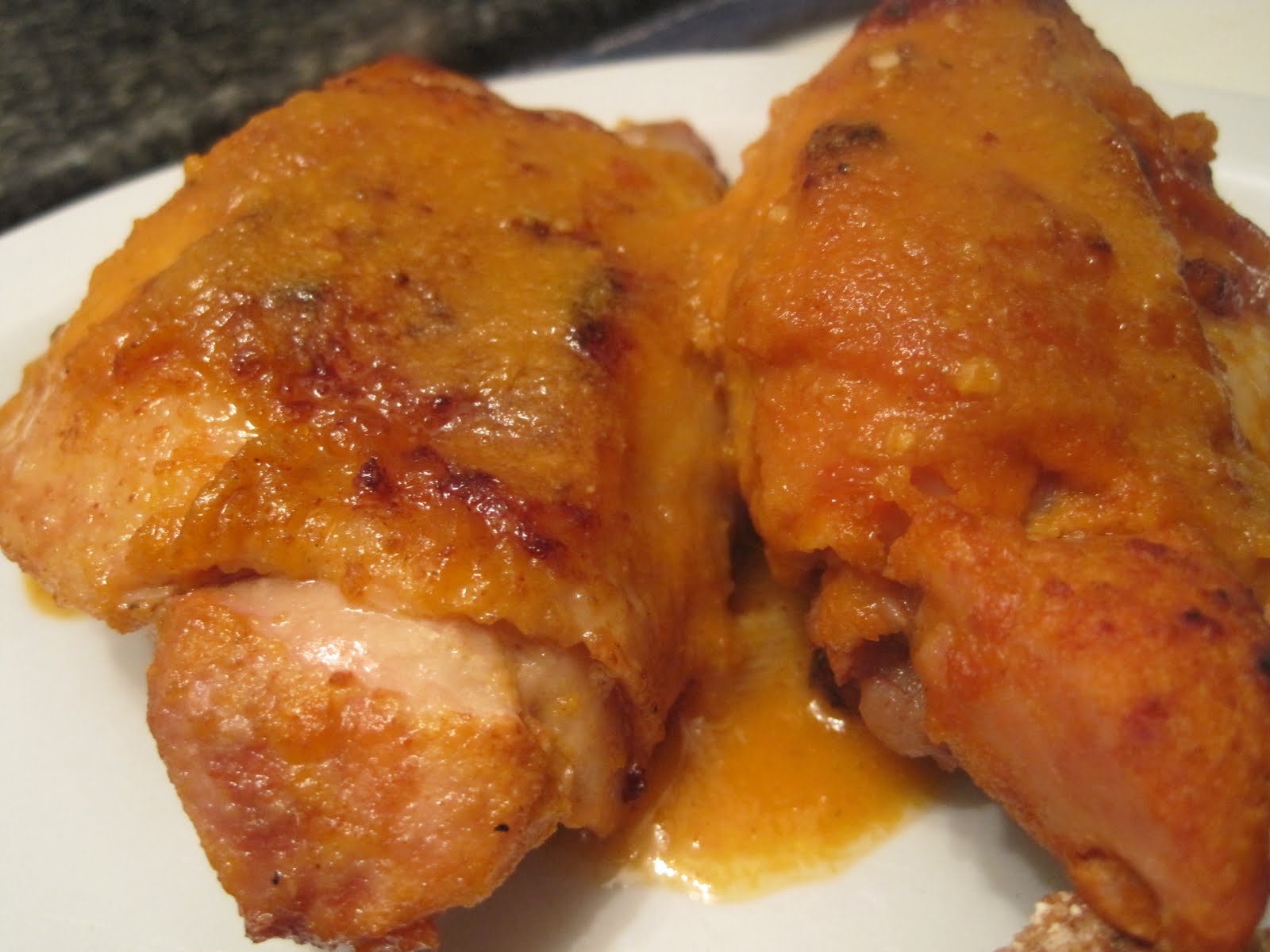
Crock pot chicken
- Carbohydrate 44.0947901011297 g
- Cholesterol 142.128 mg
- Fat 25.88379775 g
- Fiber 0.101577499608677 g
- Protein 29.3602367500648 g
- Saturated Fat 7.4261821 g
- Serving Size 1 1 Serving (272g)
- Sodium 882.450058334197 mg
- Sugar 43.993212601521 g
- Trans Fat 1.6483591 g
- Calories 526 calories
Step-by-step
- Sprinkle chicken with pepper and salt.
- Place in broil pan and broil 3-4 min each side.
- Transfer chicken to crockpot.
- In small bowl combine the rest of the ingredients and pour over chicken.
- Stir to coat.
- Cover and cook 4-5 hours on low or until meat is tender.
Honey acts as the primary humectant and browning agent in this preparation, drawing moisture toward the surface while fueling the Maillard reaction under high heat. Because monosaccharides like fructose caramelize at lower temperatures than sucrose, watch the skin closely during the preliminary broiling phase to prevent acrid carbonization.
Swapping condiments alters the moisture balance significantly. Substituting the honey with maple syrup introduces excess water content, which thins the barbecue sauce and reduces viscosity by roughly fifteen percent. To correct this without altering flavor profiles, reduce the liquid volume or introduce one teaspoon of tomato paste as a binding agent.
Bone-in poultry releases collagen during prolonged thermal processing. Cooking the meat for four to five hours at low heat melts this connective tissue into gelatin, yielding a silky sauce texture. Bone also acts as a thermal buffer, slowing heat penetration and preventing the surrounding muscle fibers from tightening prematurely.
Batch adjustments require careful scaling of viscous liquids. Doubling the sauce components prevents adequate steam venting inside standard six-quart cookers, resulting in stewed rather than glazed meat. Leftovers maintain optimal food safety parameters for up to four days when stored below 40 degrees Fahrenheit in sealed glass containers.


