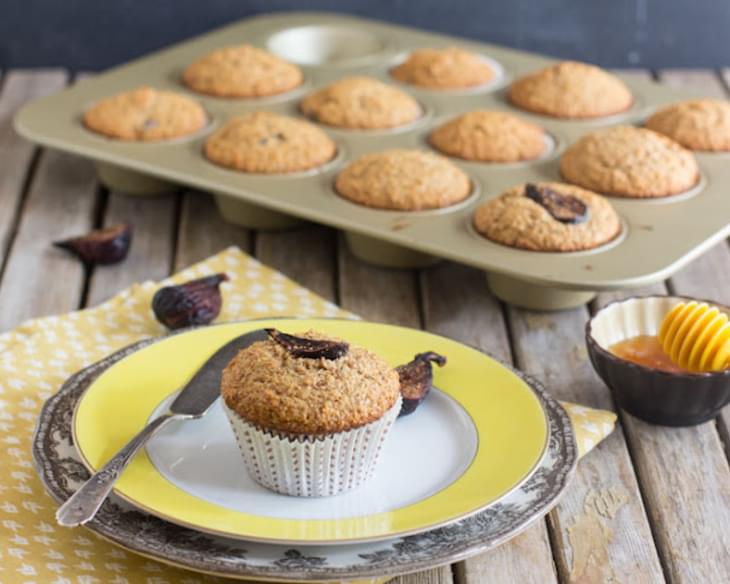
Very moist and nutritious
- Carbohydrate 337.366525 g
- Cholesterol 1189.3125 mg
- Fat 78.177975 g
- Fiber 25.8894995952956 g
- Protein 69.3443 g
- Saturated Fat 38.9755025 g
- Serving Size 1 1 Dozen (1079g)
- Sodium 2354.085 mg
- Sugar 311.477025404704 g
- Trans Fat 9.07770250000001 g
- Calories 2225 calories
Step-by-step
- Pre heat oven to 400 degrees. Spray bottoms of muffin pans or use muffin baking cups.
- In a small bowl, combine flour, baking soda, and salt and set aside.
- In another bowl mix fruit and bran and add boiling water set aside.
- Using an electrick mixer; cream together sugar and butter; beat in eggs one at a time. Alternately add flour and buttermilk beating well after each addition. Beat in soaked bran and fruit mixture. put batter in muffin tins and bake for approximately 20 minutes delicious warm or cold.
Can these quantities be halved when baking for a smaller household without altering the structural integrity of the batter? Scaling down requires dividing volumetric measurements carefully, yet eggs present a challenge since separating two whole eggs evenly into a smaller batch is impossible unless beaten first and weighed on a digital scale to approximately fifty grams per half-portion. Understanding the underlying chemistry of bran absorption ensures that altering batch sizes never compromises texture.
- Soaking the bran and dried fruit in boiling water gelatinizes the starches and softens the fibrous seed coats before they enter the batter, which prevents the dry components from aggressively competing with the flour for free moisture during baking.
- Creaming the granulated sugar and room temperature butter at a moderate speed incorporates microscopic air pockets that expand alongside the carbon dioxide released when baking soda reacts with the acidic buttermilk.
- Preheating the oven to 400 degrees Fahrenheit provides an immediate thermal shock necessary for rapid oven spring, translating to a domed top rather than a flat, dense muffin.
- Overmixing the batter after adding the flour leads to excessive gluten development, transforming tender crumb structures into tough, rubbery tunnels.
Precision regarding hydration times dictates whether the final product remains moist over a three-day storage window at room temperature. Proper execution of the creaming method guarantees optimal aeration without requiring chemical leavening agents beyond standard baking soda.


