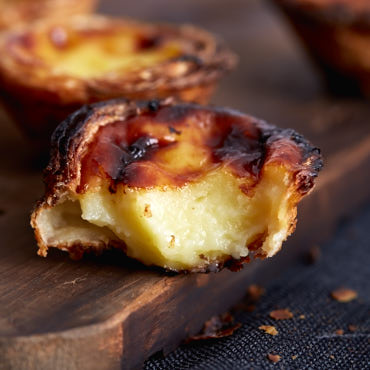
Try this Portuguese Custard Tarts recipe.
- 1/2 teaspoon pure vanilla extract
- 3 tablespoons all-purpose flour
- 2/3 cup water
- 1/4 teaspoon sea salt
- 1 cinnamon stick
- cinnamon (optional)
- 1 1/3 cups granulated sugar
- powdered sugar (optional)
- for the dough
- 2 cups minus 2 tablespoons all-purpose flour
- 3/4 cup plus two tablespoons water
- 1 cup (227 g / 8 0z) unsalted butter room temperature, stirred until smooth
- for the custard
- 1 1/4 cups milk divided
- 6 large egg yolks whisked
- Carbohydrate 1.75292952808356 g
- Cholesterol 6.23333333439002 mg
- Fat 2.3092757145825 g
- Fiber 0.142368901582626 g
- Protein 0.706226044825399 g
- Saturated Fat 1.33814550658602 g
- Serving Size 1 1 Serving (30g)
- Sodium 43.5298771574966 mg
- Sugar 1.61056062650093 g
- Trans Fat 0.273529913365984 g
- Calories 30 calories
Step-by-step
- To make the dough, place the flour, salt, and water in the bowl of a stand mixer fitted with a hook. Mix for about 30 seconds until soft and pillowy dough forms that cleans the side of the bowl.
- Place the dough on a generously floured work surface. Pat the dough into a 6-inch square using a pastry scraper. Sprinkle with flour, cover with plastic wrap, and let the dough rest for 15 minutes.
- Roll the dough into an 18-inch square. Use the scraper to lift the dough and add flour underneath to avoid the dough sticking. Brush excess flour off the top of the dough, trim any uneven edges, and using a small offset spatula dot and then spread the left two-thirds of the dough with a little less than one-third of the butter to within 1 inch of the edge.
- Neatly fold over the unbuttered right third of the dough (using the pastry scraper to loosen it if it sticks), brush off any excess flour, then fold over the left third. Starting from the top, pat down the packet with your hand to release air bubbles, then pinch the edges closed. Brush off any excess flour.
- Turn the dough packet 90 degrees to the left so the fold is facing you. Lift the packet and flour the work surface. Once again roll out to an 18-inch square, then dot and spread the left two-thirds of the dough with one-third of the butter, and fold the dough as in steps 4 and 5.
- For the last rolling, turn the packet 90 degrees to the left and roll out the dough to an 18-by-21-inch rectangle, with the shorter side facing you. Spread the remaining butter over the entire surface.
- Using the spatula as an aid, lift the edge closest to you and roll the dough away from you into a tight log, brushing the excess flour from the underside as you go. Trim the ends and cut the log in half. Wrap each piece in plastic wrap and chill for 2 hours or preferably overnight.
- Now make the custard. In a medium bowl, whisk the flour and ½ cup of the milk until smooth. Set aside.
- Bring the sugar, cinnamon, and water to a boil in a small saucepan and cook until an instant-read thermometer registers 220°F (100°C). Do not stir.
- Meanwhile, in another small saucepan, scald the remaining 1 cup milk. Whisk the hot milk into the flour mixture.
- Remove the cinnamon stick then pour the sugar syrup in a thin stream into the hot milk-and-flour mixture, whisking briskly. Add the vanilla and stir for a minute until very warm but not hot.
- Whisk in the yolks, strain the mixture into a bowl, cover with plastic wrap, and set aside.
- Heat the oven to 550°F (290°C) with two baking stones inside for at least one hour. Remove the pastry from the refrigerator and roll it gently back and forth on lightly floured work surface until it’s about an inch in diameter and 15 inches long. Cut it into scant 1.25-inch pieces.
- Place the dough pieces cut-side down into each of the the 12 cups of the 12-cup aluminum muffin pan (each cup measuring about 2.5" by 1.5"). Let the dough pieces often several minutes until they become soft and pliable.
- Dip your thumbs into the water, then press straight down into the middle of the dough piece. Flatten it against the bottom of the cup to a thickness of about ⅛ inch, then smooth the dough up the sides and create a raised lip about ⅛ inch above the pan. The pastry sides should be thinner than the bottom.
- Fill each cup ¾ full with the slightly warm custard. Bake the tarts until the edges of the dough are frilled and brown, about 10-12 minutes.
- Remove from the oven and allow the tarts to cool a few minutes in the pan, then transfer to a rack and cool until just warm. Repeat the steps with the remaining dough and custard mix.
- Serve and enjoy. Optionally, sprinkle the tarts generously with powdered sugar, then cinnamon before serving.
A Housewife's Delight: Mastering the Art of Portuguese Custard Tarts
Oh, my sweet little tarts! There's nothing quite like the delicate crunch of perfectly baked pastry giving way to a creamy, subtly spiced custard filling. These Portuguese Custard Tarts, or pastéis de nata as they're known in Portugal, have become a weekend baking obsession for me. Forget store-bought pastries; the satisfaction of making these from scratch, the aroma filling my kitchen, the happy sighs of my family as they savor each bite – that's pure joy. And surprisingly, it's not as difficult as it looks. It just takes a little patience and a good recipe, of course!
Initially, the recipe seemed daunting. Those intricate folds in the pastry dough, the precise custard temperature, the searing hot oven... it all felt a bit intimidating. But I broke it down step-by-step, and each small victory – the perfectly formed dough, the smooth and luscious custard – built my confidence. Now, I find myself making these little wonders for every occasion – a special dinner party, a quiet Sunday afternoon tea, or even just to brighten a Tuesday. My secret? A good quality butter makes all the difference! It adds a depth of flavor that's simply unforgettable.
The Magic of the Dough: The secret to the perfect pastéis de nata lies in the dough. That flaky, slightly buttery crust is a work of art in itself. The process, involving repeated folding and chilling, might seem laborious, but it's essential for achieving that incredible texture. Think of it as a meditation – the rhythmic rolling and folding, a quiet moment in the bustling heart of my day. And trust me, the result is well worth the effort. The first bite is a revelation – a harmonious blend of crisp, buttery layers and a sweet, creamy center.
The Custard's Embrace: The custard, oh, the custard! It’s the creamy, comforting heart of the pastéis de nata. That subtle hint of cinnamon, the velvety smooth texture, the delicate sweetness – it’s pure perfection. Making the custard is remarkably easy; the hardest part is waiting for it to cool down before filling the pastry shells. But trust me, the anticipation is part of the pleasure. This creamy center is perfectly complemented by the crunchy shell, making it a heavenly experience that will leave you wanting more.
A Journey to Portugal (in my Kitchen): Making these tarts is more than just baking; it's a journey. It transports me, even if just for a little while, to the sun-drenched streets of Lisbon, to the aroma of freshly baked pastries wafting from a traditional pastelaria. And as I meticulously roll out the dough, whisk the custard, and watch them bake to golden perfection, I feel a sense of accomplishment, a sense of connection to a culinary tradition that spans centuries. It’s a recipe that’s passed down through generations, a story whispered in each perfectly formed tart.
Beyond the Recipe: This isn’t just about following instructions; it’s about embracing the process. It's about the joy of creating something beautiful and delicious, about sharing the fruits of your labor with loved ones. It's the warmth of a shared moment, the sweet taste of success, the feeling of accomplishment that lingers long after the last tart has been devoured. So, gather your ingredients, roll up your sleeves, and embark on your own culinary adventure. You might just surprise yourself with the joy of making these exquisite Portuguese Custard Tarts.
A Baker's Note: Don’t be afraid to experiment! Try adding a touch of lemon zest to the custard for a brighter flavor, or sprinkle some coarse sugar on top before baking for added crunch. The possibilities are endless. And remember, even if your first attempt isn't perfect, the journey itself is the most rewarding part. So, get baking, and savor every moment!
Serving Suggestions: These tarts are best served warm, straight from the oven. But they're equally delicious at room temperature, making them perfect for picnics, potlucks, or simply an afternoon treat. Serve them with a cup of strong coffee or a glass of sweet Portuguese wine for the ultimate indulgence.



