Mac & Cheese
Among the cardinal rules of macaroni and cheese, be clear on this: Youve got to have a bechamel -- which is really just milk, thickened with flour. Skip it and the cheese inevitably toughens and the grease breaks free. This recipe may not be the most simple way to make Mac & Cheese but it is the yummist!
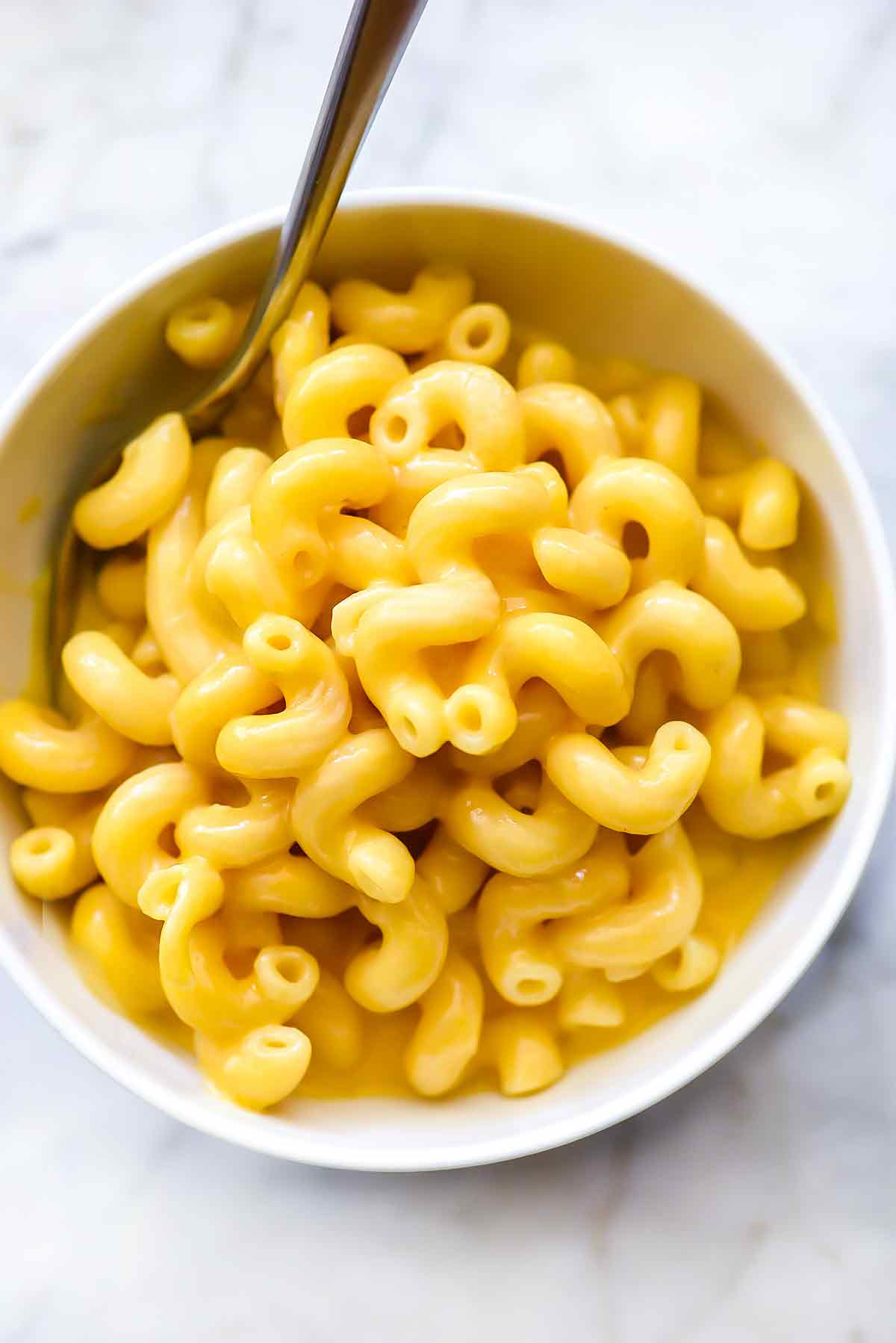
Among the cardinal rules of macaroni and cheese, be clear on this: Youve got to have a bechamel -- which is really just milk, thickened with flour. Skip it and the cheese inevitably toughens and the grease breaks free. This recipe may not be the most simple way to make Mac & Cheese but it is the yummist!
- 2 teaspoons salt
- 1/2 cup all purpose flour
- 8 tablespoons unsalted butter 1 stick
- 6 slices bread crust taken off
- 5 1/2 cups milk
- 1/4 teaspoons nutmeg
- 1/4 teaspoons fresh ground pepper
- 1/4 teaspoons cayenne pepper or to taste
- 4 1/2 cups sharp white cheddar cheese grated (about 18 ounces)
- 2 cups gruyere cheese grated (about 8 ounces)
- 1 pound elbow macaroni noodles or other small pasta shape
- Carbohydrate 45.2129470913603 g
- Cholesterol 95.5395833426322 mg
- Fat 32.2090841493105 g
- Fiber 1.96462233647937 g
- Protein 26.1324903166387 g
- Saturated Fat 19.4658071510252 g
- Serving Size 1 1 Serving (237g)
- Sodium 466.822375258215 mg
- Sugar 43.2483247548809 g
- Trans Fat 2.25796650257238 g
- Calories 576 calories
Step-by-step
- Heat oven to 375 degrees. Butter a 3-quart casserole dish; set aside. Place bread in a medium bowl. In a small saucepan over medium heat, melt 2 tablespoons butter (alternately, melt butter in the microwave). Pour butter into bowl with bread, and toss. Set breadcrumbs aside. Pull out 1 1/2 cups of grated cheddar, and 1/2 cup Gruyere, and reserve.
- Fill a large pot with water; bring to a boil. Add macaroni; cook 2 to 3 minutes less than manufacturer's directions, until the outside of pasta is cooked and the inside is underdone. (Different brands of macaroni cook at different rates; be sure to read the instructions.) Transfer macaroni to a colander, rinse under cold running water, and drain well. Set aside.
- In a medium saucepan set over medium heat, heat milk. In the same pot you used for boiling the pasta, melt remaining 6 tablespoons butter over medium heat. When butter bubbles, add flour. Cook, whisking, 1 minute.
- While whisking, slowly pour in hot milk. Continue cooking, whisking constantly, until the mixture bubbles and becomes thick.
- Remove pan from heat. Stir in salt, nutmeg, black pepper, cayenne pepper, 3 cups cheddar cheese, and 1 1/2 cups Gruyere. Stir reserved macaroni into the cheese sauce.
- Pour mixture into prepared dish. Sprinkle remaining 1 1/2 cups cheddar cheese, 1/2 cup Gruyere, and breadcrumbs over top. Bake until browned on top, about 30 minutes. If after 30 minutes, it's not browned to your liking, broil the topping rather than leaving it in the oven, which may cause the pasta to overcook and sauce to dry out. Transfer dish to a wire rack to cool 5 minutes; serve hot.
Deep golden breadcrumbs shatter under the spoon to reveal a glossy, molten mantle of sharp cheddar and nutty Gruyere clinging to tender tubes of pasta. Achieving this texture relies entirely on the initial cooked starch matrix of the bechamel sauce, which emulsifies the dairy fats and prevents the cheese proteins from seizing into rubbery clumps. Cooking the roux for precisely one full minute removes raw flour flavors without coloring the butter. Heating the milk before whisking it into the roux prevents thermal shock and eliminates lumps before they form.
Managing Make-Ahead Storage and Reheating
Baked pasta dishes handle refrigeration and freezing exceptionally well when managed properly. Assemble the casserole completely up to the baking step, cover tightly with plastic wrap pressed directly onto the surface, and refrigerate for up to 48 hours. For longer storage, wrap the unbaked dish in heavy-duty aluminum foil and freeze for up to two months. Thaw frozen casseroles completely in the refrigerator for 24 hours before baking at 375 degrees Fahrenheit. Unbaked chilled dishes require an additional ten to fifteen minutes in the oven to reach proper internal heat.
- Substitute whole milk with half-and-half at a one-to-one ratio for a richer sauce, though extra liquid may be necessary if the sauce thickens too rapidly during whisking.
- Underboil the elbow macaroni by two to three minutes in heavily salted water to compensate for the continued softening that occurs during the final thirty minutes in the oven.
- Broil the surface for sixty seconds at the end of the baking cycle if the breadcrumbs lack sufficient color, avoiding prolonged oven exposure that dries out the pasta underneath.


