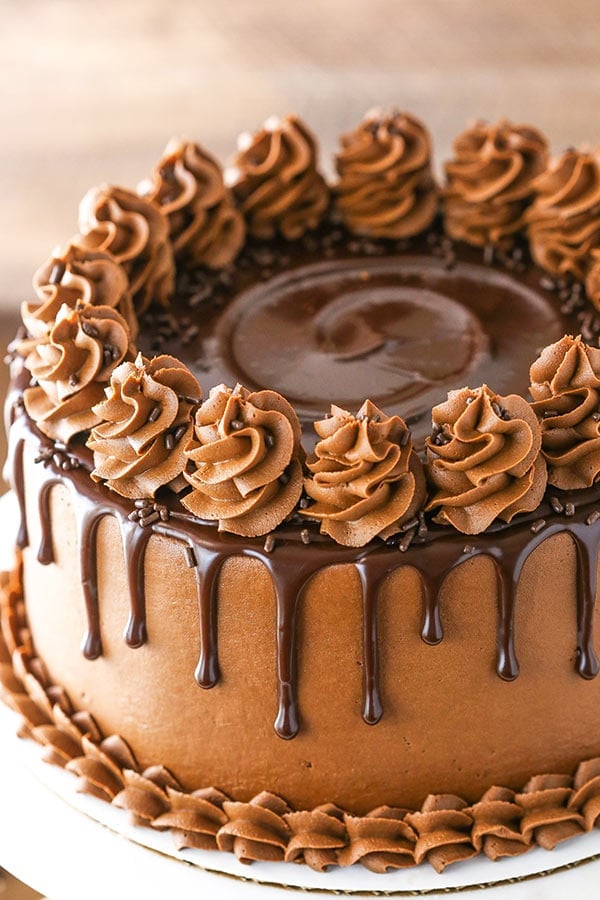
Dalton
- Carbohydrate 327.038950014141 g
- Cholesterol 1841.29000297677 mg
- Fat 744.634821643999 g
- Fiber 0.77700001001358 g
- Protein 24.3472700227462 g
- Saturated Fat 391.389290818862 g
- Serving Size 1 1 Serving (1730g)
- Sodium 118031.051335063 mg
- Sugar 326.261950004128 g
- Trans Fat 48.3510171018629 g
- Calories 7936 calories
Step-by-step
- in a large bowl sift 2 cups of flour and 2 cups of sugar
- In a sauce pan mix 1 cup of margarine, 1 cup of water and 4 T cocoa
- Bring to a boil and pour over flour and sugar mixture, stir
- mix in the 1/2 cup of buttermilk with the 1 T baking soda dissolved in it
- Add 2 eggs and 1 t vanilla
- Mix all ingredients will and pour into a 13 x 9 metal pan
- bake at 400 for 35-40 mins
- Mix all of the ingredients in a saucepan and bring to a boil
- Remove from heat and slowly add one box of sugar, 1 T vanilla and 1 cup chopped nuts
- Beat well
The raw ingredient totals hide a classic cooked-syrup mixing technique that directly impacts the crumb structure of the final cake. Boiling fat and liquid together before incorporating them into dry flour gelatinizes the starches partially, yielding a remarkably moist texture that holds up well over multiple days. Historical variations of this sheet-style confection often relied on hot water or coffee to bloom the cocoa powder thoroughly, releasing fat-soluble flavor compounds trapped in the solids.
Adjusting quantities upward or downward requires caution because baking soda reacts directly with the acidic buttermilk provided in the formula. Halving the batch works reliably in an eight-inch square metal pan, provided the baking time is reduced by roughly ten minutes to prevent dry edges. Doubling the proportion for larger gatherings demands two separate mixing bowls rather than one oversized vessel to ensure the boiling fat mixture incorporates evenly without gluten overdevelopment.
Baking at 400 degrees Fahrenheit creates rapid initial leavening as the chemical agents activate within the dense batter. Metal pans conduct heat faster than glass alternatives, promoting a uniform rise and preventing the center from sinking before the structural protein coagulates around the thirty-five minute mark. Testing for doneness requires a wooden skewer inserted into the center to emerge clean without wet batter clinging to the wood.
Leftover portions kept at room temperature retain moisture efficiently due to the high fat content in both the cake base and the boiled fudge icing. Storing slices in an airtight container prevents the crumb from drying out during the first forty-eight hours after baking. Texture softens further by the second day as fats migrate fully through the flour matrix, making day-old slices preferable to fresh ones.


