Zupa krem z pieczonych pomidorow i papryki
Try this Zupa krem z pieczonych pomidorow i papryki recipe, or contribute your own.
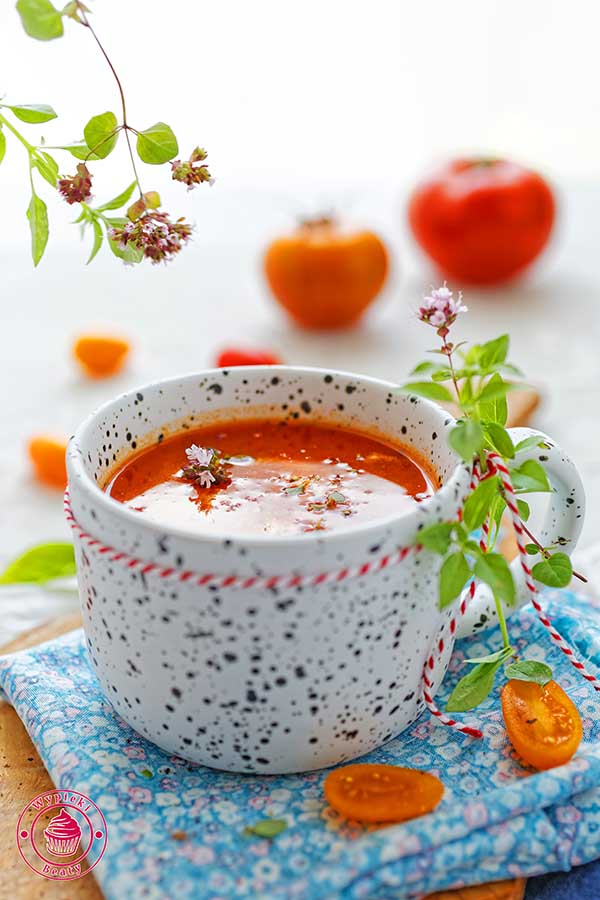
Try this Zupa krem z pieczonych pomidorow i papryki recipe, or contribute your own.
- Carbohydrate 0 g
- Cholesterol 0 mg
- Fat 0 g
- Fiber 0 g
- Protein 0 g
- Saturated Fat 0 g
- Serving Size 1 1 Recipe (500g)
- Sodium 0 mg
- Sugar 0 g
- Trans Fat 0 g
- Calories 0 calories
Step-by-step
- Myjemy pomidory i papryke. Przekladamy do zaroodpornego naczynia. Dodajemy cala glowke czosnku. Wszystko delikatnie solimy, dodajemy liski swiezego tymianku i skrapiamy olejem. Rozgrzewamy piekarnik do 180 stopni. Pieczemy okolo 30 minut. Nastepnie odstawiamy do ostygniecia.
- Papryke obieramy i usuwamy jej gniazda nasienne. Cebule kroimy i szklimy na malej ilosci oleju. Przekladamy razem z pomidorami i papryka do garnka. Dodajemy bulion, papryczki, 3 zabki upieczonego czosnku oraz przyprawy.
- Miksujemy i gotujemy.
- By osiagnac konsystencje kremu, przecieramy przez sito. Doprawiamy sola i pieprzem. Zamiast typowych grzanek podajemy z platkami kokosowymi.
Roasting Roma tomatoes and red bell peppers at 180 degrees Celsius concentrates their natural sugars while driving off excess moisture, leaving behind a thick vegetable base with deeply caramelized edges. This thermal dehydration is essential for a rich puree because raw tomatoes contain too much water to yield a velvety mouthfeel on their own. Passing the blended mixture through a fine-mesh sieve removes any lingering skins and fibrous bits from the chili peppers and thyme stems, resulting in a silky emulsion.
Scaling the Recipe for Crowds
Multiplying this preparation requires careful attention to pan capacity and oven thermodynamics. Crowding a roasting dish traps steam around the vegetables, causing them to boil in their own juices rather than roast and caramelize. Divide the tomatoes, peppers, and garlic across multiple sheet pans if scaling beyond two batches, ensuring at least an inch of space remains between each piece. When increasing the vegetable mass, scale the vegetable broth cautiously; adding too much liquid at the blending stage creates a watery soup that fails to coat the back of a spoon.Blending and Texture Control
Thermal expansion makes blending hot liquids hazardous. Allow roasted vegetables to cool slightly before transferring them to the jar of a blender, and remove the small center cap from the lid, covering the opening with a folded kitchen towel to let steam escape without pressure buildup. Incorporating the toasted coconut flakes at the end provides a contrasting crunch and fat content that replaces traditional dairy finishes. Process the soup on high speed for at least sixty seconds to thoroughly shear the vegetable fibers against the blade vortex.Storage and Reheating Mechanics
Prepared soup stores safely in airtight glass containers in the refrigerator for up to four days. Freezing is also viable for up to three months, though high-water-content vegetables like peppers can release slight moisture upon thawing, requiring a brief re-blend or simmer to restore uniformity. Reheat individual portions gently over medium-low heat on the stovetop, stirring frequently to prevent scorching at the base of the pot.


