Glazed Lemon Bread
Very lemony, very tasty and very easy to make. My mother once won a contest with her Glazed Lemon Bread recipe. It is a wonderfully moist bread, saturated with lemony flavor, that's great for breakfast, as a dessert or just as a snack. I prefer my mother's recipe over other lemon bread recipes because the glaze is allowed to saturate the bread all the way through...also, heating the glaze to melt the sugar helps it go on smoothly, unlike the usual method which is grainy from unmelted sugar.
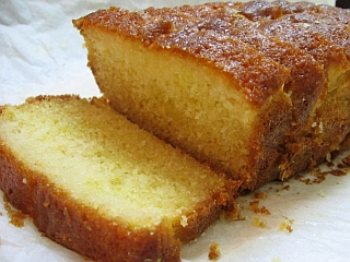
Very lemony, very tasty and very easy to make. My mother once won a contest with her Glazed Lemon Bread recipe. It is a wonderfully moist bread, saturated with lemony flavor, that's great for breakfast, as a dessert or just as a snack. I prefer my mother's recipe over other lemon bread recipes because the glaze is allowed to saturate the bread all the way through...also, heating the glaze to melt the sugar helps it go on smoothly, unlike the usual method which is grainy from unmelted sugar.
- 1/2 teaspoon vanilla extract
- 1 teaspoon salt
- 1 cup sugar
- 1 1/2 cups all-purpose flour
- 1 tablespoon baking powder
- 2 large eggs beaten
- 1/2 cup whole milk
- peel of 1 lemon grated
- 1/2 cup unsalted butter (1-stick), melted
- juice of 1 large lemon
- -- lemon glaze --
- juice of 1 large lemon
- 1/4 cup sugar (up to 1/3 cup) (depending on amount of lemon juice)
- Carbohydrate 101.313494445036 g
- Cholesterol 262.452777777778 mg
- Fat 16.08919 g
- Fiber 0.925344460137956 g
- Protein 9.3999844444469 g
- Saturated Fat 8.302105 g
- Serving Size 1 1 Serving (190g)
- Sodium 466.628666860308 mg
- Sugar 100.388149984898 g
- Trans Fat 1.72481066666667 g
- Calories 575 calories
Step-by-step
- Adjust an oven rack to the lower-middle position and heat the oven to 350 degrees F. Grease the bottom and sides of a 9- by 5-inch loaf pan; dust with flour, tapping out the excess.
- Whisk the flour, salt, sugar, lemon peel and baking powder together in a large bowl; set aside.
- In a medium bowl beat eggs with milk, butter, lemon juice and vanilla. Add egg mixture to the dry ingredients and stir until just combined. Scrape the batter into the prepared loaf pan.
- Bake until the loaf is golden brown and a tester or toothpick inserted in the center comes out clean, about 45 to 50 minutes. (Do not remove the bread from the pan.)
- To prepare Lemon Glaze: While the bread is baking, combine lemon juice and sugar in a small saucepan, stir over medium heat until sugar is dissolved.
- After removing the bread from the oven (and still in the pan), use a long wooden skewer to poke numerous holes in hot bread, piercing all the way to the bottom. Slowly drizzle hot glaze over bread and baste top several times. Allow time between bastings for glaze to soak in. Let bread cool in pan on a wire rack until glaze is set, about 20 minutes, then remove from pan and let cool completely on rack.
Quick breads containing high sugar and fat percentages freeze exceptionally well for up to three months if wrapped tightly in plastic and aluminum foil. Thawing frozen baked goods inside the refrigerator prevents moisture condensation from compromising the exterior crust. Heating slices briefly in a 350 degrees F oven restores the crumb structure without drying out the interior. Fresh citrus provides bright aromatic oils that shelf-stable bottled juices lack entirely. Zesting requires grating only the vibrant yellow epidermis while leaving the bitter white pith behind on the fruit.
Freezing and Reheating Strategy
Bakes intended for later consumption should be frozen before applying the final surface glaze to maintain proper structural integrity. Wrapping the cooled loaf in plastic wrap followed by heavy-duty foil protects against freezer burn during storage. Reheating individual slices on a parchment-lined sheet pan for eight minutes at 350 degrees F revives the freshly baked texture. Applying a fresh batch of warmed citrus syrup post-thaw replicates the original saturation method accurately.
Fresh Versus Preserved Citrus
Fresh lemons supply volatile essential oils that impart distinct aromatic qualities absent in reconstituted alternatives. Bottled juice undergoes pasteurization that neutralizes delicate flavor compounds essential for vibrant baked goods. Zest contains the highest concentration of citrus oils in the entire fruit, making fresh grating non-negotiable for optimal results. Substituting bottled juice alters the acid-to-sugar balance required for the proper chemical reaction with baking powder.


