Seafood, Sausage, and Chicken Paella
After eating Paella at a restaurant several years ago, I went on a quest to find a recipe as good as what I remembered eating that first time. This is the evolution of many different recipes and experiments, but it is my favorite.
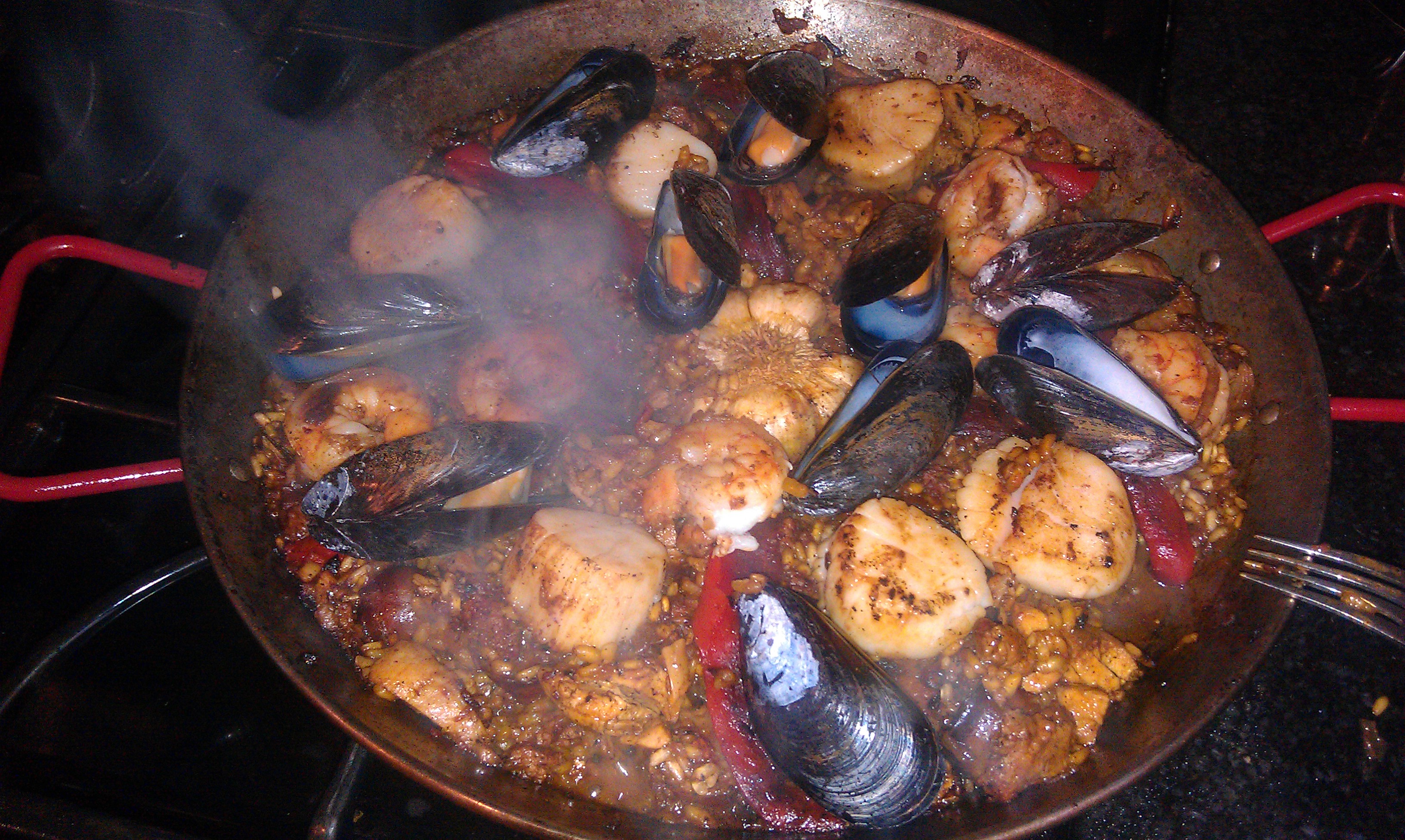
After eating Paella at a restaurant several years ago, I went on a quest to find a recipe as good as what I remembered eating that first time. This is the evolution of many different recipes and experiments, but it is my favorite.
- olive oil
- 4 cups chicken broth
- pinch saffron
- 1 small head garlic plus 4-6 cloves, thinly sliced
- 1 red bell pepper cored, seeded and cut into 1 inch strips
- 1 medium onion grated on the large side of grater
- 1 ripe tomato grated on the large side of grater, discard skin
- 1 large spring fresh rosemary
- 1 1/2 cups arborio or paella rice
- 2 links andouille or chorizo sausage
- 2 links hot italian sausage
- 4 boneless, skinless chicken thighs
- 1 pound shrimp/scallops/mussels or whatever seafood you like.
- Carbohydrate 3.92375 g
- Cholesterol 38.18 mg
- Fat 2.9247 g
- Fiber 0.974166666269302 g
- Protein 10.4346166666667 g
- Saturated Fat 0.582355 g
- Serving Size 1 1 Serving (332g)
- Sodium 661.08 mg
- Sugar 2.9495833337307 g
- Trans Fat 0.670066666666667 g
- Calories 85 calories
Step-by-step
- In a saucepan, bring the broth to a boil; reduce heat to a simmer and cover.
- Put the saffron on a 3 inch strip of aluminum foil, fold up the foil to make a square packet, and set the foil directly on the lid of the simmering broth for about 15 minutes.
- Unfold the packet, transfer the saffron to a mortar (or a small bowl), add a pinch of salt, and use the pestle (or the back of spoon) to crush the saffron.
- Add about 1/2 cup of the hot broth to the saffron and let the saffron steep for about 15 minutes.
- Add the saffron-infused liquid back to the broth.
- Taste; the broth should be well seasoned, so add more salt if necessary.
- Remove from the heat until ready to add to the rice.
- Remove the papery skins around the top of the head of garlic, trim the top and make a shallow cut around the equator to speed cooking.
- Set a 14 inch paella pan over medium-high heat and add olive oil.
- When oil is hot, add the chicken and head of garlic.
- Cook until chicken is done and golden, 10-15 minutes.
- The oil may splatter and you may need to turn down the heat.
- Transfer chicken to platter.
- The head of garlic stays in the pain through the whole cooking process.
- Reduce the heat to low and add red pepper strips to pan.
- Saute the red pepper slices slowly until they are very limp 20-25 minutes.
- When the pepper is done transfer the pieces to a plate, cover with foil, and set aside.
- Add the sausages and cook until done then remove to same platter as chicken.
- Repeat with shrimp and scallops if using.
- If there is more than 1 Tbsp of oil in the pan, pour out the excess.
- Increase the heat to medium and saute the onion and slices garlic until the onion is soft.
- Add the grated tomato.
- Season well with salt and saute until the water from the tomato has cooked out and the mixture, called a sofrito, has darkened to a burgundy color and is a very thick puree.
- If you are not cooking the rice immediately, remove the pan from the heat.
- About half an hour before you are ready to eat, bring the broth back to a simmer and set the pan with the sofrito over your largest burner on medium heat, noticing if the pan sits level.
- When the sofrito is hot, add the rice, stirring until it is transluscent, 1 to 2 minutes.
- Spread out the rice (it should just blanket the bottom of the pan), distribute the chicken, and sausages around the pan.
- Increase the heat to medium high and pour in 3 cups of the simmering broth.
- As the broth comes to a boil, lay the peppers in the pan, starburst like and push the head of garlic to the center.
- Cook until the rice begins to appear above the liquid, 6-8 minutes, rotating the pan over one and two burners as necessary to distribute the heat to all areas.
- Add the spring of rosemary and reduce the heat to medium low.
- Continue to simmer, rotating the pan as necessary, until the liquid has been absorbed and the rice is al dente, another 8-10 minutes.
- To check for doneness, taste a grain just below the top layer of rice -- there should be a very tiny white dot in the center.
- If the liquid is absorbed but the rice is not done, add a bit more hot broth to the pan and cook a few minutes more.
- Add whatever seafood you are using, cover the pan with foil and cook gently for another 2 minutes, which will help to ensure that the top layer of rice is evenly cooked.
- With the foil still in place, increase the heat to medium high and, turning the pan, cook until the bottom layer of rice starts to caramelize, creating the socarrat, 1-2 minutes.
- You may hear the rice crackling, which is fine, but if it starts burning, remove the pan from the heat immediately.
- To check for socarrat, peel back the foil and use a spoon to feel for a slight crust on the bottom of the pan.
- Remove the pan from the heat and let the paella rest, still covered, 5-10 minutes.
When preparing a multi-protein dish on a strict grocery budget, managing ingredient costs requires intentional pairing. Because this combination of chicken, sausage, and seafood yields six hearty portions, the accompanying side dishes should remain simple and inexpensive to balance the meal without inflating the food bill. A crisp green salad dressed simply with lemon juice and olive oil cuts through the richness of the pork sausage and chicken thighs. Alternatively, grilled rustic bread rubbed with raw garlic offers an inexpensive vessel for soaking up any leftover seasoned broth.
Achieving the right consistency relies entirely on proper heat distribution and moisture control. Toasting the Arborio or paella rice in the pan until translucent coats the grains in fat, which prevents them from dissolving into mush as the broth absorbs. Grating the tomato on the large holes of a box grater leaves the bitter skin behind while extracting maximum pulp for the sofrito, a foundational step that requires cooking down until the liquid evaporates entirely and the mixture darkens to a deep burgundy. Do not stir the rice once the broth is added, as agitation releases excess starches that ruin the distinct grain separation.
Forming the socarrat—the prized bottom crust—requires careful listening at the end of the cooking time. When the liquid is absorbed, brief exposure to medium-high heat produces an audible crackling sound, signaling that the starches are caramelizing against the metal. Resting the pan covered for five to ten minutes before serving redistributes remaining moisture evenly throughout the grains.


