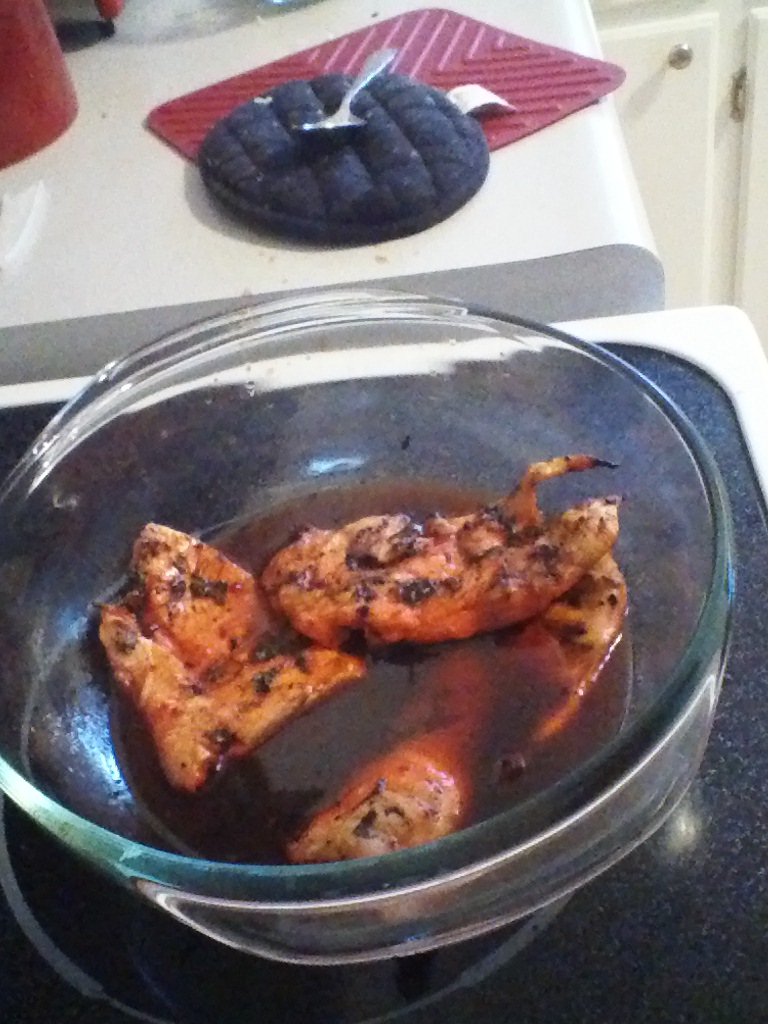
Spice up your chicken with this hot-sweet recipe!
- Carbohydrate 0.165308750003834 g
- Cholesterol 68.44 mg
- Fat 1.48231875 g
- Fiber 0.0953749983757734 g
- Protein 27.307784375 g
- Saturated Fat 0.390551875 g
- Serving Size 1 1 Serving (144g)
- Sodium 78.0810625001917 mg
- Sugar 0.0699337516280604 g
- Trans Fat 0.396116875 g
- Calories 135 calories
Step-by-step
- Preheat grill. Stir jelly, cilantro, vinegar and chili in heavy medium saucepan over low heat until glaze comes to simmer. Reserve 1/4 cup glaze in saucepan; pour remaining glaze into small bowl.
- Trim chicken and pound to an even ½ inch thickness. Brush chicken all over with glaze from bowl. Set pan of reserved glaze at edge of barbecue to rewarm. Grill chicken 3 minutes on one side; brush with glaze from bowl. Using tongs, turn chicken over. Grill 3 minutes on second side; brush with glaze from bowl. Turn chicken again and grill until cooked through, about 2 minutes longer. Transfer chicken to plates. Spoon warm glaze in saucepan over and serve.
Hot pepper jelly contains a high concentration of sugar, which means it will char on hot grill grates long before raw poultry finishes cooking through in the center. Cooks frequently ruin this dish by basting too early, causing the fruit sugars to blacken into a bitter crust before the internal temperature reaches a safe 165 degrees Fahrenheit. Separating the glaze into two portions protects the mixture from cross-contamination and allows safe management of the sweet sauce. Simmering the jelly with white wine vinegar cuts the cloying sweetness while loosening the thick pectin structure into a fluid consistency that coats meat evenly.
Pounding boneless breasts to a uniform half-inch thickness remains non-negotiable for success here, as natural tapering causes thin edges to dry out while thick lobes remain undercooked. Maintaining medium-low heat zones on the grill provides the necessary buffer for sugar-heavy marinades. When grilling proteins without a digital thermometer, pressing the thickest part of the breast yields a firm resistance rather than a soft, squishy give, indicating the proteins have fully coagulated. Reserve the untouched portion of the glaze in the saucepan to warm gently at the edge of the heat source, ensuring a clean, vibrant finishing sauce untouched by raw chicken contact.


