Best Smoked Prime Rib
Ok folks, this is a recipe that you want to keep in your stockpile. I have been cooking this for large groups and family events for many many years now. It REQUIRES a smoker. Not one of those big fancy chrome plated things. Just a regular Lil Chief or Big Chief. Being from Alaska, we know how to smoke and preserve meat, but this is my specialty. It will take you almost 18 hours to do, depending on how smokey you want it... but damn it's worth the wait!
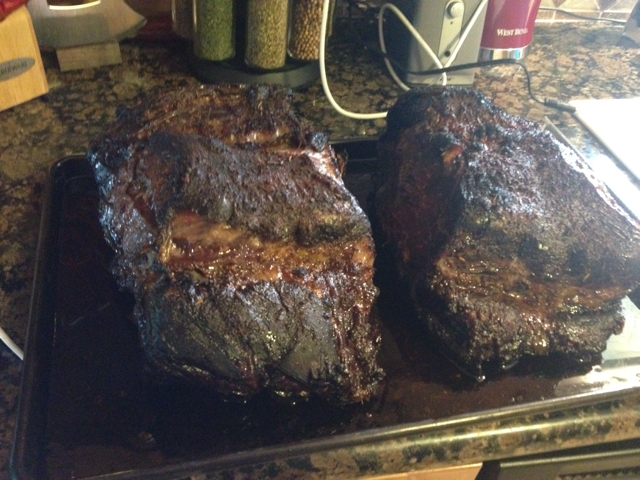
Ok folks, this is a recipe that you want to keep in your stockpile. I have been cooking this for large groups and family events for many many years now. It REQUIRES a smoker. Not one of those big fancy chrome plated things. Just a regular Lil Chief or Big Chief. Being from Alaska, we know how to smoke and preserve meat, but this is my specialty. It will take you almost 18 hours to do, depending on how smokey you want it... but damn it's worth the wait!
- Carbohydrate 0.273660833333333 g
- Cholesterol 476.271833333333 mg
- Fat 198.553062333333 g
- Fiber 0.0443083329399427 g
- Protein 113.939542 g
- Saturated Fat 82.12794 g
- Serving Size 1 1 Serving (682g)
- Sodium 411.112733333333 mg
- Sugar 0.229352500393391 g
- Trans Fat 21.9792745833334 g
- Calories 2281 calories
Step-by-step
- Now I know that 18 hours sounds like a lot of time, but most of the time it's under smoke, so you do have to check on it every hour or so to make sure you are good on wood chips.
- Start out by taking the rib out of the fridge, Trim most, but not all of the excess fat off the external sides, save fat if you are the type to make their own au jus. Rub worc. sauce over all sides. (I can never spell it right either) Followed by horseradish, then all dry ingredients. (feel free to go by taste, but I tend to go liberal on this just to give the extra bite to the skin)
- At this point... Open a beer. You've worked hard... you deserve it.
- Once the rib is up to room temperature, it's almost time to pop it into the smoker. Since I am in Oregon when I took these pictures, I did have to cut it in half to get it all into a Little Chief. (My good smokers are in Alaska right now).
- Now this is important. MAKE SURE THAT YOUR SMOKER IS NOT IN YOUR HOUSE. I know.. silly to say, but you would be amazed. I put mine right on the front porch, about 10" away from the dogs chain. Keep your chips handy, and for god sake NEVER open the top of your smoker. Best tips I can give on smoking this is not to let any of the smoke escape. I stuff all the vents on top with tin-foil, then cover it with a heavy old blanket.
- Place rib in said smoker, and keep feeding the chips. I smoke mine about 8-12 hours depending on variables, (like falling asleep and forgetting to add chips).
- Crack another beer... you deserve it.
- Continue feeding chips to the smoker until you are satisfied with the crispness of the exterior. You do want it crisp. Once satisfied, remove from smoker, and let rest about 20 minutes covered in foil.
- When you are ready to finalize, remove from foil, place on a cookie sheet, and cook at 350 until center is 120 degrees. Remove and let rest for approx 20 minutes.
- Slice into 1 1/2 inch juicy slices and enjoy!


