Simple Pizza Sauce
A simple pizza sauce based on a recipe learned in high school and tweaked over the years.
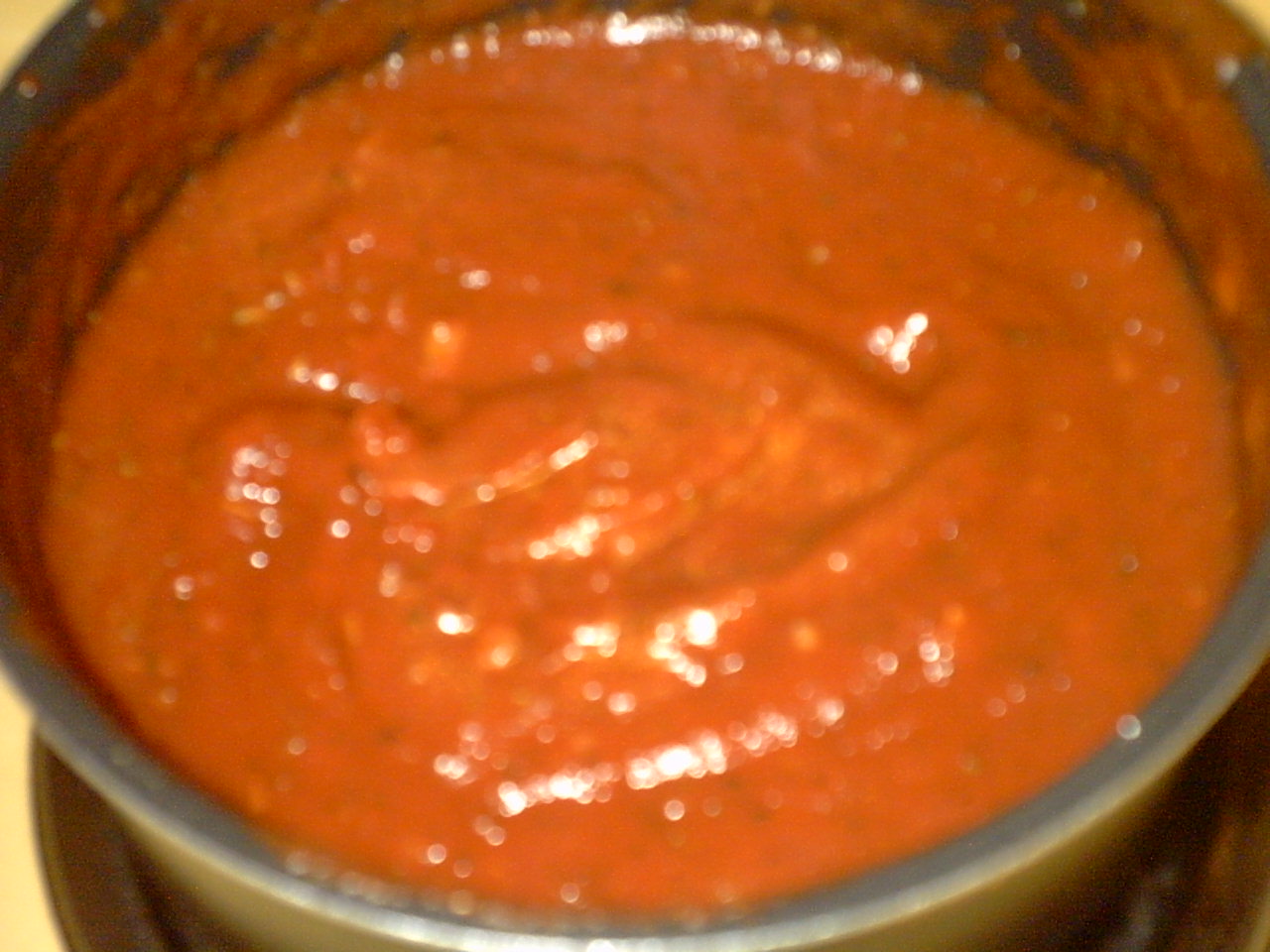
A simple pizza sauce based on a recipe learned in high school and tweaked over the years.
- Carbohydrate 49.4658629862589 g
- Cholesterol 0 mg
- Fat 4.64653370671514 g
- Fiber 11.1220613781105 g
- Protein 11.0987365413892 g
- Saturated Fat 0.711965888799849 g
- Serving Size 1 1 Serving (449g)
- Sodium 5445.03069848013 mg
- Sugar 38.3438016081485 g
- Trans Fat 0.482268283470997 g
- Calories 246 calories
Step-by-step
- Over medium heat, saute onion in olive oil until light brown.
- Stir in remaining ingredients and bring to boil.
- Lower heat and simmer until desired thickness.
Controlling the heat during the initial onion sauté dictates the success of this sauce, requiring medium heat to brown the aromatics without scorching the minced garlic. Olive oil transfers heat efficiently to the diced onion, softening the cellular walls until translucent and slightly golden before the tomato products enter the pan. When adding the canned tomato paste and tomato sauce, incorporate the sugar and Italian seasoning immediately to distribute the dried herbs evenly through the viscous base. Dried herbs benefit from direct contact with the warm oil and tomato liquids, hydrating and releasing their fat-soluble aromatic compounds into the mixture as it heats. Because this preparation relies on canned tomato solids rather than fresh pasteurized produce, it requires no extensive peeling or seeding, making it easily adaptable for vegan, gluten-free, and nut-free diets without altering the core method. Controlling the simmer is vital because excessive heat will cause the thick tomato starches to splatter aggressively across the stovetop or burn on the bottom of a thin-gauge saucepan. A steady, low bubble drives off excess moisture gradually, allowing pectin and natural sugars to concentrate until the sauce achieves a clingy consistency that will not make pizza dough soggy. Letting the sauce cool entirely before storage concentrates the flavors further, and retaining it in an airtight glass container in the refrigerator for up to five days preserves the integrity of the garlic and onion aromatics.



