Pineapple Orange Layered Gelatin Salad
Here is how to make a colorful delightful Pineapple Orange Layered Gelatin Salad sometimes called Sawdust Salad It tastes great goes with just about anything and is very inviting It will be one of your favorites
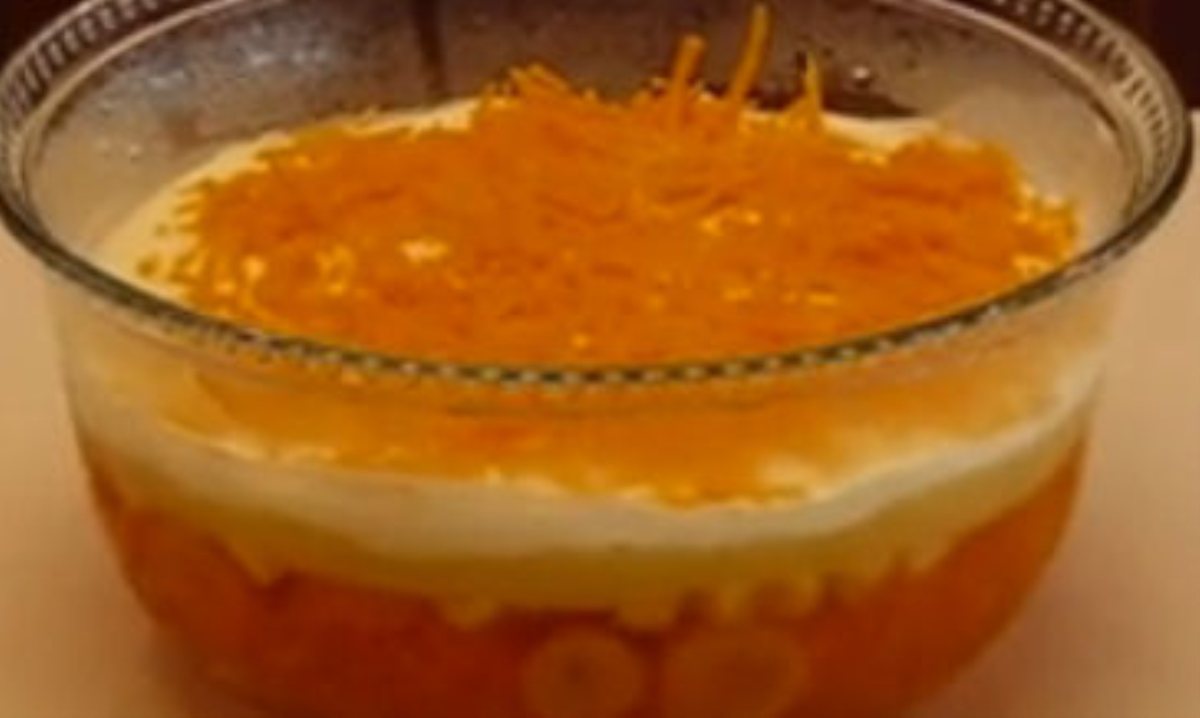
Here is how to make a colorful delightful Pineapple Orange Layered Gelatin Salad sometimes called Sawdust Salad It tastes great goes with just about anything and is very inviting It will be one of your favorites
- 0.5 cup sugar
- 1.5 cups cold water
- 2 cups hot water
- 1 box lemon jello (i used sugar-free, but i suggest you use regular)
- 1 box orange gelatin (again, i used sugar-free use regular to using sugar-free.)
- 2 bananas sliced
- 1 20-oz can crushed pineapple drained (save the juice for later in this recipe!)
- 1 cup miniature marshmallows (or more to taste)
- 1 cup pineapple juice reserved from earlier
- 2 tbs flour
- 1 egg well-beaten
- 0.5 pint whipping cream (very cold)
- 3 oz cream cheese softened
- 1/2 cup cheddar cheese (up to 1), shredded
- Carbohydrate 69.0167616666667 g
- Cholesterol 79.6416666666667 mg
- Fat 19.4199733333333 g
- Fiber 1.00799998881916 g
- Protein 7.164905 g
- Saturated Fat 11.3515486666667 g
- Serving Size 1 1 Serving (308g)
- Sodium 287.478 mg
- Sugar 68.0087616778475 g
- Trans Fat 1.98144683333333 g
- Calories 464 calories
Step-by-step
- Dissolve 1 small box lemon Jello and 1 small box orange Jello in 2 cups hot water.
- Add 1 1/2 cups cold water.
- Place in a large, clear bowl.
- Add 2 sliced bananas and 20 oz. drained, crushed pineapple.
- Stir.
- Sprinkle approximately 1 cup of miniature marshmallows over the top.
- Cover the bowl with plastic wrap and refrigerate until set, at least 4 hours.
- Meanwhile, begin your pineapple pudding layer.
- Combine 1 cup reserved pineapple juice, 1/2 cup sugar, 2 tablespoons flour, and 1 well-beaten egg.
- Stir until smooth.
- Place over low heat and cook, stirring constantly, until thickened and bubbly.
- Allow to cool to room temperature. (You may place it in the refrigerator, until your Jello mixture is congealed.)
- When your Jello is set and your pineapple pudding is cooled, spread the pudding over the Jello mixture.
- Now whip the cold whipping cream until it holds its shape.
- Also, whip the 3 oz. of softened cream cheese until light.
- Blend the whipped cream cheese into the whipped cream. (I do this with an electric mixer.)
- Spread the whipped cream mixture over the pudding layer.
- Sprinkle grated sharp Cheddar cheese over the top.
- it is read to eat immediately, or you may cover it with plastic wrap and keep it in the refrigerator until ready to serve.
- This fruit salad is *so* pretty--and *so* tasty!
While standard fruit salads are simply tossed ingredients bound by natural juices, this layered molded preparation relies on distinct structural tiers that demand specific physical states before assembly. Hot water must fully dissolve the gelatin crystals without scorching, and the subsequent addition of cold water brings the mixture down to a temperature where bananas and marshmallows can be suspended uniformly. Glass bowls work best for this stage because they allow visual inspection from the sides, ensuring the crushed pineapple distributes evenly rather than sinking entirely to the bottom during the four-hour refrigeration window.
The cooked pineapple pudding layer requires precise heat management to avoid curdling the egg. Combine the reserved fruit juice, sugar, flour, and beaten egg thoroughly off the heat before applying low flame, stirring constantly until the starches gelatinize and the mixture coats the back of a spoon. Cooling this cooked base completely to room temperature is non-negotiable; pouring warm pudding directly onto the set gelatin will melt the molded base and ruin the structural separation between tiers.
Whip the cold heavy cream and softened cream cheese separately before folding them together to create a stable topping that resists weeping. Using an electric mixer ensures the cream cheese incorporates smoothly without lumps, while chilled whipping cream traps air effectively only when maintained at refrigerator temperatures below forty degrees. Spread this dairy layer gently over the cooled pudding using an offset spatula to avoid disturbing the underlying strata.
Sharp cheddar cheese sprinkled across the final surface provides a savory contrast that holds up well during extended refrigeration. Stored properly under plastic wrap at three degrees Celsius, leftovers maintain structural integrity for up to forty-eight hours, though the bananas may soften further as moisture transfers between the fruit and gelatin layers.



