Chocolate Fudge Brownie Cake
This recipe combines two recipes to make a delicious five-layer cake. It uses a chocolate cake recipe and a boxed brownie mix to create alternating layers, frosted generously. This was created for a special occasion and layers easily using 8 inch cake pans. The frosting recipe is doubled to accommodate the extra layers.
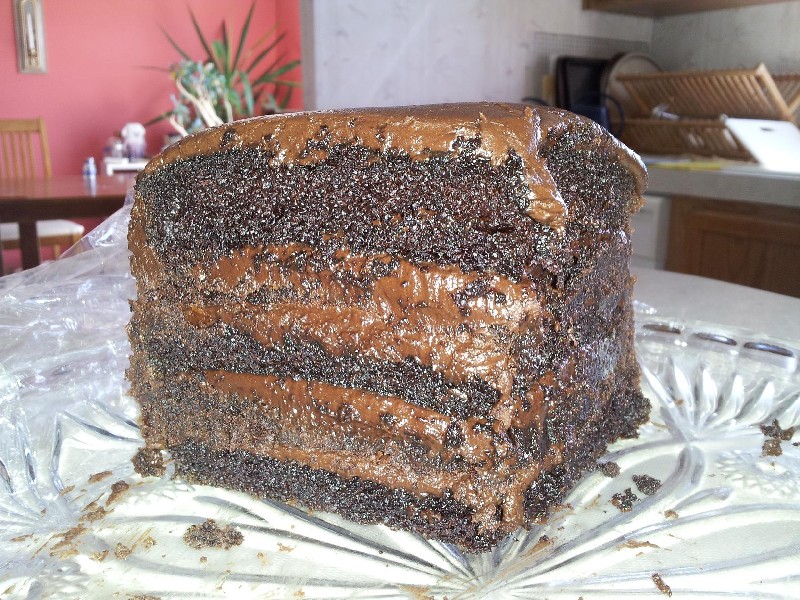
This recipe combines two recipes to make a delicious five-layer cake. It uses a chocolate cake recipe and a boxed brownie mix to create alternating layers, frosted generously. This was created for a special occasion and layers easily using 8 inch cake pans. The frosting recipe is doubled to accommodate the extra layers.
- 1/2 cup vegetable oil
- 1 teaspoon salt
- 1/4 cup water
- 2 cups sugar
- 1 cup milk
- 2 teaspoons vanilla extract
- 2 large eggs
- 2/3 cup milk
- cake
- frosting
- 1 3/4 cups all purpose flour
- 1 1/2 teaspoon baking powder
- 3/4 cup hershey’s cocoa
- 1 1/2 teaspoon baking soda
- 1 cup hot coffee freshly brewed
- brownie
- 19.5 oz box of brownie mix
- 2 sticks of butter or margarine unsalted recommended.
- 1 1/3 cup hershey’s cocoa
- 6 cups powdered sugar
- 2 teaspoons vanilla extract.
- Carbohydrate 37.4618401434053 g
- Cholesterol 246.897500002387 mg
- Fat 49.5888237303125 g
- Fiber 0.588888221061342 g
- Protein 9.29136153724793 g
- Saturated Fat 20.7857239610427 g
- Serving Size 1 1 Serving (353g)
- Sodium 11444.7745702516 mg
- Sugar 36.8729519223439 g
- Trans Fat 3.02725117141024 g
- Calories 629 calories
Step-by-step
- Preheat oven to 350 degrees. Grease two 8†cake pans. (I use the Mirro 8 x 1 ½â€ removable cake bottom pans. Grease the sides and cut out parchment paper to fit the bottoms. This aids in the removal of the cakes)
- Combine the first 6 DRY ingredients in a large mixing bowl. Add Eggs, Milk, Oil, and Vanilla. Beat on medium speed for 2 minutes. Stir in the HOT Coffee and mix well with a spoon. (The batter will be thin)
- Pour the batter into the prepared pans and bake for 30-35 minutes, or until wooden toothpick inserted into the center comes out clean.
- Cool 10 minutes on rack, then remove from pans to the wire rack and cool completely.
- Preheat oven to 350 degrees. Grease one of the cake pans you used for the cakes so they will match in size.
- Combine the Brownie Mix, Oil, Water, and Eggs in a large mixing bowl.
- Stir 50 strokes with a spoon.
- Pour into the prepared cake pan.
- Bake for 45-50 minutes
- Cool 10 minutes on rack, remove from the pan to the wire rack to cool.
- Melt the Butter and stir in the Cocoa. Alternately add the powdered sugar and milk, beating on medium speed to spreading consistency. Add more milk if needed. Stir in the Vanilla.
- Slice the Cake into 2 layers each. (You will have 4 layers. One will not be used)
- Slice the Brownie into 2 layers.
- You will begin the layering with Cake then Brownie, repeat with the top being Cake. Apply frosting between each layer. (Cake, frosting, Brownie, frosting…)
- Finish frosting the cake top and sides.
Standard ingredient tallies rarely reveal how commercial boxed brownie formulations entered American home kitchens during the mid-twentieth century, transforming simple pantry staples into decadent multi-tier confections. Early convenience manufacturers engineered these dry mixes to yield dense, chewy textures by relying heavily on fat ratios rather than traditional flour-to-liquid proportions. Pairing that dense square structure with a tender, chemically leavened oil cake creates a deliberate contrast between crumbly richness and airy hydration.
The Science of Hot Liquid Integration
Adding boiling coffee to the cocoa powder blooms the botanical solids, dissolving bitter aromatic compounds before baking begins. Baking soda requires an acid source to generate carbon dioxide bubbles; the natural acidity present in standard unsweetened cocoa provides that necessary catalyst alongside the baking powder. Combining these elements at room temperature before beating ensures the emulsified fats trap air bubbles uniformly across the mixture.
- Deflate overly domed cake layers by pressing a clean, damp kitchen towel directly onto the warm tops immediately after removal from the oven.
- Prevent frosting separation by ensuring melted butter cools to lukewarm before incorporating powdered sugar.
- Slice cooled layers using a serrated long-blade bread knife held completely horizontal to maintain uniform thickness.



