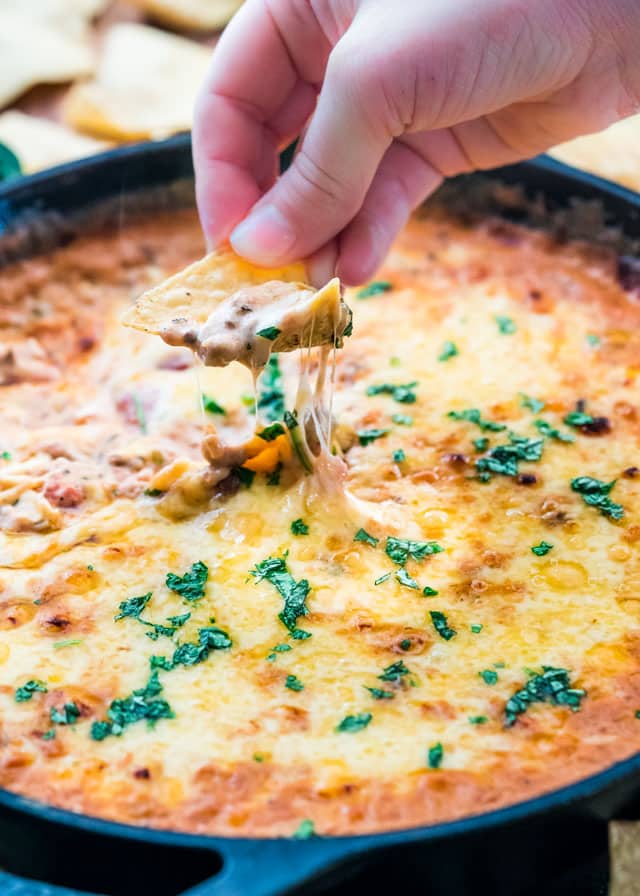
Try this Chili Con Queso recipe
- Carbohydrate 126.110380626 g
- Cholesterol 426.376827424 mg
- Fat 225.92205435544 g
- Fiber 12.7945639288354 g
- Protein 117.0172850676 g
- Saturated Fat 113.754225691676 g
- Serving Size 1 1 Serving (819g)
- Sodium 1223.907198808 mg
- Sugar 113.315816697165 g
- Trans Fat 17.5652550522 g
- Calories 2961 calories
Step-by-step
- Seed jalapeno peppers and chip.
- Combine peppers, cheese spread and pimientos in saucepan.
- Heat on stove, stirring constantly, until cheese melts.
- stir in reserved liquid.
- Serve with tortilla chips.
Why Does Processed Cheese Melt Without Separating?
Natural cheeses contain proteins that tighten and squeeze out fat when exposed to heat, resulting in a greasy mess. Processed cheese spread contains emulsifying agents, typically sodium citrate or phosphate, which alter the electrical charge of the casein proteins. These additives prevent the fat droplets from coalescing, allowing the mixture to form a stable emulsion when heated over the stove. Maintaining a low, steady flame prevents localized overheating that can break this delicate emulsion.
The Role of Capsaicin and Acidity
Jalapeno peppers supply capsaicin, the chemical compound responsible for heat, while pimientos offer a mild, sweet flavor profile balanced by natural fruit acids. Reserving one tablespoon of liquid from the jalapenos introduces targeted moisture and acidity, which helps adjust the viscosity of the melting cheese spread. Chopping the peppers finely ensures uniform distribution of capsaicin throughout the heavy fats, so every portion delivers consistent flavor without overwhelming the palate.
Texture Control and Holding Temperature
Heating dairy-heavy mixtures requires constant agitation to prevent scorching at the bottom of the saucepan. Stir the ingredients continuously with a silicone spatula until the entire mass reaches a uniform, pourable consistency. Keep the finished dip warm within a range of 140 to 145 degrees Fahrenheit to prevent skin formation on the surface before serving with crisp tortilla chips.



