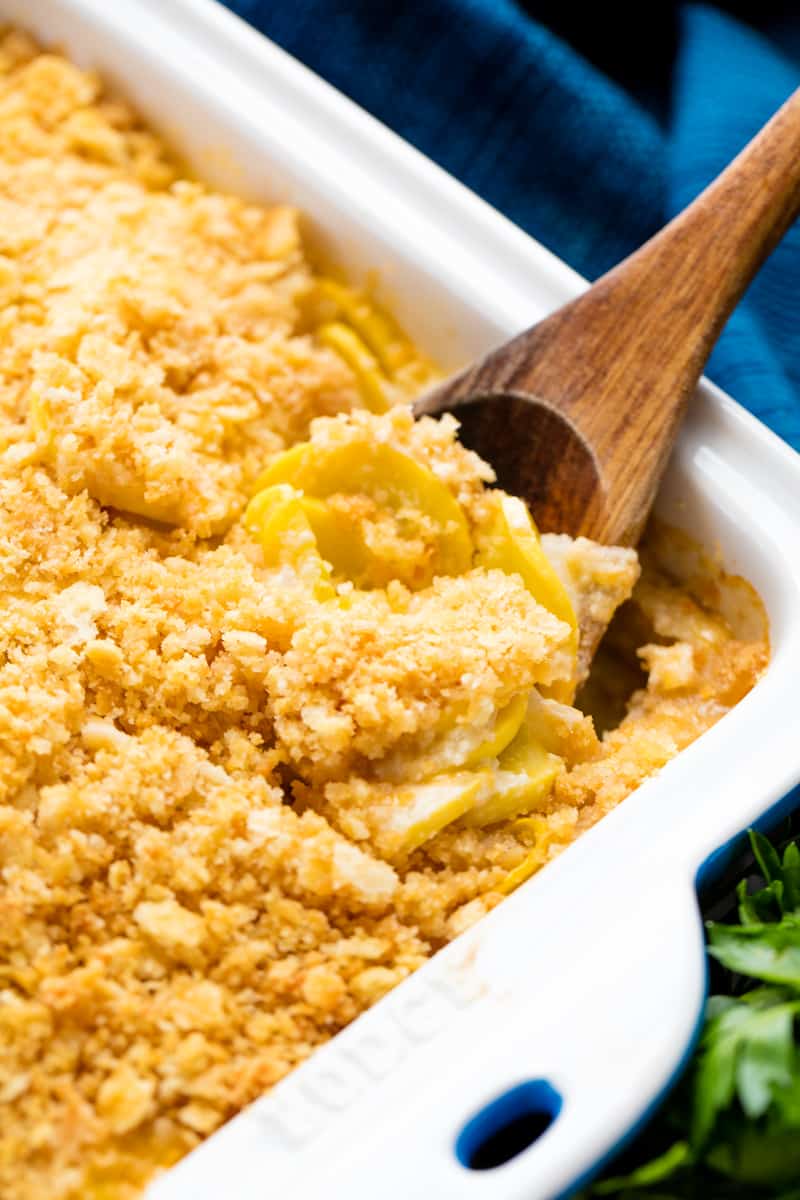
Try this SQUASH CASSEROLE recipe, or contribute your own.
- Carbohydrate 1.0164 g
- Cholesterol 558.36 mg
- Fat 13.1208 g
- Fiber 0 g
- Protein 16.6056 g
- Saturated Fat 4.09068 g
- Serving Size 1 1 recipe (1493g)
- Sodium 184.8 mg
- Sugar 1.0164 g
- Trans Fat 2.20044 g
- Calories 189 calories
Step-by-step
- Cook squash and onions in salted water until tender, drain well and mash.
- Add other ingredients, mix well.
- Pour into a 2-quart casserole dish and top with bread crumbs.
- Bake at 325 degrees for 15-20 minutes or until light brown.
Leaving boiled yellow squash in a colander for a quick two-minute drain guarantees a watery casserole that fails to set properly. Squash naturally contains an immense amount of water that must be actively expelled before mixing with binding agents like eggs and mayonnaise. Pressing the cooked and mashed squash firmly against the mesh of a strainer using the back of a large spoon removes surplus liquid, protecting the final texture from turning soggy. While standard preparations use saltine crackers and cheddar cheese, those managing dairy restrictions can substitute plant-based cheese shreds and gluten-free breadcrumbs without altering the fundamental baking mechanics. When freezing this dish for later use, assemble the casserole completely in a two-quart baking dish but omit the final buttered breadcrumb topping until the day of baking to prevent the crumbs from becoming waterlogged during the thawing process. Wrap the unbaked dish tightly in multiple layers of plastic wrap followed by heavy-duty aluminum foil, storing it in the freezer for up to three months. Thaw the frozen casserole completely in the refrigerator for twenty-four hours before baking, as placing a frozen ceramic or glass dish into a preheated 325 degree oven risks thermal shock and structural cracking. Once thawed, scatter the breadcrumbs evenly across the surface and bake until the edges bubble vigorously and the top turns a light, golden brown. Reheating leftover portions in a conventional oven at 350 degrees for fifteen minutes restores the crispness of the crumb topping far better than a microwave, which tends to soften the crunchy exterior and toughen the egg-based custard beneath.


