Pasta with Creamy Tomato Sauce
A wonderful and easy to prepare pasta sauce that bursts with layers of great tomato flavor. The recipe starts with an aromatic saute of onions, prosciutto, red pepper flakes and garlic. It then adds tomato paste, sun-dried tomatoes, and wine along with crushed tomatoes to create a sauce with great depth of flavor. Once the sauce has thickened, heavy cream, a bit of raw crushed tomatoes, a splash of wine and fresh chopped basil are added to finish the flavorful sauce. This isnt the quickest dish. Start to finish takes about an hour, and its multi-step processes require you to be in the kitchen or nearby for most of the cooking time. But its amazing taste makes it well worth the time and effort spent.
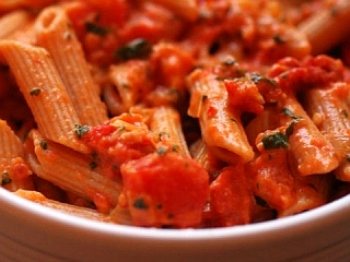
A wonderful and easy to prepare pasta sauce that bursts with layers of great tomato flavor. The recipe starts with an aromatic saute of onions, prosciutto, red pepper flakes and garlic. It then adds tomato paste, sun-dried tomatoes, and wine along with crushed tomatoes to create a sauce with great depth of flavor. Once the sauce has thickened, heavy cream, a bit of raw crushed tomatoes, a splash of wine and fresh chopped basil are added to finish the flavorful sauce. This isnt the quickest dish. Start to finish takes about an hour, and its multi-step processes require you to be in the kitchen or nearby for most of the cooking time. But its amazing taste makes it well worth the time and effort spent.
- 1 bay leaf
- 2 tablespoons tomato paste
- 1/2 cup heavy cream
- sea salt
- 3 tablespoons unsalted butter
- fresh ground black pepper
- 1 ounce prosciutto minced
- 3/4 cup onion finely diced
- 1/8 teaspoon dried red pepper flakes
- 2 large cloves garlic minced or pressed through a garlic press
- 2 ounces oil-packed sun-dried tomatoes drained, rinsed, patted dry, and coarsely chopped
- 1/4 cup dry white wine or vermouth divided, plus 2 tbsp
- 2 1/4 cups crushed tomatoes divided (i prefer organic tomatoes, either bottled or canned)
- 1 pound pasta (such as ziti, penne, fusilli, or gemelli)
- 1/4 cup fresh basil leaves chopped
- parmigiano reggiano or pecorino romano cheese freshly grated - for serving
- Carbohydrate 81.965083125 g
- Cholesterol 254.79375 mg
- Fat 69.689903125 g
- Fiber 4.58493747860193 g
- Protein 23.022535625 g
- Saturated Fat 40.35418825 g
- Serving Size 1 1 Serving (408g)
- Sodium 714.120625 mg
- Sugar 77.3801456463981 g
- Trans Fat 5.67509262500001 g
- Calories 1034 calories
Step-by-step
- Melt butter in medium saucepan over medium heat.
- Add prosciutto, onion, bay leaf, pepper flakes, and 1/4 teaspoon salt and cook, uncovered, stirring often, until onion is soft and beginning to turn golden, about 8 to 12 minutes.
- Add garlic and cook until aromatic, about 1 minute.
- Increase heat to medium-high, add tomato paste and sun-dried tomatoes and cook, stirring constantly, until slightly darkened, about 2 to 3 minutes.
- Add 1/4 cup wine and cook, stirring often, until liquid has evaporated, about 2 minutes.
- Add 2 cups crushed tomatoes and bring to the boil.
- Reduce heat to low and simmer, partially covered, stirring often, until sauce reduces and is thickened, about 25 to 30 minutes.
- While sauce simmers, bring 4 quarts water to the boil in a large pot, add 1 tablespoon salt, and drop in pasta all at once, and cook according to package directions or until al dente.
- Drain pasta in a colander, reserving 1/2 cup cooking water, and transfer back to cooking pot.
- When sauce has thickened, remove and discard bay leaf.
- Stir in cream, remaining 1/4 cup crushed tomatoes, and remaining 2 tablespoons wine, and cook until warmed through, about 1 minute.
- Adjust seasoning with salt and pepper to taste.
- Add sauce to cooked pasta and toss to combine, adjusting consistency with reserved pasta cooking water as necessary.
- Stir in basil.
- Serve immediately, passing freshly grated cheese separately.
Unlike a quick-cooking marinara that relies on raw canned tomatoes heated through with olive oil, this preparation builds depth by slowly rendering minced prosciutto and softening onions in butter for up to twelve minutes. Browning the tomato paste alongside chopped sun-dried tomatoes over medium-high heat caramelizes their natural sugars, driving off excess moisture and concentrating umami before any wine enters the pan. Deglazing with dry white wine and simmering the crushed tomatoes for nearly half an hour concentrates the base into a thick, clinging consistency that coats pasta far more effectively than watery alternatives. Finishing the sauce off-heat with heavy cream, fresh basil, and a final splash of raw tomato preserves bright acidity and herbal aromatics that would otherwise dull during a prolonged boil.
Assessing doneness for the pasta requires relying entirely on visual and textural cues rather than relying strictly on package timers. Biting into a single drained piece should reveal a thin, opaque white ring at the very center denoting starch that is not yet fully gelatinized, accompanied by firm resistance against the teeth. Preserving starchy cooking water before draining provides the necessary insurance policy for adjusting sauce viscosity, as starches released into the boiling liquid help emulsify the butter and heavy cream into a cohesive coating.
Complementing this robust, dairy-rich main requires sharp, high-acid components to cut through the significant fat content provided by butter, heavy cream, and Parmigiano-Reggiano. Raw bitter greens dressed sharply in a lemon-heavy vinaigrette offer the required palate cleanser between heavy, starch-laden bites. Steamed green beans tossed with toasted sliced almonds provide a crisp textural counterpoint to the soft, yielding nature of short pasta shapes like penne or fusilli.
Leftovers demand careful handling because dairy-heavy sauces break down rapidly when reheated over direct high heat. Storing the pasta and sauce together in an airtight container for up to three days works adequately if moisture is restored by adding a tablespoon of water before gently warming the dish over medium-low heat on the stovetop.



