Roast Vegetables with Tahini Dressing
Ingredients: 3/4 cup wild or mixed brown rice, 6 cups peeled and cubed root vegetables (carrots, kabocha pumpkin, beets, broccoli), olive oil, sea salt and black pepper, 2 spring onions or green onions, minced, 1/2 cup chopped fresh parsley and chives, toasted almonds or sunflower seeds (optional), 1/4 cup tahini, 1 tablespoon fresh lemon juice, 3 tablespoons water, 3-4 cloves garlic, peeled and minced, 1 teaspoon soy sauce
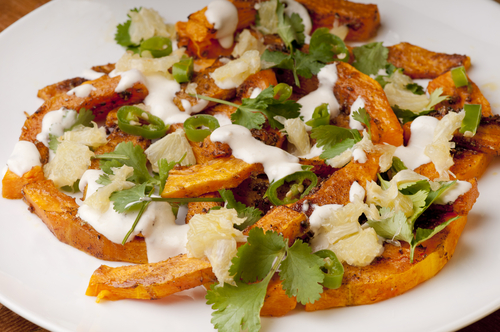
Ingredients: 3/4 cup wild or mixed brown rice, 6 cups peeled and cubed root vegetables (carrots, kabocha pumpkin, beets, broccoli), olive oil, sea salt and black pepper, 2 spring onions or green onions, minced, 1/2 cup chopped fresh parsley and chives, toasted almonds or sunflower seeds (optional), 1/4 cup tahini, 1 tablespoon fresh lemon juice, 3 tablespoons water, 3-4 cloves garlic, peeled and minced, 1 teaspoon soy sauce
- Carbohydrate 56.1435302499666 g
- Cholesterol 0 mg
- Fat 9.6210799999994 g
- Fiber 10.0389200784523 g
- Protein 8.06286899993694 g
- Saturated Fat 1.41090224999993 g
- Serving Size 1 1 Serving (361g)
- Sodium 192.498924966484 mg
- Sugar 46.1046101715142 g
- Trans Fat 0.517501999999833 g
- Calories 329 calories
Step-by-step
- Preheat oven to 375 degrees. Toss the vegetables with olive oil, salt and freshly ground pepper.
- Spread the vegetables in an even layer on a baking sheet, and bake for 30-45 minutes, or until vegetables are cooked through. Stir once or twice while baking to keep vegetables from burning. Remove from heat and let cool.
- To make Lemon-Tahini Dressing, combine all ingredients
- This dish is best served at room temperature. When you're ready to serve, arrange rice in a bowl, top with plenty of vegetables, drizzle with a generous amount of dressing on top, and add a few spoons of the green onion/herb mixture. Finally sprinkle with almonds! Stir and feast. :)
Earthy root vegetables caramelized at 375 degrees contrast sharply against the bright, pungent bite of raw minced garlic suspended in smooth sesame paste. Achieving optimal caramelization requires spreading the root vegetables in a single layer on a heavy rimmed baking sheet without overcrowding, which otherwise causes steaming instead of roasting. When pairing this dish for a meal, roasted salmon or a simple white bean soup provides a satisfying protein counterweight to the dense carbohydrates of the squash and carrots. Fresh herbs and toasted seeds add crucial textural dimension against the tender roasted interiors. Particular adjustments make it simple to adapt the components based on pantry availability or dietary constraints without losing the foundational flavor balance.
- Cut denser root vegetables like carrots and kabocha pumpkin into uniform three-quarter-inch cubes so they finish cooking simultaneously within the thirty to forty-five minute window.
- Thin the tahini dressing gradually with cold water, whisking vigorously until it transforms from a seized paste into a pourable consistency.
- Substitute toasted sunflower seeds or pumpkin seeds for almonds to keep the finished dish entirely free of tree nuts.
Serve the components at room temperature so the toasted flavors of the seeds and the pungency of the fresh green onions remain pronounced. Leftover roasted components keep well in a sealed glass container in the refrigerator for up to four days.


