Zoot's Crockpot Pizza Casserole
This is one of the most delicious meals I've ever made. I have to give credit to BigOven member Beachbumette for posting the healthy version. This is for those of you that want to feed the masses, while throwing caution to the wind. Leave a comment once you've made it and tell me how you liked it.
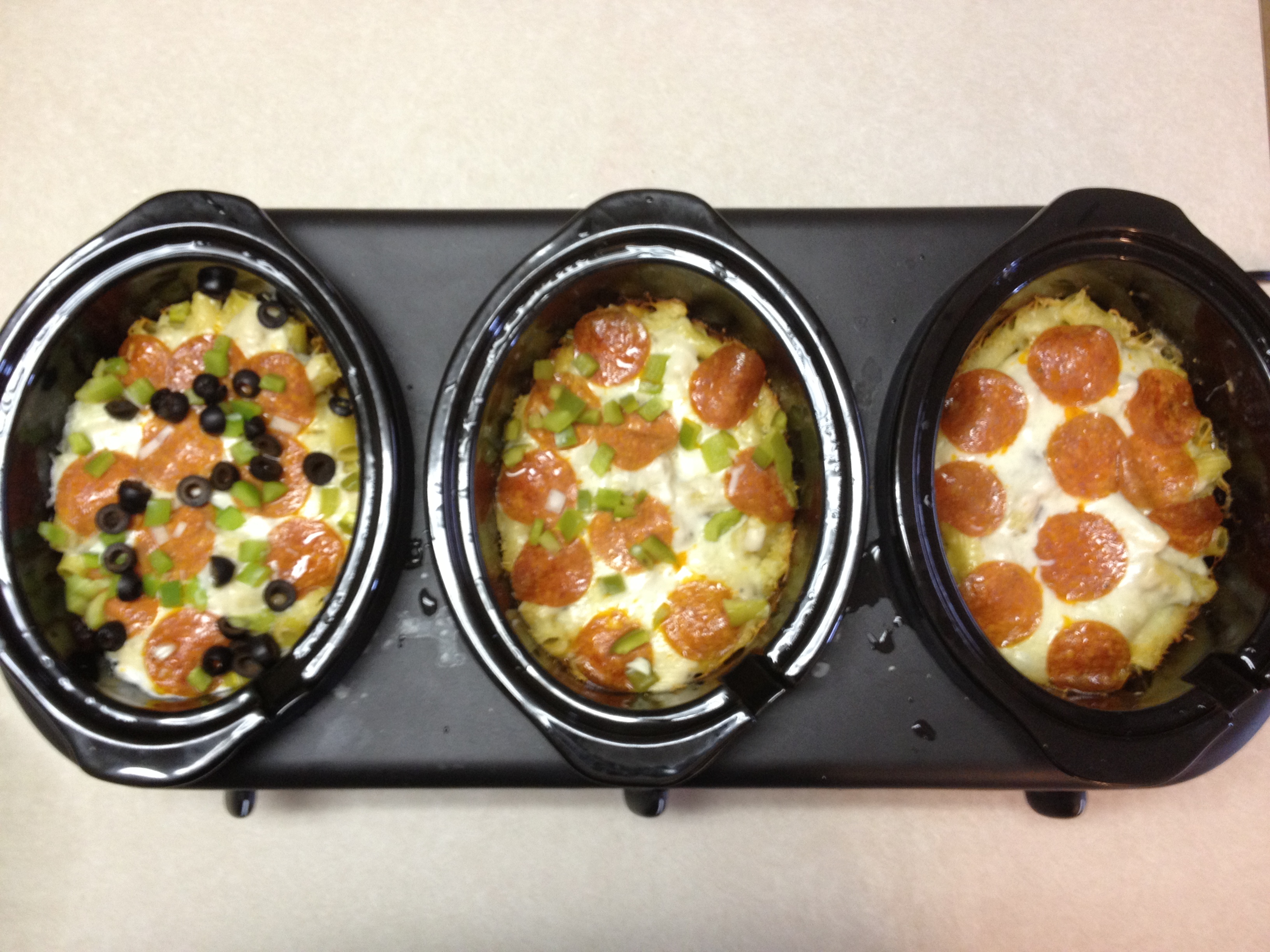
This is one of the most delicious meals I've ever made. I have to give credit to BigOven member Beachbumette for posting the healthy version. This is for those of you that want to feed the masses, while throwing caution to the wind. Leave a comment once you've made it and tell me how you liked it.
- 1 onion chopped
- 1 can cream of mushroom soup
- 1 pound italian sausage browned and drained
- 1 pound ground beef browned and drained
- 3 ounces pepperoni
- 8 ounces rigatoni pasta cooked 5 min. and drained
- 1/2 - 1 green pepper chopped
- 1 small can black olives halved
- 14 ounces italian blend cheese shredded
- 14 ounces pizza sauce (or spaghetti sauce)
- Carbohydrate 18.7505390668484 g
- Cholesterol 87.9070437890833 mg
- Fat 26.9770844821985 g
- Fiber 1.19287831101815 g
- Protein 21.4036247932585 g
- Saturated Fat 10.5064823609905 g
- Serving Size 1 1 Serving (212g)
- Sodium 864.027578956417 mg
- Sugar 17.5576607558302 g
- Trans Fat 3.93521011514305 g
- Calories 410 calories
Step-by-step
- Mix together in bowl or skillet that was used to brown the meat:(I ground the two meats in separate skillets - They don't cook the same)Ground BeefItalian SausageOnionPizza (or Spaghetti) Sauce
- Layer in 3.5 quart crock pot: in the order given:
- 1. Half of the meat mixture
- 2. Half of the cooked pasta
- 3. Half a can of the soup
- 4. 6 ounces of cheese
- 5. Half of the pepperoni slices
- 6. Half of the green pepper (if included)
- 7. Half of the black olives (if included)
- Top with any other ingredients you like such as mushrooms, Canadian bacon, etc.
- Repeat layers.
- Cook on low heat for 4 hours and serve with your favorite bread and a salad. I recommend garlic toast. It balances the meal out perfectly.
- Note: First of all, I like to season my ground beef with Canadian (Montreal) Steak Seasoning. This past weekend, I had to feed about 15 people. For my recent batch, I added an additional pound of ground beef. From there, I doubled my Mushroom Soup, Pasta and Pizza Sauce amount. When layering Pepperoni, I circle it around the surface and fill in the gaps within the circle. I used Italian Cheese Blend instead of Parmesan cheese. You'll need a bigger or multiple pots (as you see in my photo).I also chopped up ½ of a Green Pepper and layered it after the Pepperoni, adding Black Olives.
Standard pasta box instructions assume boiling water, but slow-cooker casseroles demand precise control over starch hydration. Undercooking the rigatoni to five minutes prevents the tubular structure from collapsing into mush under four hours of continuous ambient heat. The remaining starches absorb moisture directly from the pizza sauce and mushroom soup emulsion instead of boiling water. This internal absorption thickens the surrounding liquid phase rather than diluting it.
Brown and drain both the ground beef and Italian sausage separately before assembly. Ground beef releases significant amounts of saturated fat and water during rendering, which can easily swamp a 3.5-quart slow cooker. Removing this excess fat prevents the dairy solids in the Italian cheese blend from breaking and oiling off. Fat management preserves the structural integrity of the sauce layers.
Cream of mushroom soup functions here as an emulsifier and thickener. Its processed fats and modified starches bind free moisture released by the onions and bell peppers during the four-hour low-temperature cooking cycle. Without this binding agent, the high water content of fresh vegetables would pool at the base of the crockpot. The soup creates a uniform viscosity across every portion.
Prepared portions of this baked pasta maintain structural stability for up to three days when sealed in refrigerated airtight containers. Reheating works best in a conventional oven at 350 degrees Fahrenheit rather than a microwave. Dry microwave heat tends to toughen the rigatoni exterior while over-melting the cheese layer into a greasy separation.


