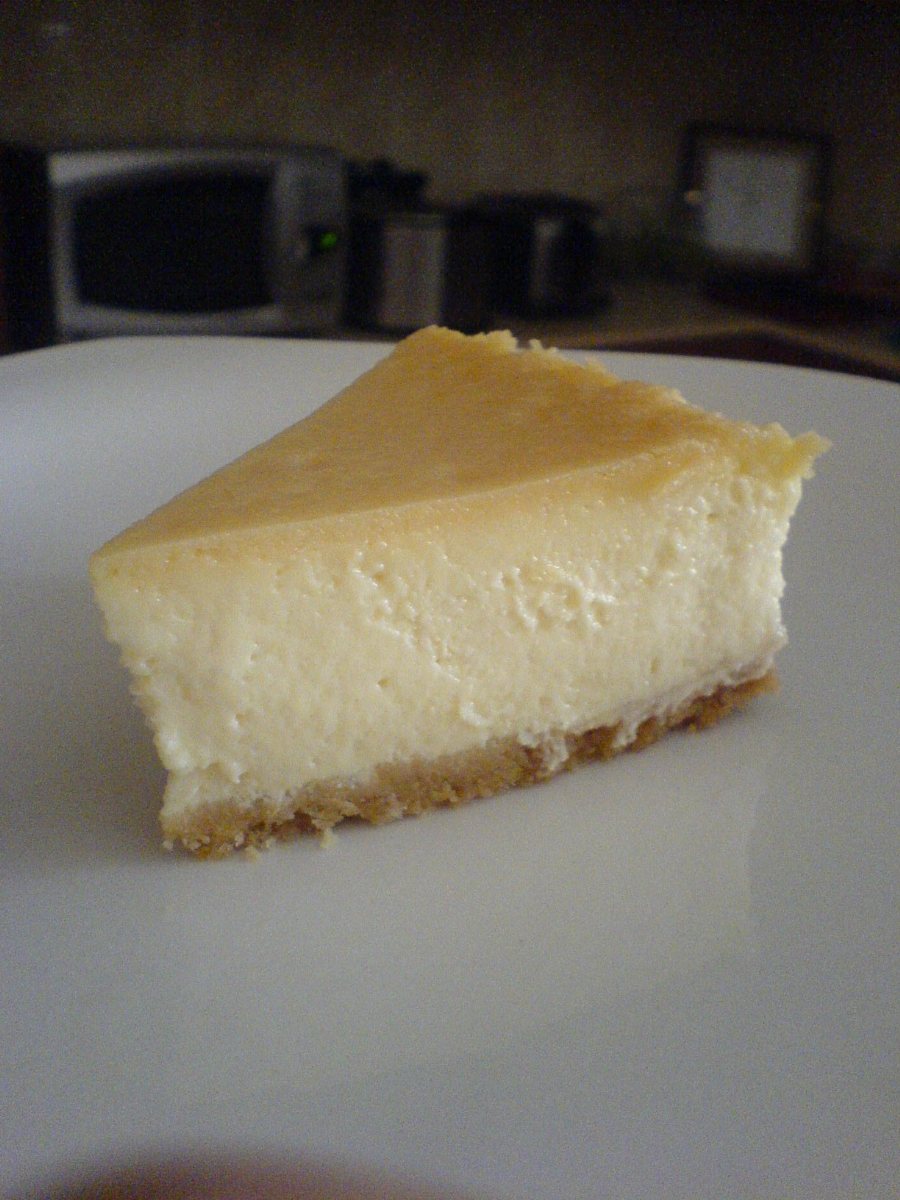
I got this recipe from a cooking show, so thanks to them for this recipe.
- filling:
- crust:
- 2 cups sugar
- 1 cup sour cream
- 2 tablespoons sugar
- 6 tablespoons unsalted butter
- 1 1/2 cups graham cracker crumbs
- 1 pinch fine salt
- 2 pounds cream cheese at room temperature
- 6 large eggs lightly beaten
- 2 tablespoons vanilla paste or extract
- 1 teaspoon lemon zest finely grated
- 1 teaspoon orange zest finely grated
- berries optional
- Carbohydrate 60.1188653924917 g
- Cholesterol 509.98 mg
- Fat 93.9172504495833 g
- Fiber 0.396789764268479 g
- Protein 16.2418952075921 g
- Saturated Fat 53.8445560434683 g
- Serving Size 1 1 Serving (409g)
- Sodium 523.087425627542 mg
- Sugar 59.7220756282232 g
- Trans Fat 10.6937989169175 g
- Calories 1133 calories
Step-by-step
- Position a rack in the middle of the oven and preheat to 325 degrees F.
- For the crust: Melt the butter, covered in the microwave, in a medium microwave safe bowl, or a saucepan.
- Brush a 9-inch spring form pan with some of the butter.
- Stir the remaining butter together with the crumbs, sugar, and salt.
- Press the crumb mixture over the bottom of the pan, taking care to get the crust evenly into the edges.
- Bake until golden brown, 15 to 18 minutes.
- Cool.
- Wrap the bottom and up the sides of the pan with foil and put in a roasting pan.
- For the filling: Beat the cream cheese on medium speed with a hand-held mixer until smooth.
- Add 1 1/4 cups sugar and beat just until light and fluffy, scraping the sides of the bowl and beaters as needed.
- Slowly beat in 3/4 cup sour cream, then eggs, 1 tablespoon vanilla and both citrus zests; take care not to over whip.
- Pour into the cooled crust.
- Bring a medium saucepan or kettle of water to a boil.
- Gently place the roasting pan in the oven (don't pull the rack out of the oven).
- Pour in enough hot water to come about halfway up the side of the spring form pan.
- Bake the cheesecake for 1 hour and 10 minutes---the outside of the cake will set but the center will still be loose.
- Meanwhile, stir together the remaining sour cream, sugar and vanilla paste.
- Spread over the top of the cooked cheesecake and return to the oven for 5 minutes.
- Turn the oven off, cook the cheesecake in the residual heat in the oven for 1 hour.
- This gentle finish minimizes the risk of the dreaded crack in your cheese cake.
- Remove cheesecake from the roasting pan to a rack.
- Run a knife around the edges and cool to room temperature.
- Cover and refrigerate at least 8 hours or overnight.
- Bring cheesecake to room temperature 30 minutes before serving.
- Remove the spring form ring.
- Dip a knife in warm water, wipe dry before slicing each piece.
- Serve with berries, if desired
Swapping standard granulated sugar for honey or unrefined cane sugar introduces excess moisture that alters the protein structure of dairy, preventing proper setting and yielding a dense, overly wet custard. Achieving the ideal texture requires all components, particularly cream cheese and large eggs, to sit at 70 degrees F before mixing so they incorporate smoothly without requiring aggressive aeration that beats unwanted air pockets into the batter. This baseline temperature control is essential because cold dairy traps air that expands in the heat of the oven, forcing unsightly fissures across the surface as the dessert bakes. Although a nine-inch springform pan is standard equipment, wrapping the exterior tightly in heavy-duty aluminum foil remains mandatory when utilizing a water bath to prevent boiling water from seeping through the seams and ruining the graham cracker crust.
Beating the cream cheese initially until completely smooth before incorporating sugar ensures there are no hidden lumps that survive the mixing process. The transition from cream cheese to sugar must be executed carefully, adding the sweetener gradually while scraping down the bowl with a rubber spatula to guarantee uniform distribution without overworking the mixture. Excessive whipping introduces air bubbles that inevitably expand during baking and collapse upon cooling, which is why incorporating the lightly beaten eggs at the very end must be done strictly on low speed just until combined. Paying close attention to these mechanical boundaries protects the delicate protein matrix of the cheese from breaking down into a grainy texture.
Baking the dessert inside a water bath, or bain-marie, provides gentle, insulated thermal transfer that keeps the outer edges from cooking faster than the interior while maintaining an ambient moisture level in the oven cavity. The water temperature should be boiling when poured into the roasting pan, and the liquid level must reach halfway up the sides of the springform pan to ensure even heat distribution. Opening the oven door during this stage causes radical temperature drops that shock the batter, which is why the cooking progress should be monitored solely through the oven glass until the timer signals the one-hour-and-ten-minute mark. At this point, the outer ring should be set while the center retains a slight jiggle, signaling that the residual heat will finish the cooking process safely.
Applying a sour cream topping during the final five minutes of oven time creates a glossy, tangy cap that seals in moisture and balances the rich sweetness of the heavy filling. Turning the oven completely off and letting the dessert sit undisturbed inside the cooling cavity for a full hour prevents sudden thermal shock, which is the primary mechanical trigger for surface splitting. After this slow cooling phase, running a thin metal blade around the interior perimeter before chilling prevents the shrinking crust from tearing the delicate edges as it contracts in the refrigerator. Allowing the finished dessert to rest chilled for at least eight hours allows the starches and proteins to fully set, guaranteeing clean slices when dipped in warm water between cuts.



