Butternut Squash Polenta Chips
This dish may take some time, but it is the kind that you can prepare part in advance, leaving the frying to the last minute - these chips taste best warm. They are perfect to serve to guests while they are waiting for starters, to accompany a juicy steak or as a snack alongside beer. I made them with garlic aioli but they will also taste great with a spicy tomato salsa.
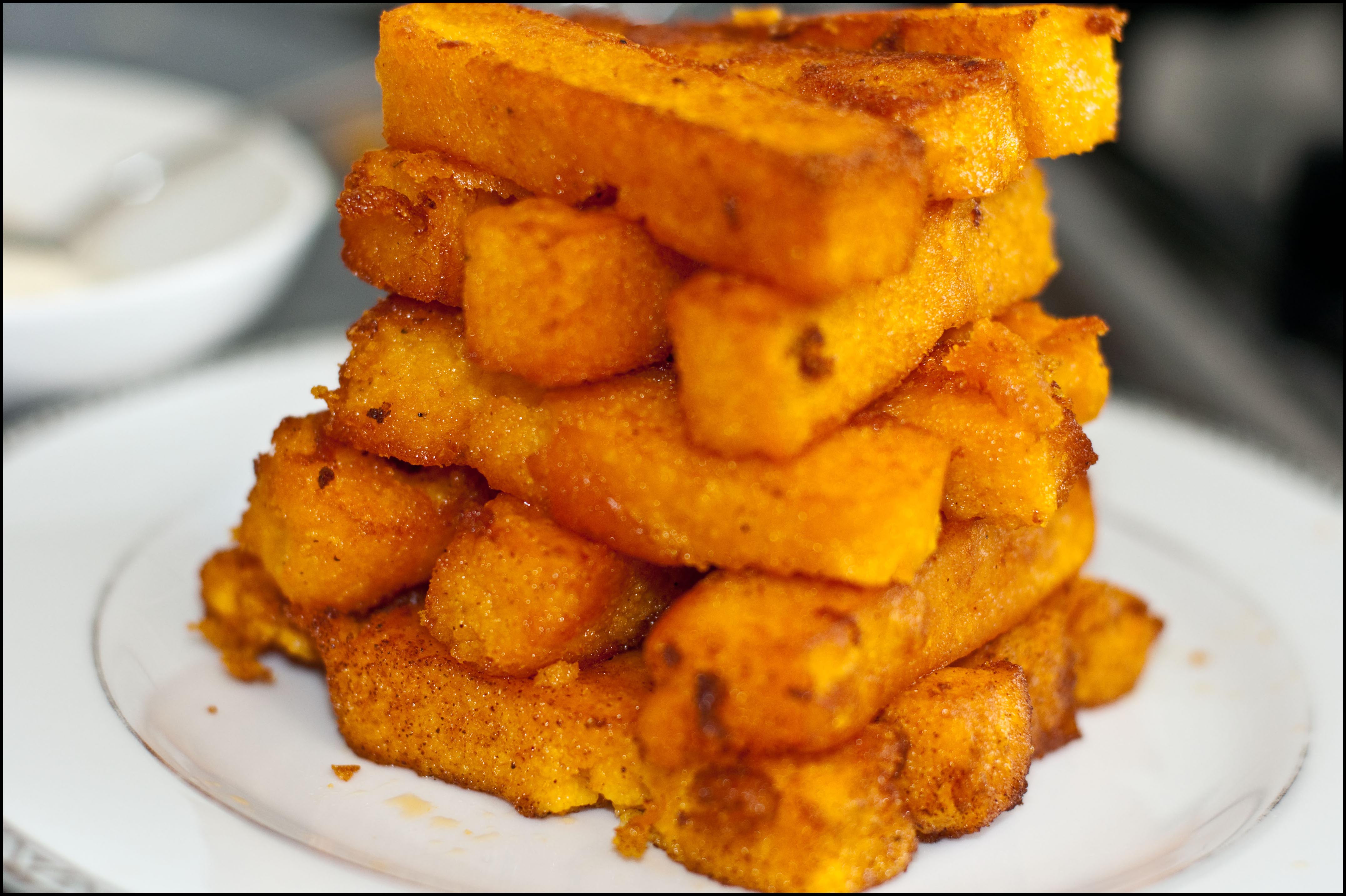
This dish may take some time, but it is the kind that you can prepare part in advance, leaving the frying to the last minute - these chips taste best warm. They are perfect to serve to guests while they are waiting for starters, to accompany a juicy steak or as a snack alongside beer. I made them with garlic aioli but they will also taste great with a spicy tomato salsa.
- Carbohydrate 105.25207 g
- Cholesterol 0 mg
- Fat 338.73893 g
- Fiber 18.1648000068665 g
- Protein 9.06809 g
- Saturated Fat 27.41787 g
- Serving Size 1 1 Serving (1353g)
- Sodium 117.21475 mg
- Sugar 87.0872699931335 g
- Trans Fat 14.8691475 g
- Calories 3391 calories
Step-by-step
- Pre-heat oven to 180 degrees. Place squash on a baking tray and drizzle with olive oil, salt, pepper and a sprinkle of cayenne pepper for a bit of heat. Roast on a middle shelf for 25-30 minutes until softened. Leave on one side to cool enough to handle.
- Pour roasted butternut squash into a blender or use a hand blender to purée. Add a bit more olive oil to make it extra smooth. Start cooking the polenta by setting the water to boil with a pinch of salt, note that I used less water than usual as I am adding butternut squash. When the water is boiling, add the polenta and stir well. Keep stirring until the polenta absorbs the water and thickens. When the polenta sticks to your spoon, add the puréed squash. Mix well, taste and season if necessary.
- Pour the polenta-squash mixture onto a baking sheet or large tray and spread until the whole thing is around an inch thick. Leave to cool completely (a good hour in the fridge or by a cool location should do it). Once the polenta has cooled, test the centre to ensure it has solidified all the way through. Then cut into 1 inch thick sticks. Heat oil in a pan and pan fry the polenta for a crispy exterior. If you prefer a lower fat version, bake it in the oven.
- Enjoy with you favourite dipping sauce.
Scaling Polenta Starch Ratios
Adapting this yield requires strict adherence to liquid absorption rates, because altering grain volume without adjusting the squash puree creates a soupy batter that fails to solidify. Doubling the batch demands a wider saucepan to prevent hot liquid splatter during rapid starch gelatinization. When scaling up, maintain the exact ratio of two parts cold liquid to one part dry cornmeal while incorporating the roasted vegetable component.
Achieving Structural Integrity
Chilling the cooked mixture for at least sixty minutes in a refrigerator allows the starches to retrograde completely into a firm block that resists breaking apart during cutting. Using a sharp chef knife dipped in cold water prevents the sticky cornmeal paste from adhering to the blade while slicing uniform one-inch batons. Thorough cooling is non-negotiable because warm polenta will immediately disintegrate upon hitting hot oil.
Frying Dynamics and Pairings
Maintaining corn oil temperature near 180 degrees Celsius ensures a crisp exterior shell without excessive interior saturation. Pair these warm, starchy sticks with high-acid condiments like a spicy tomato salsa to cut through the dense fat content of the fried crust. Alternatively, serve them alongside roasted white meats where the earthy sweetness of the squash bridges rich proteins.



