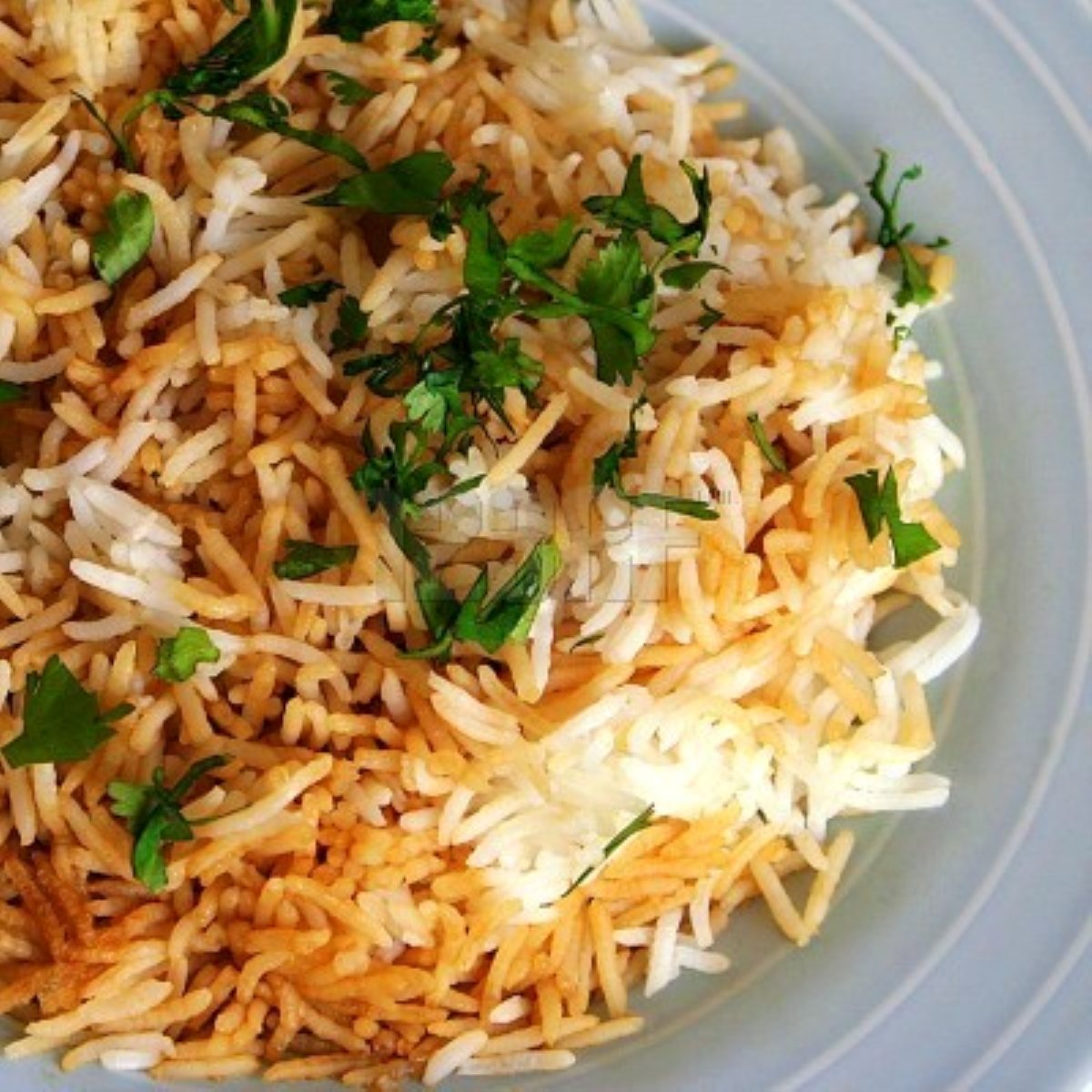
I would like to share some of our traditional recipes with you.
- 1/2 cup vegetable oil
- 1 teaspoon chili powder
- 1 large tomato diced
- 4 cloves
- 1/2 kg rice (basmati) par boiled
- 1/2 kg chicken
- 2 lg onion sliced
- 1 tablespoons salt
- 1 tablespoon tumeric
- 1 teaspoon garam masala powder
- 1 tablespoons coriander seeds powdered
- 3 green chilies diced
- 2 sticks cinnamon
- 1/2 tablespoon black pepper whole
- 2 medium brown cardamom whole
- 1 bunch coriander sprigs chopped
- 4 cloves garlic mashed
- 1 large bay leaf
- Carbohydrate 116.271542127434 g
- Cholesterol 93.75 mg
- Fat 41.1037568031285 g
- Fiber 8.78811073373936 g
- Protein 34.0728191715155 g
- Saturated Fat 7.317710391105 g
- Serving Size 1 1 Serving (423g)
- Sodium 109.034967801004 mg
- Sugar 107.483431393695 g
- Trans Fat 2.25035789878409 g
- Calories 974 calories
Step-by-step
- Fry the onion in oil in a medium size pot until light brown.
- Start to boil the rice in a large pot with salt.
- The rice should not be soft, it should be a little bit uncooked when you drain the rice after boiling.
- Remove onion from pot and set aside.
- Put the chicken in the same pot you used to cook the onion and add 1 tblsp salt and garlic.
- Saute until golden, then add tomato, bay leaf, chilli powder, turmeric, garam masala, coriander powder, cloves, black pepper, brown cardamom and cinnamon sticks.
- Fry for five minutes.
- Now pour one large drinking glass of water into the pan and cover it.
- Cook till the chicken is tender and about 1/2 cup water is remaining in the pot.
- Put half of the rice in chicken mixture and mix lightly.
- Sprinkle onions, green chilies and coriander strands into the pot.
- Spread the remaining half of the rice on top and cover lid tightly.
- The heat should be set on high for 2 minutes, then switched to low.
- Keep the heat on low for ten minutes.
- Finally turn the heat off and let the covered pot sit for 15 minutes.
- Fluff the rice with a fork, remove bay leaf and cinnamon sticks, and serve.
Controlling moisture is the primary mechanism for preventing sticky grains in this dish. Parboiling the basmati rice until it retains a firm center prevents disintegration during the final steam stage. Rinsing the raw rice grains in cold water before boiling removes excess surface starch that otherwise promotes clumping. Whole spices require direct contact with heated fat to release their fat-soluble aromatic compounds effectively into the cooking medium.
Pot Selection and Thermal Mass
Heavy-bottomed vessels distribute thermal energy evenly and prevent scorching during the prolonged low-heat phase. Using a pot with a tight-fitting lid is mandatory to trap steam during the final fifteen-minute resting window without heat. Aluminum or heavy stainless steel cookware works well, while thin camping pots risk burning the bottom layer before the chicken fully tenders. Ensure the pot has at least a four-quart capacity to accommodate the expansion of both chicken and rice without overcrowding.
Texture Control Through Heat Management
High heat applied for precisely two minutes at the start of steaming generates the necessary internal steam pressure. Lowering the burner to minimum for ten minutes completes cooking without over-softening the exterior of the grains. Resting the covered pot off the heat for fifteen minutes redistributes internal moisture evenly across all layers. Fork-fluffing at service prevents crushing the elongated grains.



