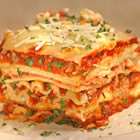
I found this recipe on allrecipes.com
- 1/2 teaspoon salt
- 1 tablespoon salt
- 1 egg
- 1/2 cup water
- 2 (6 ounce) cans tomato paste
- 2 tablespoons white sugar
- 1/4 teaspoon ground black pepper
- 1 (28 ounce) can crushed tomatoes
- 2 cloves garlic crushed
- 1 teaspoon italian seasoning
- 1 pound sweet italian sausage
- 3/4 pound lean ground beef
- 1/2 cup minced onion
- 2 (6.5 ounce) cans canned tomato sauce
- 1 1/2 teaspoons dried basil leaves
- 1/2 teaspoon fennel seeds
- 4 tablespoons chopped fresh parsley
- 12 lasagna noodles
- 16 ounces ricotta cheese
- 3/4 pound mozzarella cheese sliced
- 3/4 cup grated parmesan cheese
- Carbohydrate 70.0184079064621 g
- Cholesterol 79.1885233645833 mg
- Fat 24.0113068168516 g
- Fiber 5.07292326847496 g
- Protein 32.1969550600895 g
- Saturated Fat 10.7995012151027 g
- Serving Size 1 1 serving (334g)
- Sodium 842.918393596725 mg
- Sugar 64.9454846379872 g
- Trans Fat 1.76686123384961 g
- Calories 617 calories
Step-by-step
- In a Dutch oven, cook sausage, ground beef, onion, and garlic over medium heat until well browned. Stir in crushed tomatoes, tomato paste, tomato sauce, and water. Season with sugar, basil, fennel seeds, Italian seasoning, 1 tablespoon salt, pepper, and 2 tablespoons parsley. Simmer, covered, for about 1 1/2 hours, stirring occasionally.
- Bring a large pot of lightly salted water to a boil. Cook lasagna noodles in boiling water for 8 to 10 minutes. Drain noodles, and rinse with cold water. In a mixing bowl, combine ricotta cheese with egg, remaining parsley, and 1/2 teaspoon salt.
- Preheat oven to 375 degrees F (190 degrees C).
- To assemble, spread 1 1/2 cups of meat sauce in the bottom of a 9x13 inch baking dish. Arrange 6 noodles lengthwise over meat sauce. Spread with one half of the ricotta cheese mixture. Top with a third of mozzarella cheese slices. Spoon 1 1/2 cups meat sauce over mozzarella, and sprinkle with 1/4 cup Parmesan cheese. Repeat layers, and top with remaining mozzarella and Parmesan cheese. Cover with foil: to prevent sticking, either spray foil with cooking spray, or make sure the foil does not touch the cheese.
- Bake in preheated oven for 25 minutes. Remove foil, and bake an additional 25 minutes. Cool for 15 minutes before serving.
Slicing into lasagna immediately after it leaves the oven guarantees a collapsed, watery mess on the plate. Water accumulates inside baked layers when hot cheeses and simmering tomato sauces release internal moisture without adequate resting time. Letting the casserole sit for fifteen minutes allows dairy fats and starches to firm up, yielding clean, distinct portions. Sweet Italian sausage and lean ground beef render considerable fat during the initial ninety-minute Dutch oven simmer, so skimming excess grease from the meat sauce prevents a greasy surface pool. Fennel seeds and dried basil require that extended simmer to hydrate fully and soften their cell walls, releasing aromatic compounds into the tomato paste and crushed tomatoes without leaving hard fragments in the finished dish. Rinsing boiled noodles in cold water halts starch gelatinization immediately, stopping the pasta from turning mushy before assembly. Spraying the underside of the aluminum foil with cooking spray stops melted mozzarella from welding itself to the metal during the initial covered bake at 375 degrees Fahrenheit. Removing that foil for the final twenty-five minutes of baking encourages surface evaporation, browning the grated Parmesan cheese and rendering the top mozzarella layer chewy rather than rubbery.
Managing Moisture and Starch
Pasta sheets absorb liquid continuously while baking. Undercooking the noodles slightly during the initial eight to ten minute boil gives them structural integrity against the heavy meat sauce and ricotta mixture. Ricotta cheese contains high water content; binding it with a raw egg provides the necessary protein matrix to set the cheese layer into a firm curd during thermal exposure. Slicing mozzarella cheese manually instead of using pre-shredded varieties avoids anti-caking cellulose powders that interfere with smooth melting.
- Letting the baked dish rest for fifteen minutes before cutting prevents structural collapse.
- Bake covered with foil for twenty-five minutes, then uncover for another twenty-five minutes to brown the cheese properly.
- Keep foil from touching the cheese by tenting it or coating it with non-stick spray.
- Store leftovers properly because starch retrogradation overnight firms the pasta layers further for improved slicing on day two.


