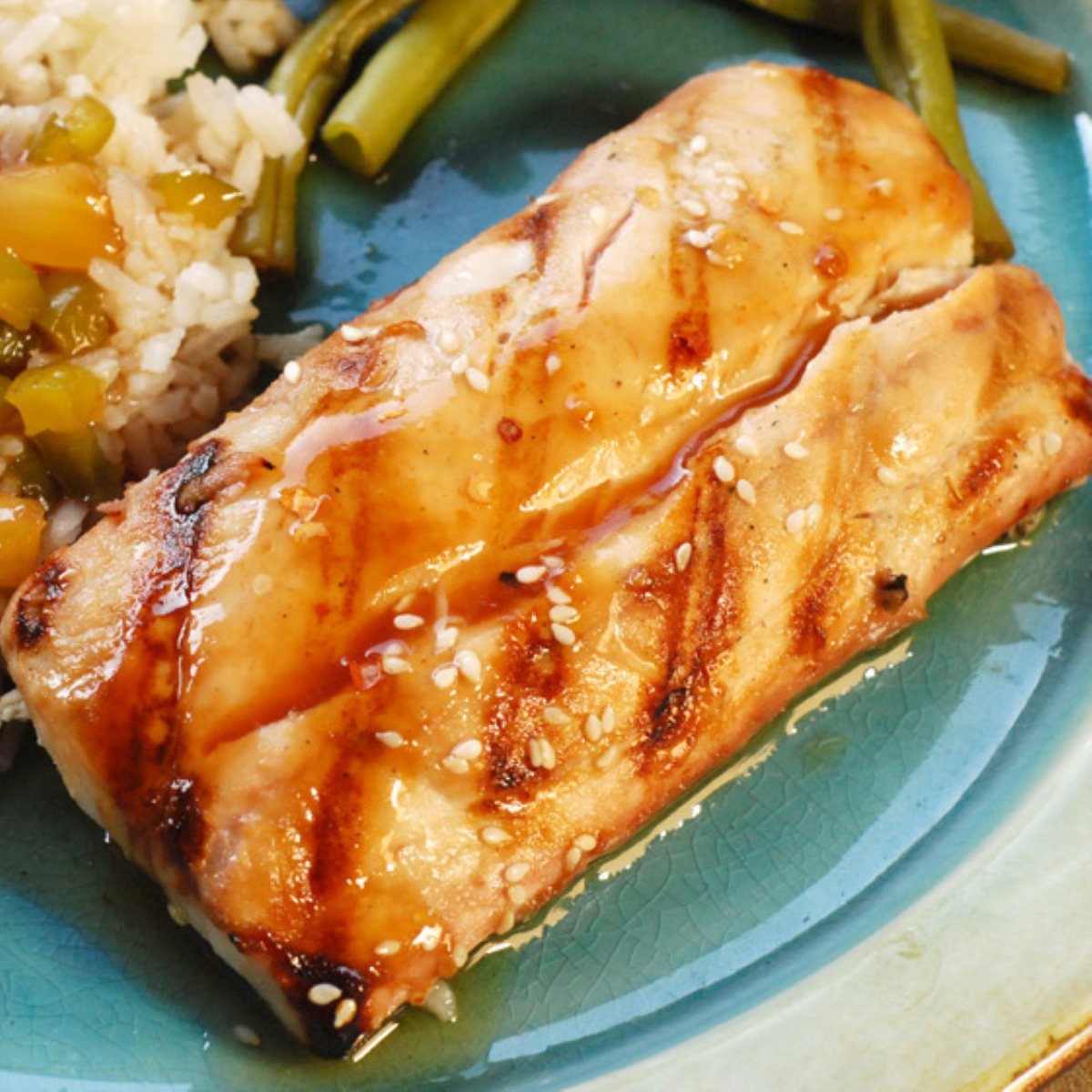
This is one of my favorite fish dishes, which is huge considering I hate fish
- Carbohydrate 1.53783161744079 g
- Cholesterol 126.712838366766 mg
- Fat 3.07248271309097 g
- Fiber 0.200812055488985 g
- Protein 31.9371145457002 g
- Saturated Fat 1.06370968638021 g
- Serving Size 1 1 (177g)
- Sodium 214.892965934094 mg
- Sugar 1.33701956195181 g
- Trans Fat 0.494277638487347 g
- Calories 168 calories
Step-by-step
- Melt butter in a skillet and brown garlic.
- Remove from heat and add teriyak, lemon juice, honey, and sesame and mix well.
- Marinate fillets 30 minutes.
- Grill over medium coals until white and flakey.
Flaky, firm white flesh meets a sweet and savory glaze that chars rapidly over direct heat. Achieving this balance requires careful management of the grill temperature and protein moisture. Mahi mahi features a dense, large-flaked muscle structure that holds together well on grill grates, unlike delicate flatfishes that break apart under tension. Maintaining that integrity depends on avoiding prolonged exposure to extreme heat, which tightens the protein fibers past the point of moisture retention. Cooking the fillets over medium coals creates the ideal environment for the exterior sugars in the marinade to caramelize before the interior dries out. Brushing butter and teriyaki onto the fish adds surface fat, preventing sticking and promoting the Maillard reaction necessary for savory depth. Sautéing the garlic in butter beforehand mellows its raw bite, infusing the lipid base with aromatic compounds that cling to the fish during the thirty-minute marinating window. Honey in the marinade browns quickly, requiring constant visual monitoring once the fillets hit the grate. Grilling is the traditional method for this preparation, but a heavy cast-iron skillet heated over medium-high stove settings serves as a reliable indoor alternative when outdoor cooking is not feasible. Cast iron provides the direct thermal contact needed to achieve similar exterior browning without requiring specialized grilling equipment. Removing the fish from the heat source the moment the center turns opaque guarantees a moist, flaky texture rather than a rubbery one.


