Juicy Butterflied Roast Chicken
Butterflying a whole chicken results in a juicy, easy-to-prepare, and simple-to-carve roast chicken.
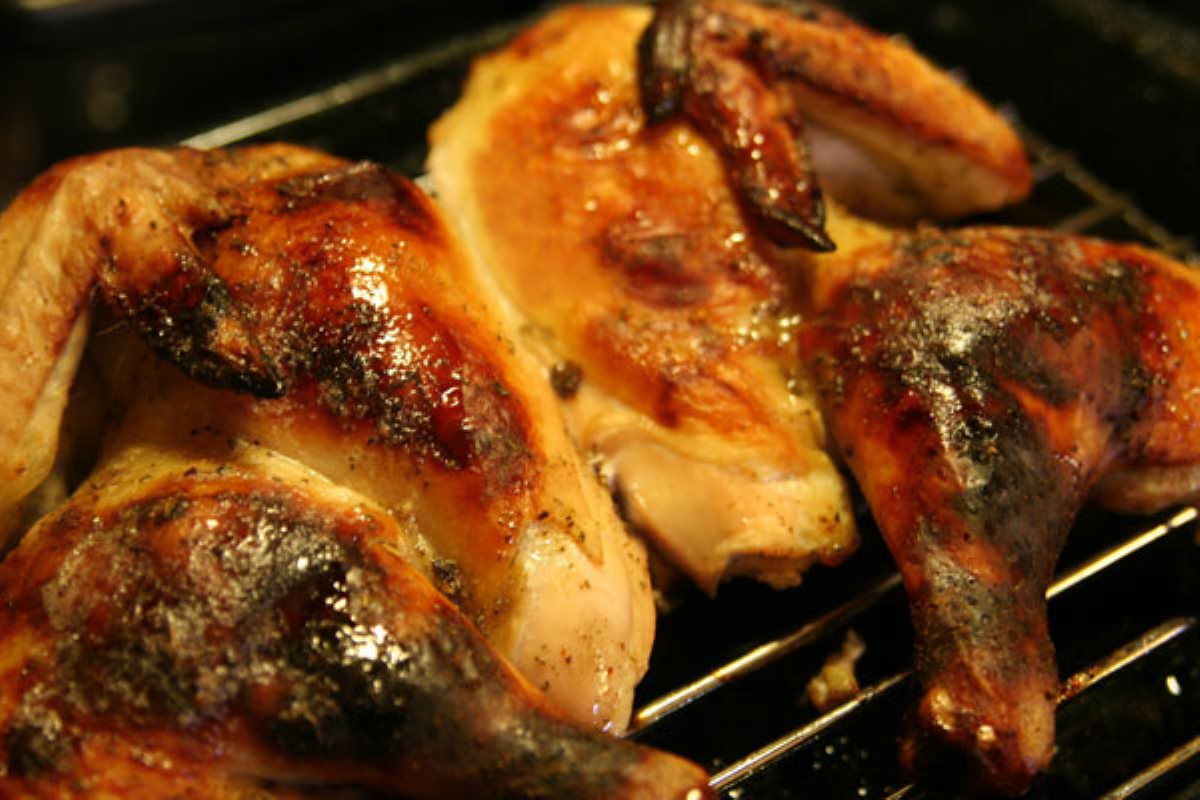
Butterflying a whole chicken results in a juicy, easy-to-prepare, and simple-to-carve roast chicken.
- Carbohydrate 0 g
- Cholesterol 26.6 mg
- Fat 13.6865 g
- Fiber 0 g
- Protein 8.3895 g
- Saturated Fat 2.55172 g
- Serving Size 1 1 Serving (44g)
- Sodium 25.73 mg
- Sugar 0 g
- Trans Fat 0.70922 g
- Calories 158 calories
Step-by-step
- Spray the broiler pan with nonstick cooking spray.
- Preheat oven to 400 degrees.
- Prepare your spice rub with any combination you'd like; I use powdered shallot/pepper seasoning (Penzey's Spices), rosemary, basil, pepper, garlic, and salt.
- About a teaspoon of each, or you can eyeball it.
- Prep the chicken: flip the bird (ha, ha) so it's breast-side down.
- With the kitchen shears, cut alongside each side of the backbone and discard backbone.
- Open up the chicken and cut the breastbone down the center so chicken will lay flat.
- Rinse the chicken and pat dry.
- Place the chicken on the broiler pan so that the legs and thighs are flat on the pan (they will rotate in a seemingly odd way; that's fine).
- Tuck the wings if you'd like; otherwise, just get your chicken to lay as flat as possible.
- Rub the spice mixture on the chicken, and drizzle a little bit of oil all over the top.
- Roast in oven for 15 minutes and then reduce heat to 350 degrees.
- Continue to roast for 50 minutes to one hour, or until chicken is cooked through.
- Remove from oven and allow to stand 10 to 15 minutes, covered, before carving.
- While carving, you'll notice that the leg and thigh separate from the breast when sliced at an angle; the breasts, too, are easy to cut into servings when you're carving a flat bird. :)
Removing the backbone and flattening the bird alters thermodynamic behavior completely, allowing breast and dark meat to finish simultaneously without sacrificing moisture. Whole birds purchased whole cost significantly less per pound than pre-cut parts, making this preparation a primary strategy for economical meal planning. When utilizing herb rubs, remember that dried herbs adhere better when bound with a thin film of oil rather than water-based liquids. Though roast chicken is best consumed fresh, cooked leftovers store safely in an airtight container for three to four days and freeze well for up to three months.
- Use heavy-duty kitchen shears to cut cleanly along both sides of the backbone, discarding or saving it for stock.
- Split the sternum down the inside center so the bird achieves complete flatness on the sheet pan.
- Start roasting at 400 degrees Fahrenheit for 15 minutes to render surface fat before dropping the temperature to 350 degrees Fahrenheit.
- Allow the meat to rest undisturbed under loose foil for 10 to 15 minutes to let internal juices redistribute fully.
- Slice the separated leg and thigh quarters at natural anatomical angles for clean portions.
Proper bone removal ensures every surface area crisps evenly in the heat. Efficient portioning transforms a single inexpensive bird into multiple distinct meals.



