Jools's Favorite Beef Stew
Jools goes mad for this stew in the colder months of the year, and the kids love it too. It's a straightforward beef stew to which all sorts of root vegetables can be added. I really like making it with squash and Jerusalem artichokes, which partly cook into the sauce, making it really sumptuous with an unusual and wonderful flavor. The great thing about this stew is that it gets put together very quickly, and this is partly to do with the fact that no time is spent browning the meat. Even though this goes against all my training, I experimented with two batches of meat - I browned one and put the other straight into the pot. The latter turned out to be the sweeter and cleaner-tasting, so I've stopped browning the meat for most of my stews these days.
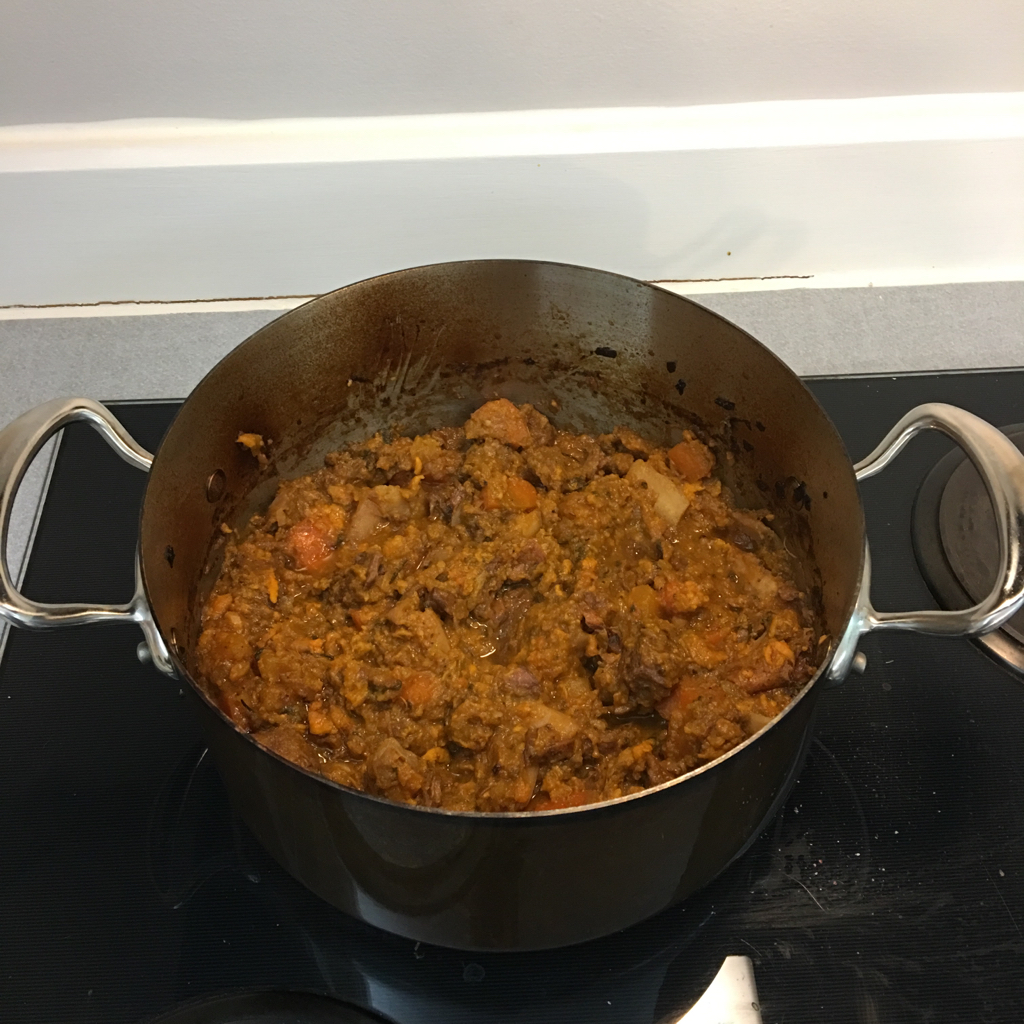
Jools goes mad for this stew in the colder months of the year, and the kids love it too. It's a straightforward beef stew to which all sorts of root vegetables can be added. I really like making it with squash and Jerusalem artichokes, which partly cook into the sauce, making it really sumptuous with an unusual and wonderful flavor. The great thing about this stew is that it gets put together very quickly, and this is partly to do with the fact that no time is spent browning the meat. Even though this goes against all my training, I experimented with two batches of meat - I browned one and put the other straight into the pot. The latter turned out to be the sweeter and cleaner-tasting, so I've stopped browning the meat for most of my stews these days.
- olive oil
- sea salt and freshly ground black pepper
- 1 onion peeled and chopped
- 1 knob butter
- 1 • a handful of fresh sage leaves
- 1 3/4 pounds stewing steak or beef skirt (800 g) cut into 5cm/2 inch pieces
- • flour to dust
- 2 parsnips peeled and quartered
- 4 carrots peeled and halved
- 1/2 butternut squash halved, deseeded and roughly diced
- • optional: a handful of jerusalem artichokes, pee
- 500 grams small potatoes (1lb 2oz)
- 2 tablespoons tomato purã©e
- 1/2 bottle red wine
- 1/2 pint beef or vegetable stock (285 ml)
- zest (of 1 lemon) finely grated
- handful rosemary leaves picked
- 1 clove garlic peeled and finely chopped
- Carbohydrate 57.8621375 g
- Cholesterol 176.3775 mg
- Fat 64.01813125 g
- Fiber 11.0116876345128 g
- Protein 52.33115625 g
- Saturated Fat 29.518093125 g
- Serving Size 1 1 Serving (757g)
- Sodium 473.6755 mg
- Sugar 46.8504498654872 g
- Trans Fat 3.5969075 g
- Calories 1081 calories
Step-by-step
- Preheat the oven to 160ºC/300ºF/gas 2. Put a little oil and your knob of butter into an appropriately sized pot or casserole pan.
- Add your onion and all the sage leaves and fry for 3 or 4 minutes.
- Toss the meat in a little seasoned flour, then add it to the pan with all the vegetables, the tomato purée, wine and stock, and gently stir together.
- Season generously with freshly ground black pepper and just a little salt.
- Bring to the boil, place a lid on top, then cook in the preheated oven until the meat is tender. Sometimes this takes 3 hours, sometimes 4 – it depends on what cut of meat you’re using and how fresh it is. The only way to test is to mash up a piece of meat and if it falls apart easily it’s ready.
- Once it’s cooked, you can turn the oven down to about 110°C/225°F/gas ¼ and just hold it there until you’re ready to eat.
- The best way to serve this is by ladling big spoonfuls into bowls, accompanied by a glass of French red wine and some really fresh, warmed bread.
- Mix the lemon zest, chopped rosemary and garlic together and sprinkle over the stew before eating. Just the smallest amount will make a world of difference – as soon as it hits the hot stew it will release an amazing fragrance.
Cooking without a pre-seared crust saves twenty active minutes while yielding a cleaner, sweeter broth because raw beef proteins integrate directly into the braising liquid. Root vegetables like parsnips, carrots, and squash absorb the red wine and stock during the initial three to four-hour oven phase at 160°C, releasing starches that naturally thicken the sauce without flour slurries.
Transforming Second-Day Leftovers
Resting overnight allows starches from the potatoes, squash, and Jerusalem artichokes to break down further, yielding a richer consistency by the second day. Reheat portions gently on the stovetop over medium-low heat, adding a splash of beef stock to restore the initial sauce viscosity if the starches have absorbed too much liquid during refrigeration.
- Test tenderness by pressing a piece of meat against the side of the pot with a spoon; if it yields and breaks apart completely, the collagen has fully converted to gelatin.
- Keep cooked stew safely chilled below 4°C within two hours of cooling to maintain food safety during storage.
- Lower the oven temperature to 110°C to hold the pot at serving temperature for up to two hours without overcooking the root vegetables.



