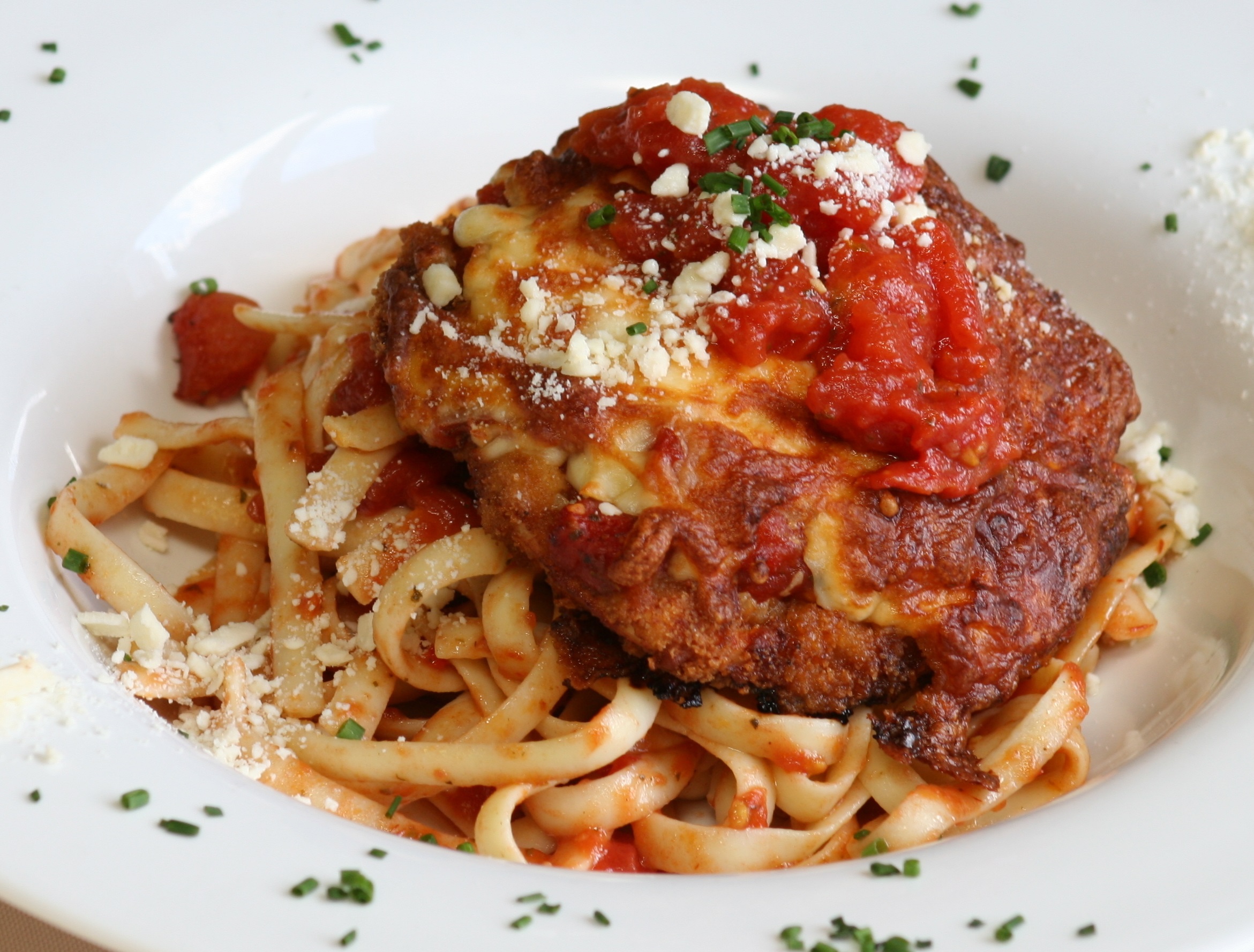
Not quite Chicken Parm, but good enough for the women I date
- Carbohydrate 65.6304750006178 g
- Cholesterol 151.10750001339 mg
- Fat 6.36320000435338 g
- Fiber 3.4987500205636 g
- Protein 81.9589750058522 g
- Saturated Fat 2.31321000263257 g
- Serving Size 1 1 Serving (371g)
- Sodium 588.051250232657 mg
- Sugar 62.1317249800542 g
- Trans Fat 1.33666500026796 g
- Calories 672 calories
Step-by-step
- Preheat oven to 375F.
- Pour sauce into 13 x 9 baking dish.
- Stir in 0.25 cups of parmesan.
- Add chicken, turning to coat each side.
- Cover with foil and bake 30 minutes.
- Uncover, top with mozzarella and remaining 2 tablespoons parmesan.
- Bake 5 minutes or until cheese melted.
- Serve over cooked pasta.
Can raw chicken safely cook directly inside a pool of cold tomato sauce without prior browning? Traditional Italian-American kitchens separate every stage of preparation, pounding cutlets thin, breading them in fine crumbs, and frying them in oil before baking. This streamlined variation bypasses the frying station entirely, relying on a covered baking phase to cook the poultry through while infusing it with moisture from the surrounding tomatoes.
The Origins of Parmigiana
Food historians trace the lineage of chicken parm back to eggplant parmigiana originating in Southern Italy. Immigrants arriving in the United States substituted readily available chicken breast for eggplant, adapting traditional layering techniques to suit local ingredients. While purists insist on a crisp breadcrumb crust, the baked-in method creates a tender protein that merges seamlessly with melted cheese and red sauce.Avoiding Common Pitfalls
Cooks frequently ruin poultry dishes by overcooking lean breasts until they turn fibrous and dry. Covering the baking dish tightly with aluminum foil for the initial thirty minutes traps steam, protecting the meat from direct dry heat while maintaining a steady internal temperature of 375°F. Another frequent error involves dumping cheese onto the dish too early, which causes the fats to separate and burn before the sauce underneath reaches a simmer. Removing the foil only for the final five minutes allows the mozzarella to melt into a stretchy blanket without scorching.Serving and Sauce Dynamics
Bottled marinara formulas vary wildly in sugar content and acidity, making a quick adjustment necessary before assembly. Stirring parmesan directly into the base sauce adds umami and thickens the liquid as it reduces in the oven. Plate the finished poultry immediately over freshly boiled pasta while residual heat keeps the cheese pliable and glossy.


