Easy Rice Pudding
I like this recipe because it is easy, quick compared to other rice pudding recipes, and uses ingredients you probably always have around the house and it's good
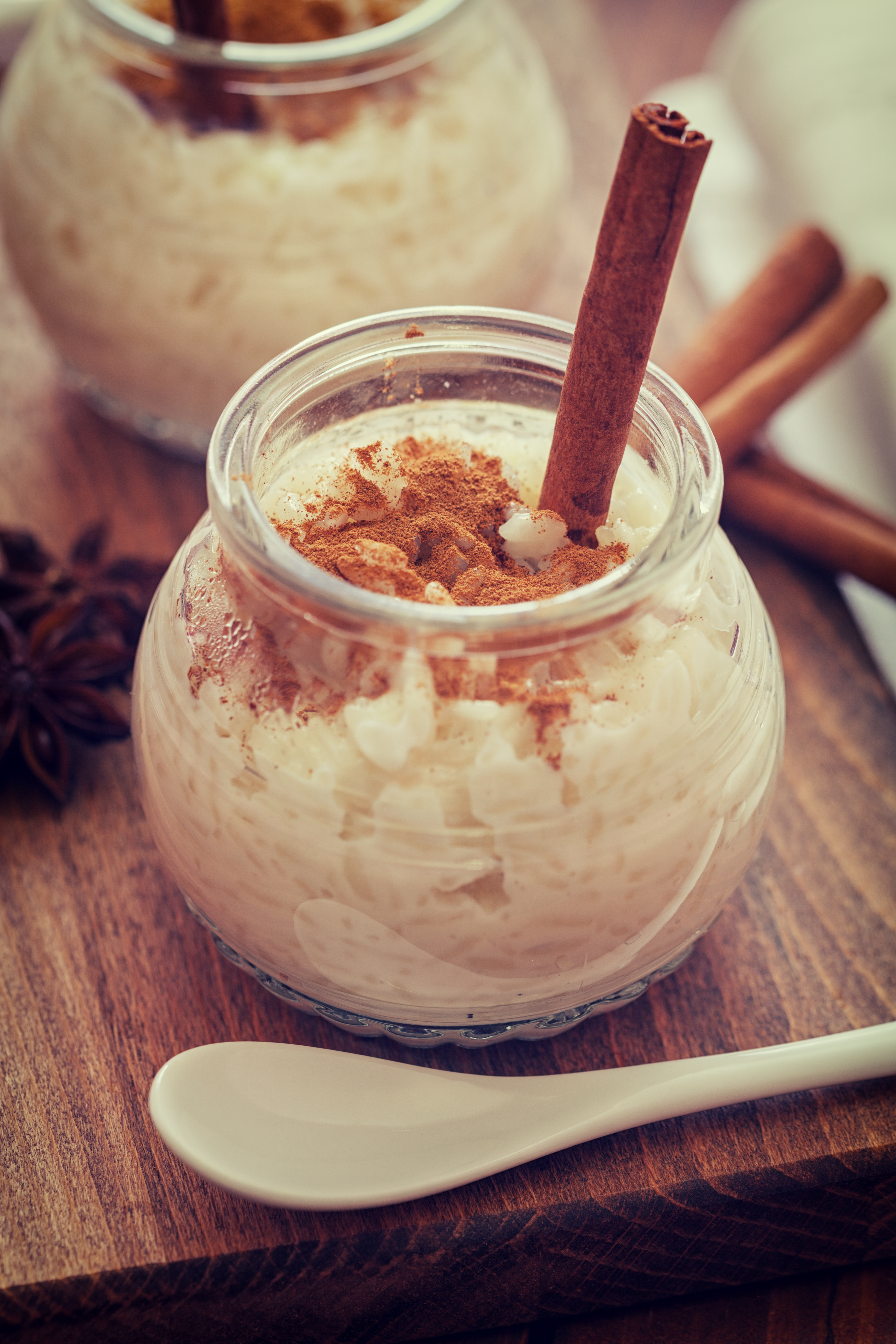
I like this recipe because it is easy, quick compared to other rice pudding recipes, and uses ingredients you probably always have around the house and it's good
- Carbohydrate 55.0202516666667 g
- Cholesterol 62.04 mg
- Fat 1.67151833333333 g
- Fiber 1.5074833343029 g
- Protein 3.81832666666667 g
- Saturated Fat 0.49626875 g
- Serving Size 1 1 Serving (180g)
- Sodium 24.0366666666667 mg
- Sugar 53.5127683323638 g
- Trans Fat 0.336301083333333 g
- Calories 241 calories
Step-by-step
- Bring water and rice to a boil; reduce heat to low, cover, and simmer 14 min.
- All water should be absorbed. (alternately, use 1 cup of leftover cooked rice).
- Heat oven to 325 degrees.
- Beat eggs in un-greased 1 1/2 quart casserole dish.
- Stir in sugar, raisins, milk, salt, and spice.
- Stir in rice.
- Bake uncovered 45 minutes; stirring occasionally.
- Remove from oven and stir well.
- It will still be pretty wet.
- Let set for 15 minutes to thicken.
- Serve warm or chilled
Starch Gelatinization and Milk Proteins
Cooking long-grain rice in water first forces starch granules to absorb moisture and swell before dairy enters the equation. Long-grain varieties contain a lower ratio of amylopectin compared to short-grain types, which helps the grains maintain distinct structural integrity rather than collapsing into paste. Introducing whole milk or two percent milk adds fats and proteins that coat the starch molecules, yielding a suspension that thickens securely as eggs coagulate at roughly 160 degrees Fahrenheit during the 45-minute bake at 325 degrees.
Cooling, Setting, and Resting Mechanics
Chemical reactions continue long after the dish leaves the oven. The mixture appears watery upon initial removal, but starch retrogradation occurs during the mandatory 15-minute resting window. As the temperature drops, dissolved amylose molecules realign into a rigid crystalline network that traps free liquid, transforming the loose pudding into a spoonable dessert. Stirring occasionally during the baking process distributes the rising milk solids evenly, preventing a dense, dry crust from forming on the surface.
Storage and Reheating Protocols
Prepared servings can be refrigerated for up to four days in an airtight container, though retrogradation will continue and firm up the texture significantly. Reheating requires gentle indirect heat, such as warming portions on the stovetop over low heat with an extra tablespoon of milk to restore lost moisture. Freezing is generally discouraged because high-water dairy emulsions and cooked starch matrices tend to separate and turn grainy upon thawing.



