Cole Slaw
We particularly enjoy this recipe made with either Napa or Savoy cabbage. I usually have buttermilk in the fridge but if you don't have any, just use regular milk.
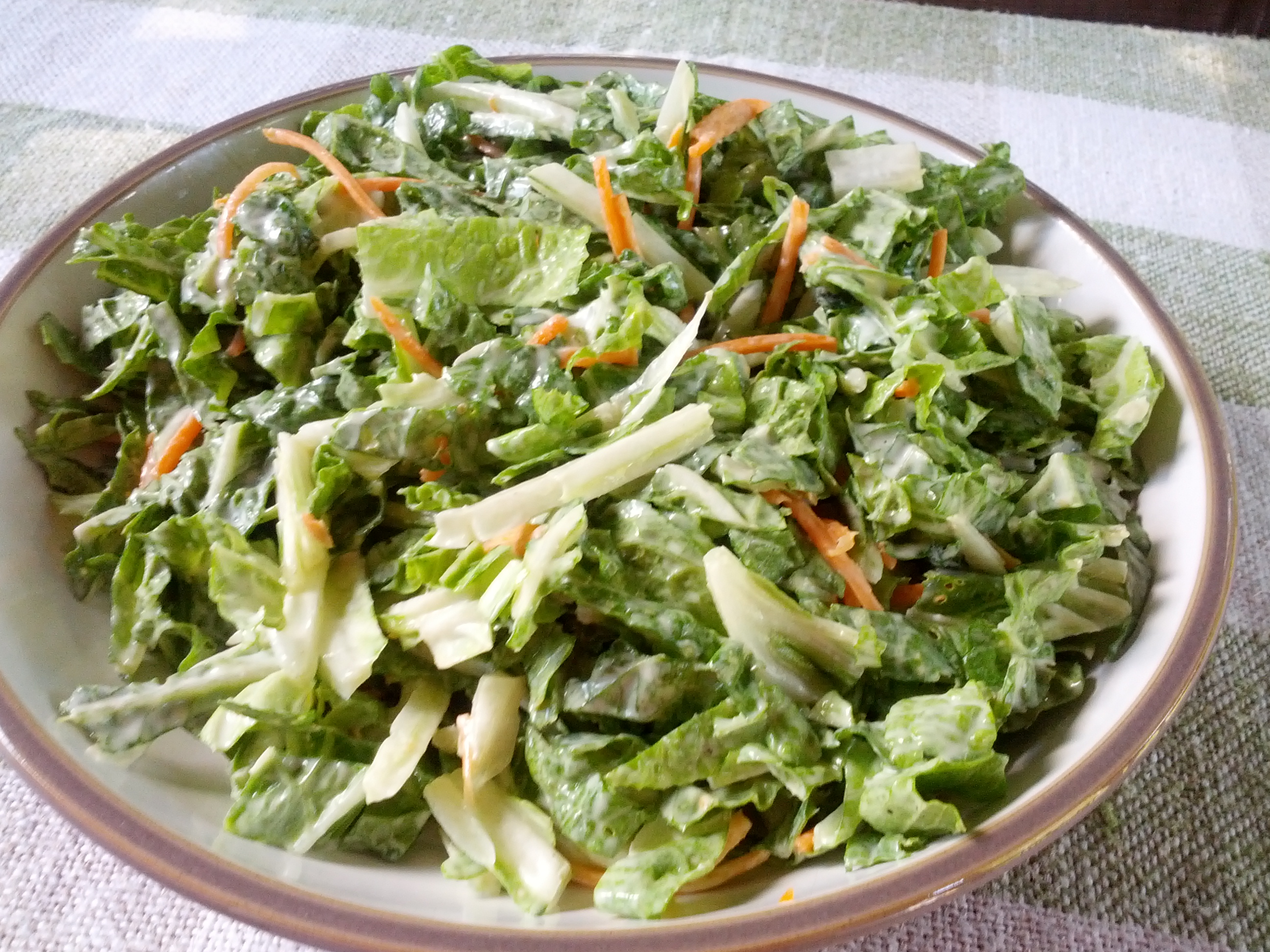
We particularly enjoy this recipe made with either Napa or Savoy cabbage. I usually have buttermilk in the fridge but if you don't have any, just use regular milk.
- Carbohydrate 18.8646721822878 g
- Cholesterol 9.708125 mg
- Fat 12.5342874998396 g
- Fiber 2.74074999140414 g
- Protein 1.8509359373252 g
- Saturated Fat 1.86391562499008 g
- Serving Size 1 1 Serving (158g)
- Sodium 320.4235312046 mg
- Sugar 16.1239221908837 g
- Trans Fat 0.597037656242757 g
- Calories 189 calories
Step-by-step
- Whisk first five ingredients together until smooth.
- Combine cabbage with carrot in a large bowl.
- Add about 2/3 of the dressing to the cabbage and toss.
- If needed, add more dressing.
Should the dressing cling to the leaves or pool at the bottom of the bowl? Achieving the right consistency depends entirely on how the emulsion holds up against water released from the vegetables. Cabbage contains high levels of cellular water that leaches out upon contact with salt. Whisking the mayonnaise, Dijon mustard, white wine vinegar, sugar, and buttermilk thoroughly before mixing prevents the oil and acid from separating prematurely. Emulsification creates a cohesive coating that binds to the shredded surfaces rather than sliding off.
Savoy and Napa varieties offer crinkled leaves with high surface area. That texture captures the dressing far better than smooth-leaved green heads. Shred the cabbage thin, aiming for ribbons roughly one-eighth of an inch wide. Coarsely shred the carrot to introduce a contrasting snap and a mild sweetness that balances the sharp tang of white wine vinegar.
Pair this crunchy side dish with rich, heavy mains to cut through dense fats. Smoked pork shoulder, charred beef sausages, or fried catfish provide the ideal counterweight to the acidity and crisp vegetables. The fat in these proteins benefits from the lactic acid in the buttermilk and the acetic acid in the vinegar.
Resting the dressed mixture in the refrigerator for 30 minutes allows the cabbage to soften slightly while retaining structural integrity. Leftovers keep for up to 24 hours in a sealed container, though the vegetables continue to release moisture over time. Drain excess liquid before serving day-old portions.


