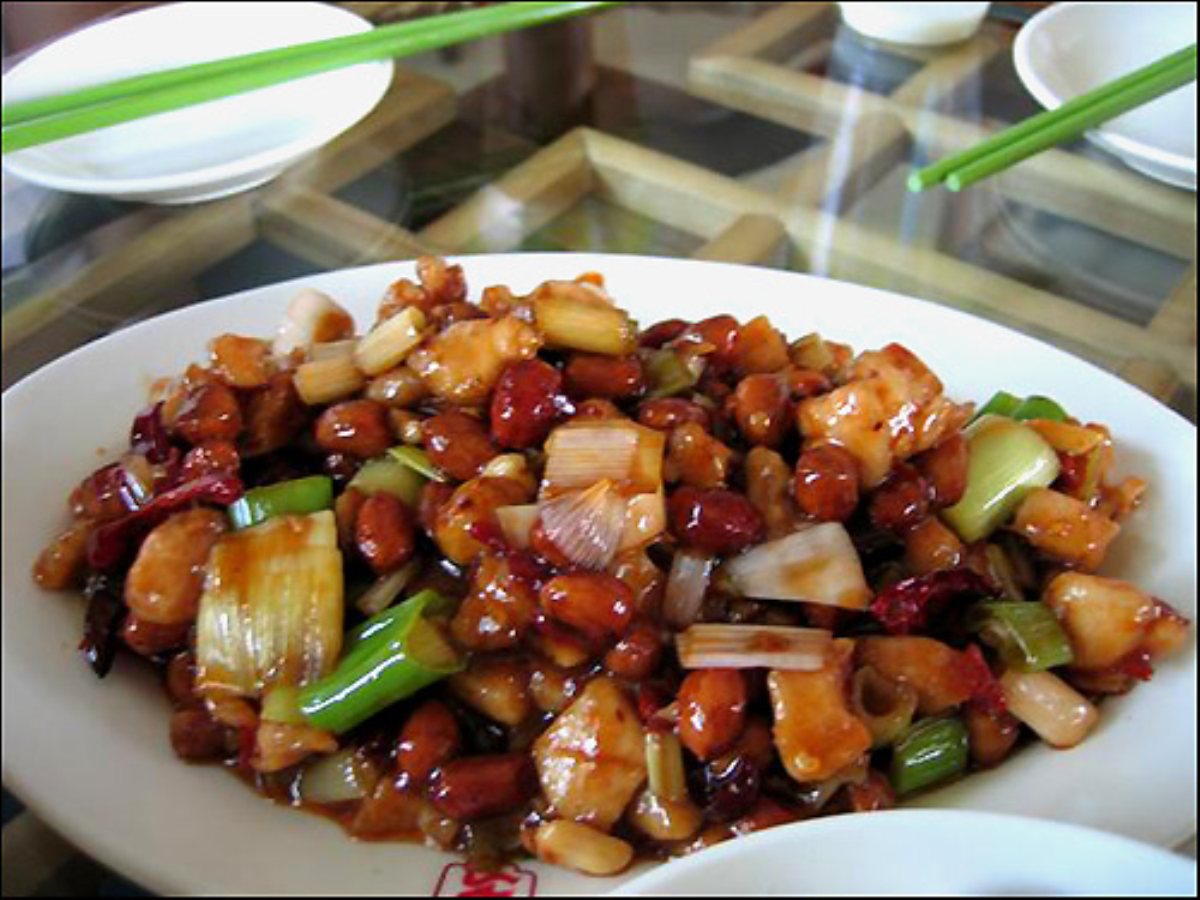
Szechuan Kung Pao Chicken (Gong Bao Ji Ding)
A spicy chicken and peanut dish originating from the western Chinese province of Szechuan, an area renowned for its distinctive fiery hot cuisine. I learned this when I was living in Chongqing. Important foreword: Get ALL of your ingredients ready before anything goes into the wok. Everything must be near to hand as, like most Chinese recipes involving stir frying, this moves pretty rapidly. You've been warned. Heed not and you'll be eating a giant mess of burnt sugar coated chicken.
A spicy chicken and peanut dish originating from the western Chinese province of Szechuan, an area renowned for its distinctive fiery hot cuisine. I learned this when I was living in Chongqing. Important foreword: Get ALL of your ingredients ready before anything goes into the wok. Everything must be near to hand as, like most Chinese recipes involving stir frying, this moves pretty rapidly. You've been warned. Heed not and you'll be eating a giant mess of burnt sugar coated chicken.
- marinade:
- pinch of salt
- 1 tablespoon sugar
- 1 egg white
- 1 tablespoon cornstarch
- 1 lb chicken thigh
- 10 whole red chili peppers
- 1 small red onion (optional)
- 2-3 cloves garlic (crushed)
- 1/2 piece ginger (crushed)
- handful of roasted peanuts (the salted kind is fi
- 1 tablespoon shaoxing wine or sherry
- seasoning:
- 1 tablespoon shaoxing wine/sherry
- 1 tablespoon dark vinegar (balsamic will do)
- 1 tablespoon dark soy sauce
- 1 scallion
- Carbohydrate 13.5343000049554 g
- Cholesterol 94.120416775 mg
- Fat 4.95276541675022 g
- Fiber 1.81199999645738 g
- Protein 25.5934251762511 g
- Saturated Fat 1.18276842500004 g
- Serving Size 1 1 Serving (244g)
- Sodium 325.233359550039 mg
- Sugar 11.722300008498 g
- Trans Fat 0.996473575250002 g
- Calories 199 calories
Step-by-step
- Dice chicken into half inch cubes.
- Mix marinade, lightly beating the egg white and pour over the chicken. Leave to stand for no more than 30 minutes.
- Velvet the chicken with oil or water: Heat 2 cups of oil until hot (450F) in the wok or alternatively bring a large pot of water to a boil. Stir the chicken to separate, add to the oil or water, and stir again. If using oil, after about a minute, flip the chicken and cook for another minute, until white. If using water, simmer for about 2 minutes until the chicken turns white. Drain the chicken and reserve, keeping about 2 tablespoons of the oil in the wok (if you used water, you'll need 2 tablespoons of oil to finish the dish).
- Tear the chilis into pieces, then soak them in hot water for 30 minutes. Drain.
- Peel the onion and cut into sqaure 1 1/2 inch pieces.
- Heat wok until very hot (until it starts to smoke). Add the oil if you velveted your chicken in water. Add the garlic and ginger to the oil, stir for 15 seconds, then add the chilis and stir for a minute or two. Add the onions and continue to stir and flip for another minute. Add the chicken, scallion, peanuts and cook for a minute. After this, if you notice that it seems a little dry for your taste, feel free to mix 1 tablespoon of cornstarch with a little bit of water and pour in along with your seasoning (that means vinegar, soy etc). Give it a good quick stir. I mean it, be quick! The sugar will burn. Serve with fragrant steamed rice.



