Homemade Black Licorice Nibs
I love black licorice but my blood pressure doesnt. So I adapted this recipe to satisfy my sweet tooth and my heart. It has no real licorice root in it but the taste of anise and molasses does the trick for me. It is a chewy treat similar to taffy. Makes about 2 pounds.
I love black licorice but my blood pressure doesnt. So I adapted this recipe to satisfy my sweet tooth and my heart. It has no real licorice root in it but the taste of anise and molasses does the trick for me. It is a chewy treat similar to taffy. Makes about 2 pounds.
- 1 cup sugar
- 1/2 teaspoon kosher salt
- 1 stick butter
- 1/2 cup corn syrup light or dark
- 1/2 cup sweetened condensed milk *see below*
- 1/4 cup blackstrap molasses
- add after cooking
- 3/4 cup flour white or whole wheat
- 1 1/2 tablespoons anise extract **or 1 1/2 tsp. anise oil
- 1 1/2 teaspoons black food coloring ***see below***
- Carbohydrate 5.1508426519864 g
- Cholesterol 2.82220000186958 mg
- Fat 0.791215400468855 g
- Fiber 0 g
- Protein 0.727580000613019 g
- Saturated Fat 0.497983120297476 g
- Serving Size 1 1 Serving (25g)
- Sodium 1148.95489321662 mg
- Sugar 5.1508426519864 g
- Trans Fat 0.0467225200215414 g
- Calories 30 calories
Step-by-step
- First spray a 8 inch square baking dish with cooking spray and set aside.
- Bring butter, sugar, syrup, milk, molasses and salt to a boil over high heat in a 2 quart saucepan equipped with a Candy Thermometer. Cook until temperature reaches 250 degrees.
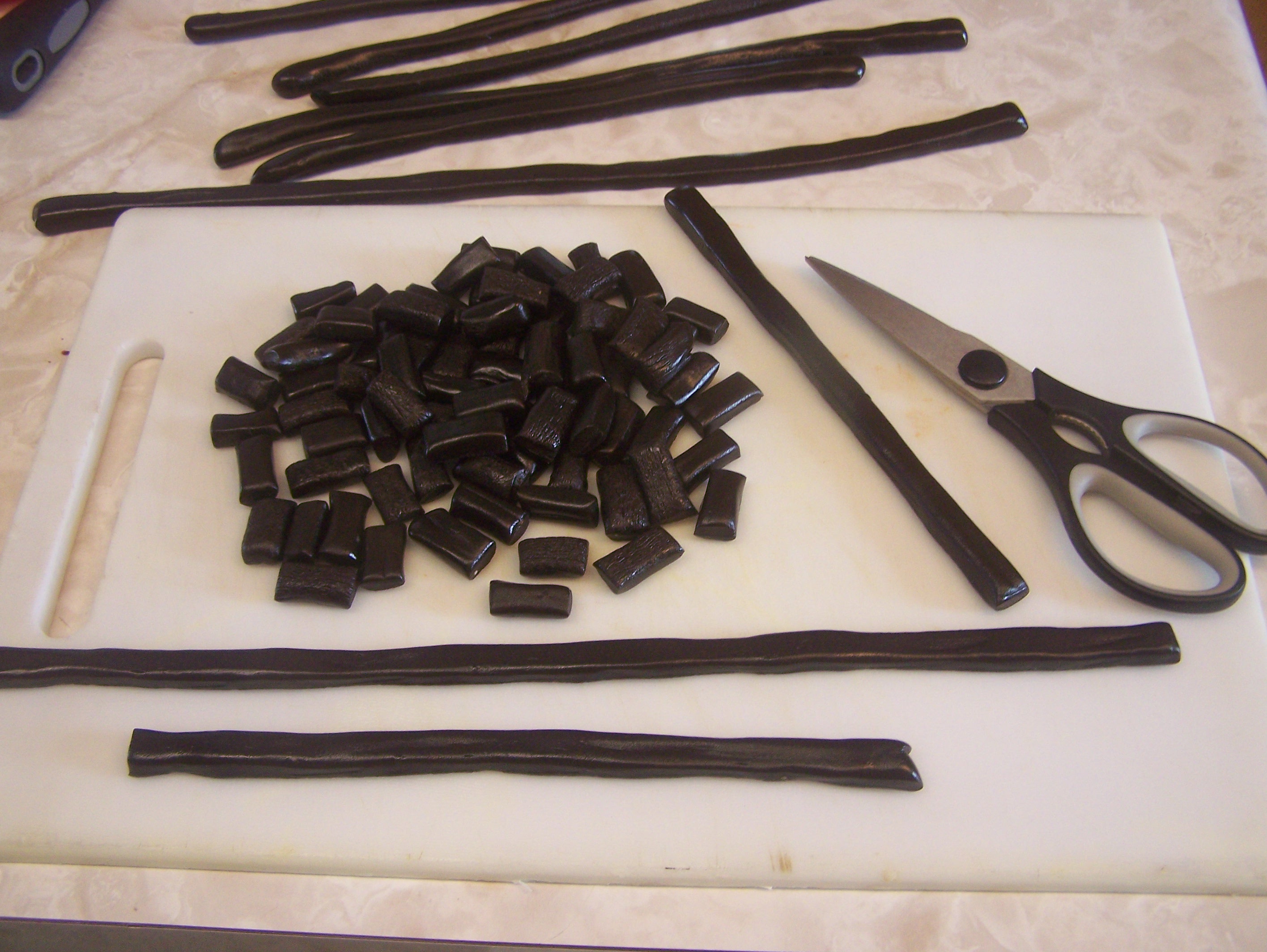
- Remove from heat and stir in flour, anise extract and food color. Mix well and pour into prepared baking dish. Let cool 30 to 45 minutes. Unmold onto a cutting board when warm enough to handle but not hot. Using kitchen shears cut into 1 inch wide strips and using your hands roll and form the strips into 1/2 inch round ropes. Cut each rope into 1 inch long pieces or "Nibs" and let finish cool and harden slightly stirring once in a while to avoid sticking together.
Mastering the Stovetop Stage
Combining butter, sugar, corn syrup, sweetened condensed milk, molasses, and kosher salt requires constant attention over high heat because dairy solids scorch easily at the bottom of thin pots. Whisking continuously until the mixture reaches the exact 250 degree mark guarantees the proper evaporation of water content necessary for chewiness. Once the hot pot leaves the burner, rapidly stir in the flour, colorings, and anise extract before the mixture begins to set up against the metal. Pouring the hot mass into an oiled 8-inch square baking dish allows the interior heat to dissipate evenly during the initial 30 to 45 minute resting window.
Shaping and Cutting Technique
Handling the warm mass demands precise timing, as letting the slab cool too long creates cracking while insufficient cooling causes the ropes to flatten into blobs. Unmold the warm slab onto a clean cutting board once internal temperatures drop to a point where the material holds its shape under pressure from kitchen shears. Snip the flattened mass into 1-inch wide strips, roll them manually into half-inch round ropes, and divide those ropes into bite-sized pieces. Toss the finished pieces occasionally during their final cooling phase to prevent them from fusing into a solid block.



