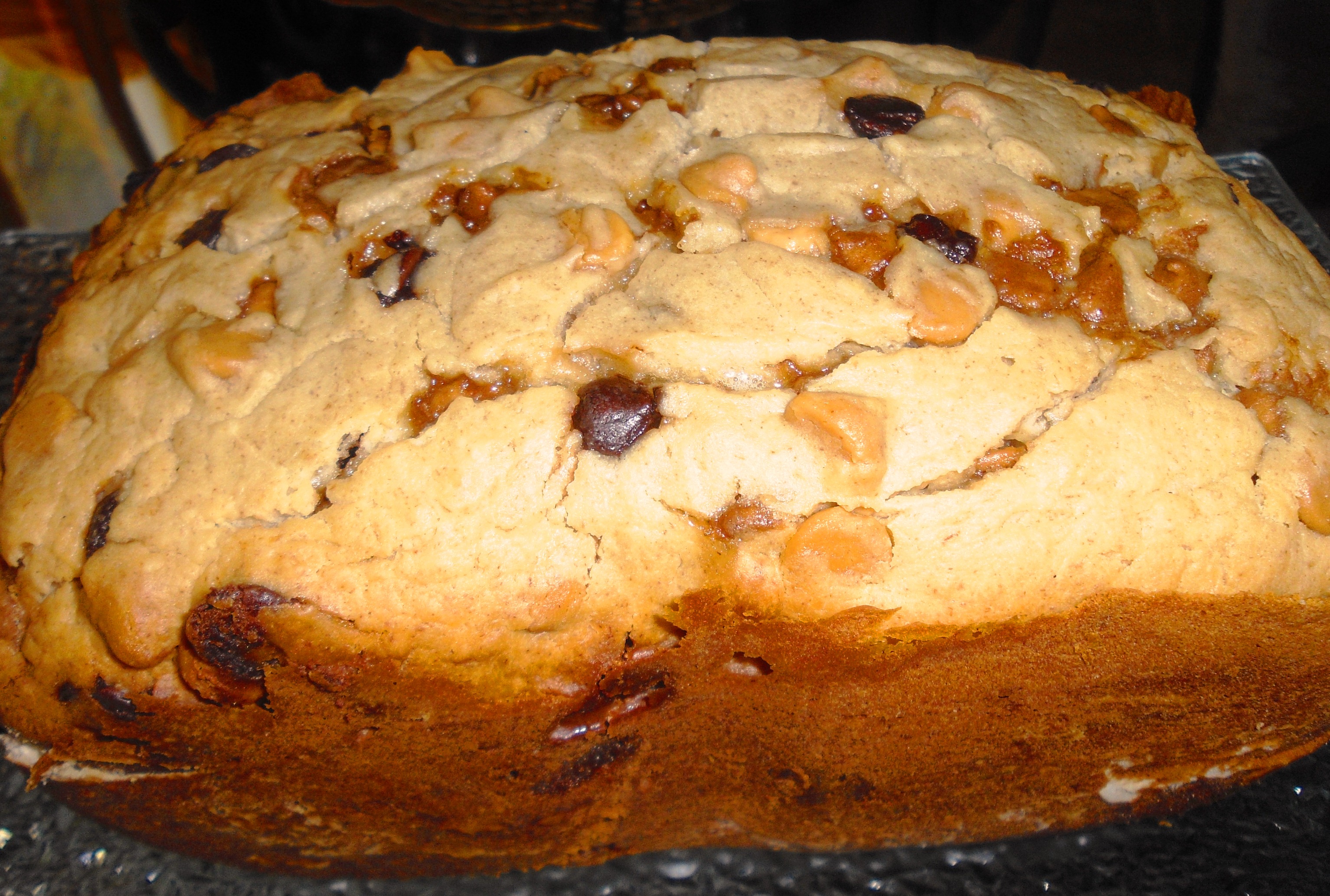
Excellent!
- 1/2 cup vegetable oil
- 1 teaspoon baking soda
- 1 teaspoon salt
- 3 eggs
- 1 teaspoon vanilla
- 1/2 cup butter or margarine softened
- 1 1/4 cups sugar (i used half sugar half splenda)
- 1 1/2 cups mashed very ripe bananas (3 to 4 medium)
- 1/2 cup plain greek yogurt
- 1 1/2 cups gold medal� all-purpose flour
- 1 cup peanut butter chocolate chips and chocoate chips
- Carbohydrate 118.960506 g
- Cholesterol 341.85775 mg
- Fat 24.55187975 g
- Fiber 1.67100002670288 g
- Protein 15.54309325 g
- Saturated Fat 8.81819447595 g
- Serving Size 1 1 Serving (229g)
- Sodium 299.85515 mg
- Sugar 117.289505973297 g
- Trans Fat 2.16914777551 g
- Calories 752 calories
Step-by-step
- Mix all ingreidents together the way your bread machine says to and make sure that your bread machine has a batter bread selection to put it on that cycle.
- set your machine to Batter bread cycle and push start.
- When it beeps to put in nuts, put your chocolate chips in and take out the paddle, this way it wont over mix.
- I usually just stir the chocolate chips in with a spoon.
- Then just close the top it will start up again and then bake,
Standard quick breads rely on chemical leaveners and manual creaming methods, but adapting the formula for a bread machine shifts the structural mechanics entirely. Incorporating butter, vegetable oil, and Greek yogurt simultaneously provides a high moisture retention profile that prevents the crumb from drying out during prolonged machine mixing cycles. Selecting overly ripe bananas, identifiable by entirely black peels and soft flesh, ensures maximum natural sugar conversion before the machine even begins its work.
Historically, banana bread gained widespread American popularity during the Great Depression as a practical method for utilizing overripe fruit that would otherwise spoil. Early iterations were strictly hand-mixed in cast-iron or loaf pans, relying on basic pantry staples without commercial baking appliances. Modern automated adaptation requires careful observation of the machine settings to prevent gluten overdevelopment during the initial incorporation phase.
Operating the machine demands specific attention to the equipment cycle parameters. Setting the unit to a dedicated batter bread program avoids the heavy kneading phases meant for yeast doughs, protecting the tender texture required for quick breads. Removing the kneading paddle immediately before the final bake cycle prevents dense mechanical streaks in the finished loaf and eliminates the cavity left by the blade.
Adjusting sweetness levels through partial sweetener replacements alters the browning reactions during baking. Substituting half the granulated sugar with alternative sweeteners reduces the Maillard reaction rates, resulting in a lighter exterior crust color. Storing the finished loaf tightly wrapped at room temperature maintains textural integrity for up to three days without refrigeration.


