Easy Barbeque Baked Beans
Great for a family reunion, these taste like they came from your local BBQ joint. Prep is easy and you can cook in the oven or leave out the liquid smoke and put on the top rack of your smoker next time you are smoking a brisket.
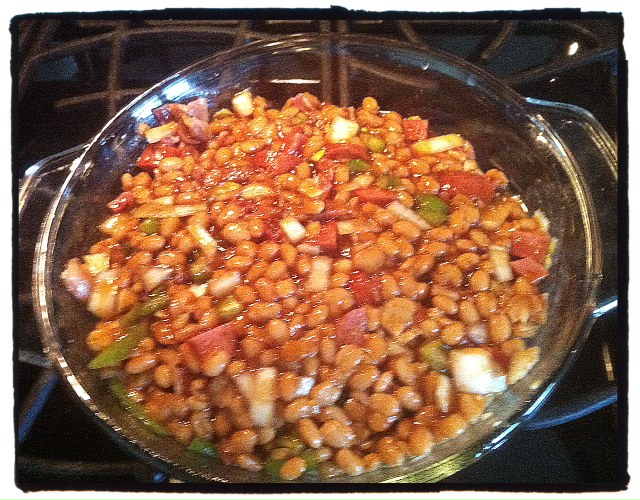
Great for a family reunion, these taste like they came from your local BBQ joint. Prep is easy and you can cook in the oven or leave out the liquid smoke and put on the top rack of your smoker next time you are smoking a brisket.
- 1/2 cup ketchup
- 3/4 cup brown sugar
- 2 tbsp worcestershire sauce
- 1 tsp lemon juice
- 1 tsp liquid smoke
- 5 cans pork and beans rinse beans in sink, until all juice is off
- 1 med bell pepper chopped
- 1 med onion chopped
- 1 tbsp mustard
- 1 cup barbeque sauce any sauce you like, i use head country a local favorite
- 2 cloves garlic cloves minced
- 6 strips bacon chopped (dont cook bacon completely in microwave)
- 3/4 cup maple syrup
- 1 16 oz. smoked sausages sliced
- Carbohydrate 51.96537634996 g
- Cholesterol 24.989884375 mg
- Fat 9.29704192390271 g
- Fiber 4.65707270221067 g
- Protein 9.31316449757355 g
- Saturated Fat 3.02255799589072 g
- Serving Size 1 1 Serving (201g)
- Sodium 859.042240853434 mg
- Sugar 47.3083036477494 g
- Trans Fat 1.41280651389871 g
- Calories 315 calories
Step-by-step
- Rinse Pork and Beans juice in a collander place aside.
- chop onions and bell peppers and cook in microwave for 45 seconds to soften set aside.
- cook bacon about 2/3rds done and chop and set aside.
- combine all ingredients in a covered cooking pot 350 degrees for 90 min or until start boiling.
- let cool a bit and serve.
Using raw onions and crisp, fully cooked bacon ruins baked bean texture by introducing watery pockets and rubbery strips. Achieving the right consistency requires careful preparation of each component before the mixture ever enters the oven at 350 degrees.
- Microwave chopped onions and bell peppers for 45 seconds to drive off excess moisture and start cell wall breakdown before mixing them into the pot.
- Cook bacon only until two-thirds done so the strips retain enough structural integrity to render remaining fat slowly during the 90-minute bake.
- Rinse the canned pork and beans thoroughly in a colander to eliminate the thick, starchy canning liquid, which otherwise prevents your custom sauce mixture from binding properly to the legumes.
- Maintain a covered cooking environment for the first portion of the baking time to trap steam until the contents reach a rolling boil.
- Allow the finished dish to cool slightly before serving to let the starches gelatinize and thicken the liquid phase into a clingy glaze rather than a watery broth.
Proper sequencing prevents textural contradictions in the final dish. Staggering your prep ensures that dense ingredients soften at the correct rate during the bake.


