Chewy Oatmeal-Raisin Cookies
These are incredibly good cookies, sweet but not too sweet, deliciously crisp on the edges but moist and chewy in the middle. I cant say for sure that these are the best oatmeal-raisin cookies in the world, but theyre certainly the best ones Ive made or tasted.
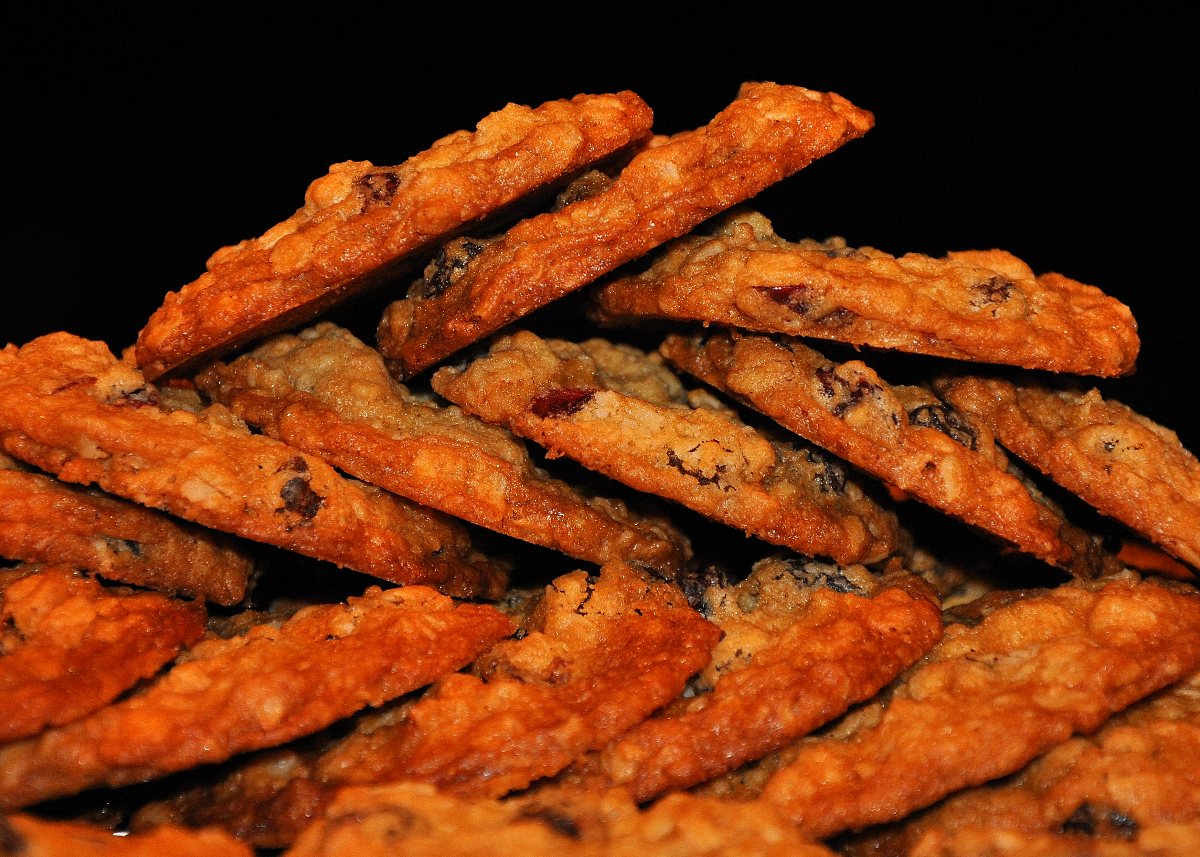
These are incredibly good cookies, sweet but not too sweet, deliciously crisp on the edges but moist and chewy in the middle. I cant say for sure that these are the best oatmeal-raisin cookies in the world, but theyre certainly the best ones Ive made or tasted.
- 1/4 teaspoon salt
- 1 large egg
- 1 teaspoon vanilla extract
- 3/4 teaspoon baking soda
- 3/4 teaspoon baking powder
- 2/3 cup sugar
- 1 1/2 6-oz sticks unsalted butter softened but still firm
- 3/4 cup light brown sugar firmly packed
- 2 cups rolled oats (i use quaker old fashioned or quick. do not use instant.)
- 1 1/4 cups all-purpose flour sifted
- 1 1/2 cups dark seedless raisins (variations: currants or raisinets)
- 1/2 cup walnuts chopped (optional)
- Carbohydrate 39.98415 g
- Cholesterol 10.575 mg
- Fat 13.32077725 g
- Fiber 2.49963257438578 g
- Protein 4.82614475 g
- Saturated Fat 4.03667175 g
- Serving Size 1 1 Cookie (68g)
- Sodium 276.7946 mg
- Sugar 37.4845174256142 g
- Trans Fat 6.80454185 g
- Calories 293 calories
Step-by-step
- Preheat oven to 375 degrees F.
- In bowl of electric mixer or by hand, beat butter until creamy. Add sugars; beat until fluffy, about 3 minutes. Beat in egg and vanilla extract; beat until well combined
- In a separate bowl combine oats, flour, soda, baking powder and salt. Mix into butter mixture with wooden spoon or large rubber spatula until just combined. Stir in raisins, currants or Raisinets (and optional walnuts).
- Drop the dough by heaped tablespoons onto ungreased baking sheets (or, parchment-lined baking sheet*), leaving at least a 2" gap between each mound.
- Bake for 12-15 minutes until edges are golden brown (Do not overbake these cookies...the edges should be brown but the rest of the cookie should still be very light in color). Cool on sheet for at least two minutes before transferring to a rack.
- *Note: Parchment paper is not a necessity but does make for easy cookie removal and cleanup. If using parchment, remove baking sheets from oven and immediately slide cookies on parchment directly onto cooling racks.
Ingredient weights and measures reveal little about the physical transformation that occurs when butter and sugars are beaten for three full minutes. That mechanical aeration incorporates microscopic air pockets, which chemical leaveners like baking soda and baking powder then expand in a 375 degrees F oven. Old-fashioned rolled oats absorb moisture differently than instant varieties, yielding a structured chew rather than a mushy crumb.
Managing Texture Over Time
Leftover cookies retain their interior moisture surprisingly well when stored in an airtight container with a slice of plain white bread. The cookies draw hydration from the bread, maintaining their soft center for up to four days. If the edges begin to soften too much during storage, crisp them for three minutes in a 300 degrees F toaster oven before eating.
Batch Sequencing and Cooling
Bake only one sheet at a time on the middle oven rack to ensure even heat circulation. Letting the mounds rest on the hot pan for exactly two minutes allows the starches to set without overcooking the bottoms. Transfer them carefully to a wire rack to stop the residual cooking process immediately.



