Russian Solyanka
A wonderful and tasty traditional Russian dish. I had this every time I visited Moscow and fell in love with it so much, I just had to figure out how to make it. This recipe calls for beef, ham, and sausage, but feel free to experiment around with this.
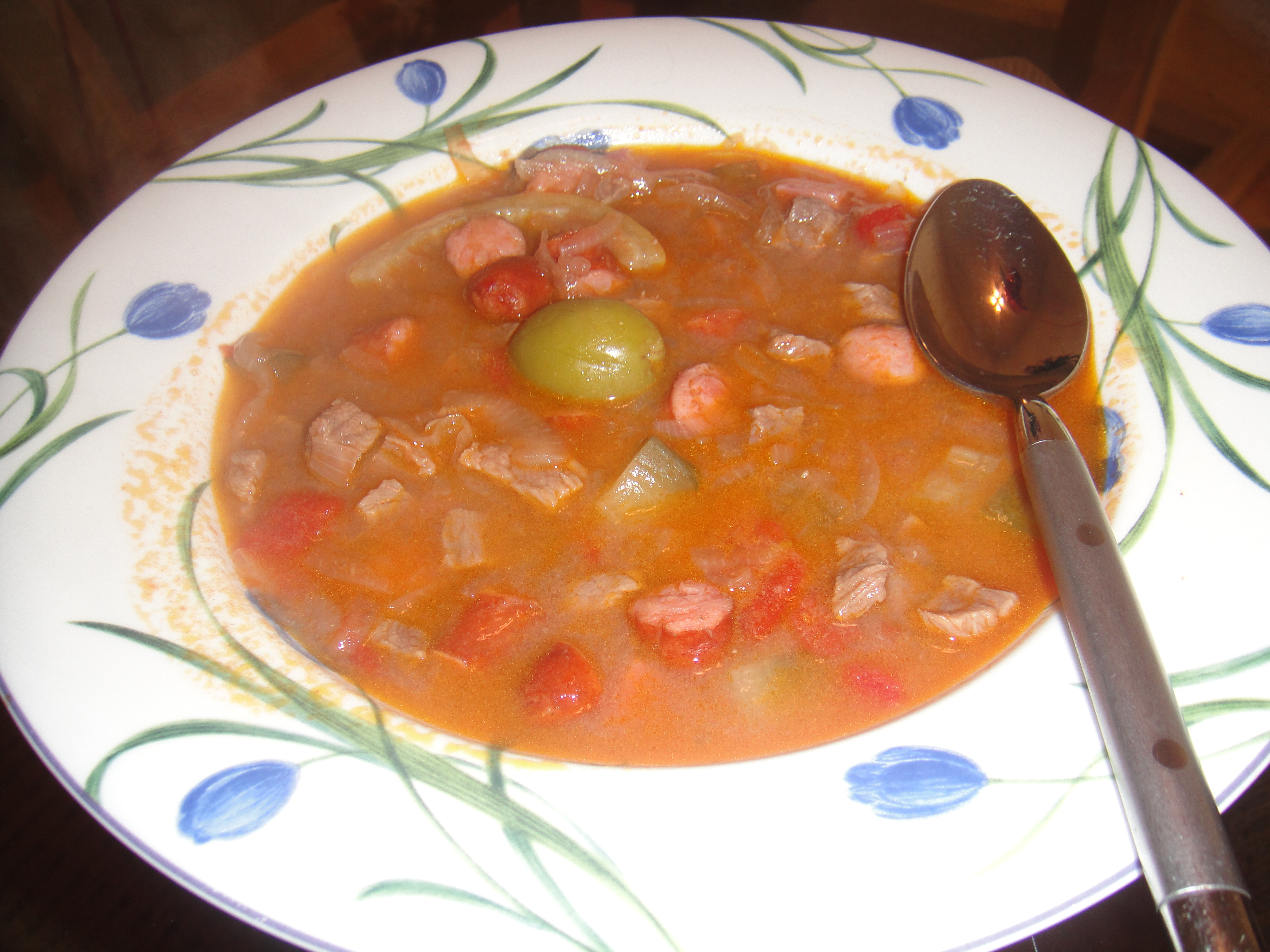
A wonderful and tasty traditional Russian dish. I had this every time I visited Moscow and fell in love with it so much, I just had to figure out how to make it. This recipe calls for beef, ham, and sausage, but feel free to experiment around with this.
- 1 tsp salt
- 2.5 lb beef chuck bite size chunks
- .25 lb ham cubed
- .25 lb sausage bite size chunks
- 2 whole onion sliced thin
- 2 whole pickle cubed
- 2 tbsp tomato paste
- 3 tbsp butter vegetable or olive oil optional alternate
- 4 pint beef boullion chicken or vegetable optional alternate
- 10 whole peppercorn
- 2 whole bay leaf
- 1 tbsp capers
- 4 tbsp sour cream
- 1/2 whole lemon sliced thin
- 2 whole tomatoes peeled & chopped
- 8 whole olives large
- Carbohydrate 6.46346064949888 g
- Cholesterol 109.4709699825 mg
- Fat 32.7898599986369 g
- Fiber 1.86572744191343 g
- Protein 28.8618924629556 g
- Saturated Fat 14.5586161116078 g
- Serving Size 1 1 Serving (411g)
- Sodium 1221.27981941194 mg
- Sugar 4.59773320758545 g
- Trans Fat 3.58471772129504 g
- Calories 437 calories
Step-by-step
- Shred the onion into semi-rings. Soften it in the pan with oil or olive oil. Add chopped into cubes (1/3-1/3") cucumbers, add half the broth and allow to simmer, do not allow cucumbers to get soft. Add tomato paste, salt, and peppercorns bring to boil for 5-7 minutes when cucumbers get a little bit soft then add chopped tomatoes.
- Right away after boiling add chopped (again into small cubes 1/2-1/2") meat products (the more various the better), remainder of bullion, and bay leafs then heat to get it to boil.
- Add olives, capers, and lemon into Solyanka. Allow to simmer until thickened.
Balancing acidity against a rich, heavy protein base requires strict control over addition timing. Solyanka relies on cured meats, brined pickles, and fresh citrus interacting within a single stock pot. Historical variations of this Eastern European soup emerged from the need to utilize leftover pantry preserves alongside market cuts of beef, turning disparate ingredients into a cohesive broth.
Sequencing the Acid and the Meat
Adding acidic ingredients too early in the cooking process will toughen connective tissues in the beef chuck and prevent root vegetables from softening. Simmer the diced pickles and sliced onions in fat until translucent before introducing the tomato paste and stock. Incorporating cured ham, sausage, and raw beef after the initial broth reaches a boil ensures the proteins retain distinct textures rather than dissolving completely. Whole peppercorns and bay leaves infuse the liquid during this medium-heat stage without overpowering the salinity of the capers and olives.
Managing Texture Through Simmering
Preserving structural integrity in the vegetables dictates the final mouthfeel of the dish. Cucumbers must retain a slight crunch after their initial simmer in the broth, which prevents them from turning mushy when exposed to prolonged heat. Thinly sliced lemon rounds and large olives go in near the end of the process, imparting aromatic oils without rendering the soup excessively bitter. Ladle the finished portions hot, garnishing each bowl with a dollop of sour cream to temper the sharp brine.


