Bourbon Balls
Bourbon Balls, a classic holiday confection, delight all. Made with pecans, confectioner's sugar, butter, and Maker's Mark Bourbon Whisky, these dough balls are rolled and dipped in chocolate for a festive treat.
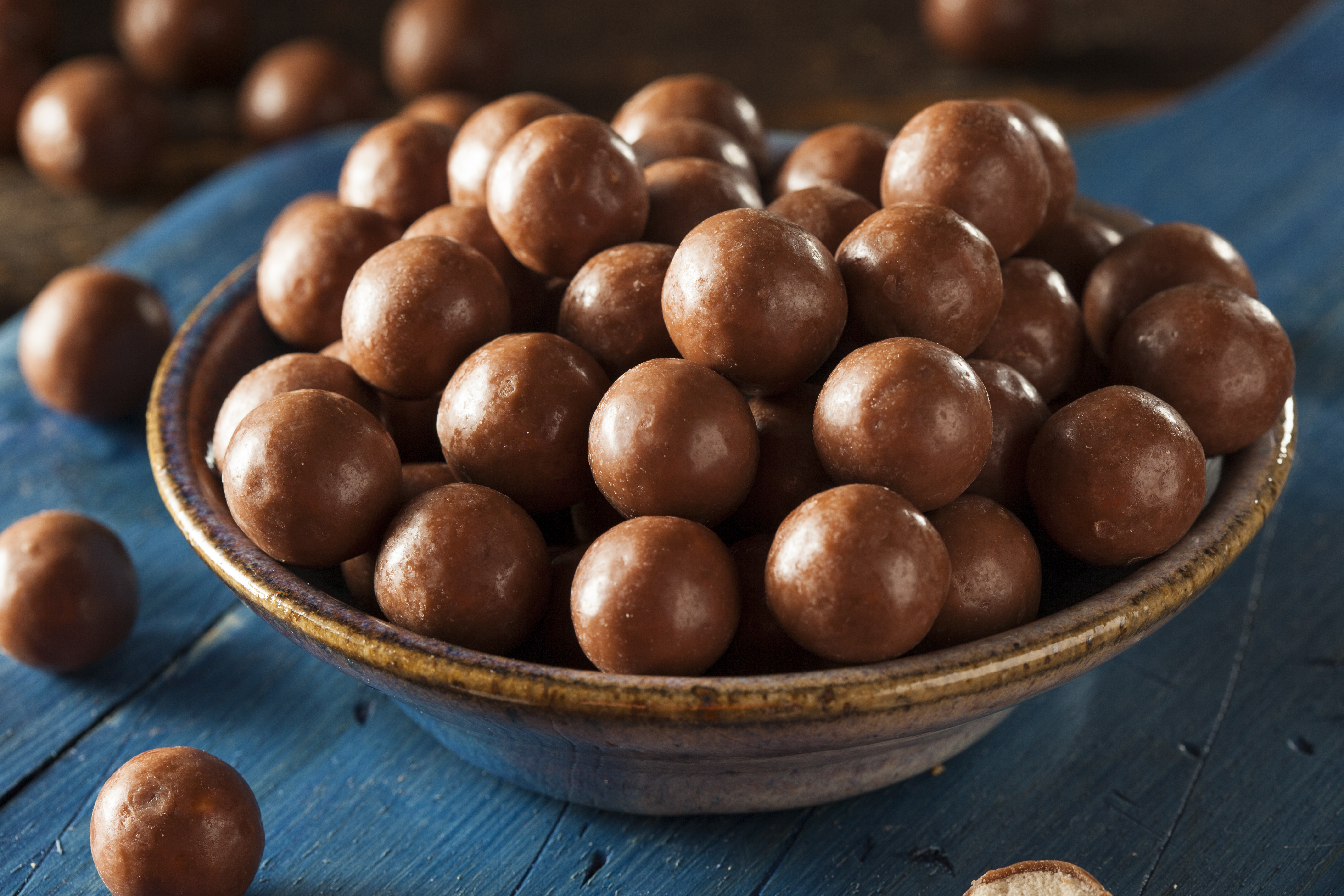
Bourbon Balls, a classic holiday confection, delight all. Made with pecans, confectioner's sugar, butter, and Maker's Mark Bourbon Whisky, these dough balls are rolled and dipped in chocolate for a festive treat.
- Carbohydrate 25.9456111407095 g
- Cholesterol 26.9944444444444 mg
- Fat 14.5671940242397 g
- Fiber 0.581333356924875 g
- Protein 0.662016667136085 g
- Saturated Fat 6.82881102664969 g
- Serving Size 1 1 Serving (44g)
- Sodium 72.5719957611111 mg
- Sugar 25.3642777837846 g
- Trans Fat 0.916775453094989 g
- Calories 230 calories
Step-by-step
- Soak nuts in Bourbon overnight.
- Combine all ingredients (except coating materials) and refrigerate until firm.
- Roll in small balls and dip in Bakers semi-sweet chocolate melted with paraffin.
- I used a 12 oz. bag of semi-sweet chocolate chips, mixed with 1 oz. paraffin in a double boiler.
- I then coated the Bourbon balls with the chocolate mixture, and placed them on waxed paper to set up.
- I placed a single half-pecan piece on the top of each piece of candy, and pressed it lightly while the coating was still hot.
- I let the finished Bourbon balls cool.
- You can use a refrigerator or freezer to speed up the process.
- Then I placed them in a candy dish for serving.
- These Bourbon balls are wonderful for serving during the holiday season; also, they make great gifts!
- Enjoy!!!
Soaking pecans in high-proof alcohol overnight fundamentally alters their cellular structure, softening the nut meat while extracting harsher volatile compounds into the liquid. Standard baking tools suffice for this confection, but precise equipment determines the final texture of the candy coating. A double boiler provides the gentle, indirect heat necessary to melt chocolate without seizing the cocoa butter solids. Alternatively, a heavy-bottomed glass bowl set over a saucepan of simmering water prevents scorching.
Fat and sugar ratios dictate the stability of the interior dough before coating. Butter contains roughly twenty percent water, which must be thoroughly bound by the powdered sugar during mixing to prevent weeping beneath the shell. Chilling the dough mixture for at least two hours solidifies the saturated fats, allowing the mass to hold a spherical shape when rolled by hand. Rolling should occur quickly so ambient kitchen heat does not melt the butter prematurely.
Paraffin wax is historically utilized in professional confectionery work to raise the melting point of chocolate. Adding one ounce of food-grade paraffin to twelve ounces of chocolate creates a hard, glossy shell that will not melt at room temperature or leave fingerprints when handled. Dipping requires a specialized dipping fork with two or three thin tines, which allows excess chocolate to drip back into the pot rapidly.
Setting the dipped candies on parchment paper or waxed paper prevents adhesion and ensures clean removal once hardened. Storing these confections in an airtight container at cool room temperatures allows the bourbon and sugar flavors to mature over forty-eight hours. High humidity should be avoided during storage to prevent sugar bloom on the chocolate surface.



