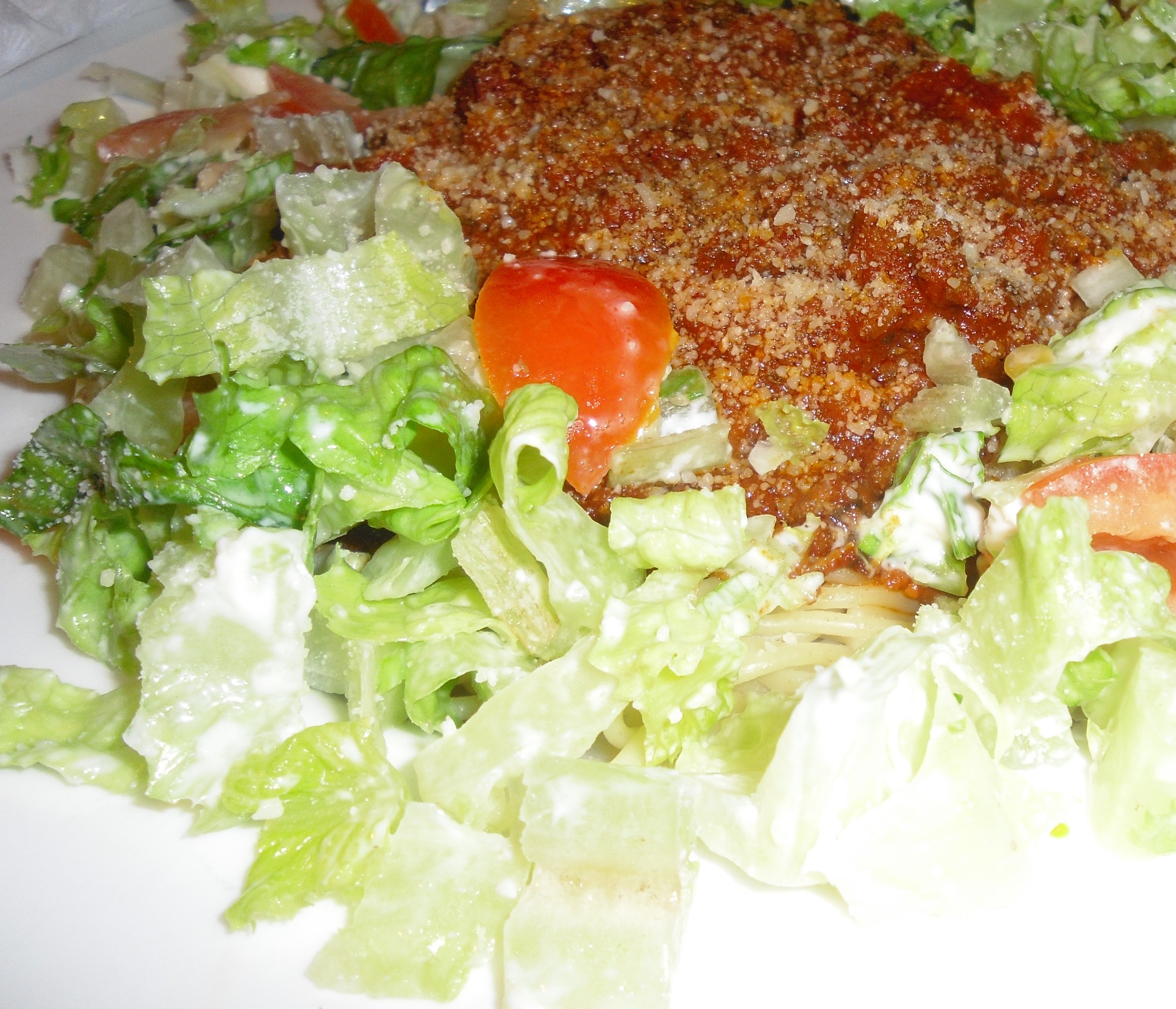
Spaghetti-like lasagna
- Carbohydrate 22.2603683333333 g
- Cholesterol 81.4264166666667 mg
- Fat 24.8931858333333 g
- Fiber 1.66554165055354 g
- Protein 20.8126016666667 g
- Saturated Fat 11.926124 g
- Serving Size 1 1 Serving (186g)
- Sodium 397.877916666667 mg
- Sugar 20.5948266827798 g
- Trans Fat 3.26370958333333 g
- Calories 399 calories
Step-by-step
- Cook spaghetti and drain.
- Brown beef in skillet. Add spaghetti sauce and heat through. Add a little cinnamon to taste.
- In bowl, combine cream cheese, cottage cheese, sour cream, onion, and green pepper. To this add a little nutmeg to taste.
- In 2 quart casserole or 9x13 dish, layer 1/2 the spaghetti, 1/2 the sauce, and 1/2 the cheese mixture. Repeat layers and top with mozzarella cheese.
- Bake at 350 degrees for 45 min. or until bubbly and cheese is melted and lightly browned.
Working within the spatial limitations of a standard 9x13-inch baking dish requires careful volumetric control over layered pasta casseroles. When combining wet dairy bases with protein and starch, thermal conductivity dictates how evenly the center cooks compared to the edges. Utilizing a two-quart casserole or a standard glass pan ensures the heat penetrates the dense core without scorching the exterior mozzarella layer.
The Dairy and Meat Emulsion
Softened cream cheese blended with cottage cheese and sour cream creates a rich thermal barrier that prevents the pasta strands from drying out during baking. As the ambient oven heat reaches 350 degrees Fahrenheit, the milk fats melt into the rendered beef lipids, forming a stable emulsion that coats each strand of thin spaghetti. Spicing this dairy layer with ground nutmeg introduces warm aromatic compounds that contrast sharply against the savory umami of the ground beef and tomato sauce.Structural Integration and Storage
Allowing the baked casserole to rest for fifteen minutes post-oven allows the starches to fully gelatinize and the dairy proteins to set, which makes portioning clean slices significantly easier. Storing leftovers in an airtight container for up to three days promotes further moisture distribution as the pasta continues to absorb the seasoned tomato sauce.


